



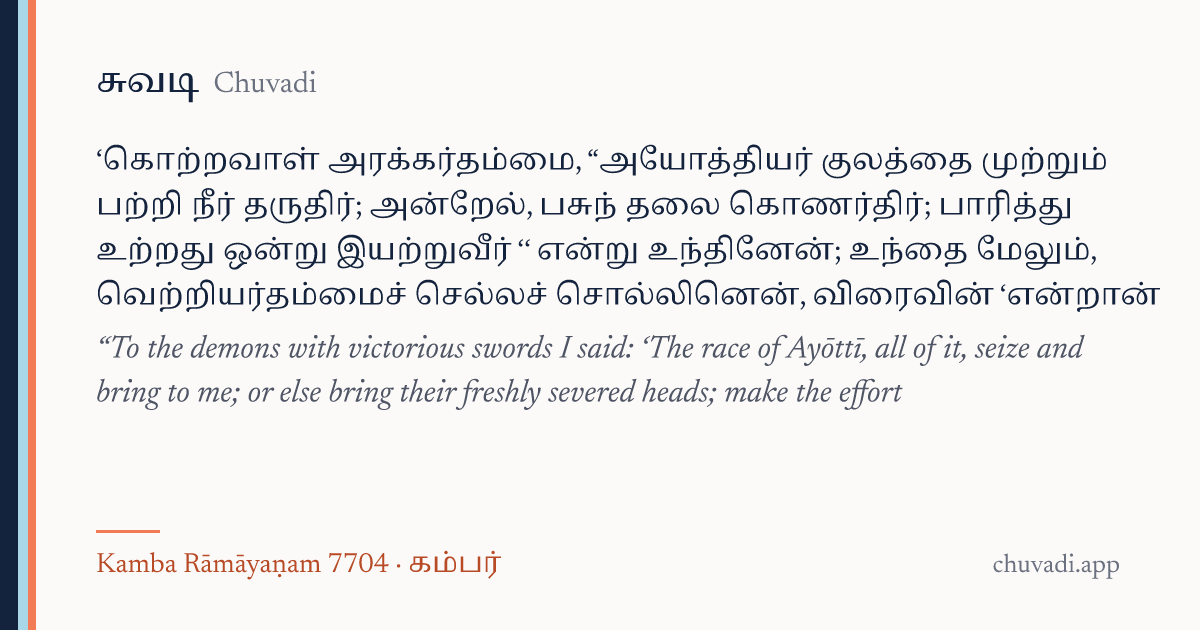
கம்பராமாயணம் 7704 · யுத்த 16.28
பாடல் · The poem
Tap a word to see its gloss in the commentary and where else it occurs.
பொருள் · Meaning in Tamil
அயோத்தியர் குலத்தை முற்றும் பற்றி நீர் தருதிர் - அயோத்திக்குரிய அரசரின் குலத்தை முற்றிலும் நீர் பற்றிக் கொண்டு வந்து தாருங்கள்; அன்றேல் பசுந்தலை கொணர்திர் - அல்லாவிட்டால் (அவர்களது) பசிய தலையைக் கொண்டு வாருங்கள்; பாரித்து உற்றது ஒன்று இயற்றுவீர் - முயற்சியை மேற்கொண்டு ஏற்றதொரு செயலைச் செய்யுங்கள்; என்று கொற்றவாள் அரக்கர் தம்மை உந்தினேன் - என்று (கட்டளை இட்டு) வெற்றி பொருந்திய வாட்படையை ஏந்திய அரக்கர்களை (அயோத்திக்கு) அனுப்பி உள்ளேன்; உந்தை மேலும் - உனது தந்தையாகிய சனகன் மீதும்; வெற்றியர் தம்மை விரைவின் செல்லச் சொல்லினென் என்றான் - வெற்றி பொருந்திய அரக்க வீரரை விரைந்து போகுமாறு சொல்லியுள்ளேன் என்று இராவணன் கூறினான்.
மகோதரன் கூறிய ஆலோசனைக்கு ஏற்ப அயோத்தியர் மீதும் சனகன் மீதும் படை வீரரைச் செலுத்தி உள்ளேன் என்று இராவணன் கூறுகிறான். அயோத்தியர் தசரதன் கால் வழி வந்தவர் பசுந்தலை - புதிதாய்க் குருதி வடிய வெட்டப்பட்ட தலை. பாரித்தல் - முயற்சி மேற்கொள்ளல்.
ஆங்கிலம் · English translationAI
Translation
- “To the demons with victorious swords I said: ‘The race of Ayōttī, all of it,
- seize and bring to me; or else bring their freshly severed heads; make the effort
- and do the deed that is fitting’ — and so I sent them off; and against your father too
- I have told my victorious warriors to go, and quickly,” he said.
What the poem says
Following the scheme suggested by his counsellor Makōtaraṉ, Irāvaṇaṉ claims he has dispatched sword-bearing demons to Ayōttī to capture or behead Tacarataṉ's whole line, and has sent other warriors to seize Cītai's father Caṉakaṉ. This sets up the illusion of the chapter, in which a magically created Caṉakaṉ will be paraded before Cītai.