



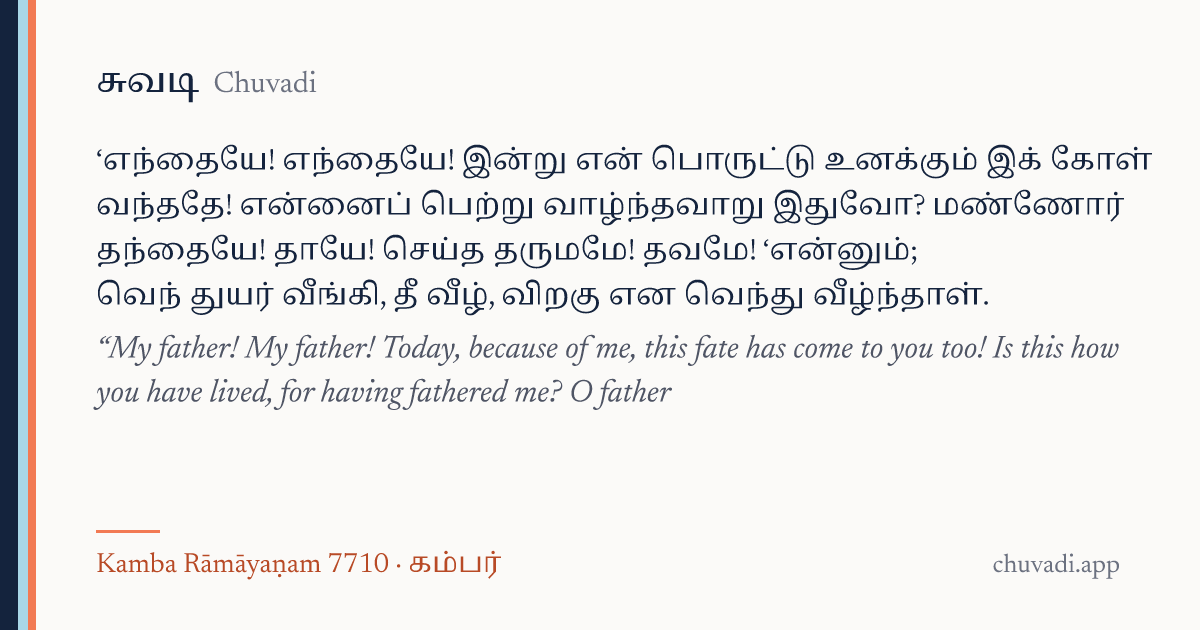
கம்பராமாயணம் 7710 · யுத்த 16.34
பாடல் · The poem
Tap a word to see its gloss in the commentary and where else it occurs.
பொருள் · Meaning in Tamil
எந்தையே எந்தையே - (மேலும் சீதை) என் தந்தையே என் தந்தையே; இன்று என் பொருட்டு உனக்கும் இக்கோள் வந்ததே - இப்போது என் காரணமாக உனக்கு இந்த நிலை வந்து விட்டதே! என்னைப் பெற்று வாழ்ந்தவாறு இதுவோ - என்னை மகளாகப் பெற்றதால் (நீ வாழ்ந்த தன்மை இதுவேதானோ; மண்ணோர் தந்தையே - நில உலகத்தவர்களுக்குத் தந்தை போல் நல்லது செய்பவனே; தாயே - (அன்பினால்) தாயைப் போன்றவனே; செய்த தருமமே - (ஒருவன் செய்த அறம் போல் நன்மை செய்பவனே; தவமே - (பயன் விளைவிக்கும்) தவம் போன்றவனே! என்னும் - என்று கூறி; வெந்துயர் வீங்கி - கொடிய துயரம் மிகுந்து; தீ வீழ் விறகு என வெந்து வீழ்ந்தாள் - தீயில் விழுந்த விறகு போல (துயரால்) மனம் வெந்து கீழே விழுந்தாள்.
என் தந்தையே என்னால் இந்த நிலை உனக்கு வந்ததே. என்னைப் பெண்ணாகப் பெற்று நீ வாழ்ந்த வகை இதுதானா? என்று கொடுந்துயர் கொண்ட சீதை தீயில் வீழ்ந்த விறகு போல் மனம் வெதும்பிக் கீழே விழுந்தாள். இப்பாடலில் உவமை அணி அமைந்துள்ளது.
ஆங்கிலம் · English translationAI
Translation
- “My father! My father! Today, because of me, this fate has come
- to you too! Is this how you have lived, for having fathered me? O father
- of those on earth! O mother! O dharma you have performed! O penance!” she cries;
- swollen with burning sorrow, like firewood fallen in a fire, she burned and fell.
What the poem says
Cītai addresses the figure she takes for Caṉakaṉ. Because of her, she says, he too has met this disaster: is this the reward of having her as a daughter? She praises him as a father and mother to all the world, as dharma and penance embodied. Then, consumed by grief, she collapses like a log of wood dropped into a fire.