



கம்பராமாயணம் 7711 · யுத்த 16.35
பாடல் · The poem
Tap a word to see its gloss in the commentary and where else it occurs.
பாட வேறுபாடு · Project Madurai reads
பொருள் · Meaning in Tamil
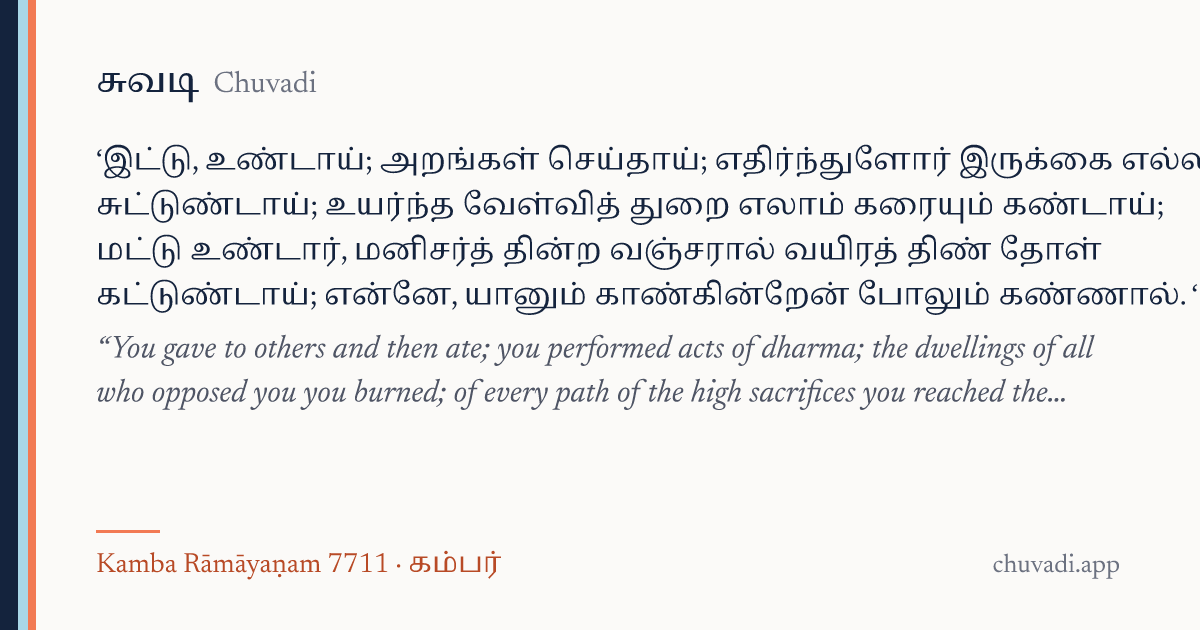
இட்டு உண்டாய் - (வறியவரும் விருந்தினரும் நெருங்கி உண்ணுமாறு) அளித்துப் பிறகு (நீ) உண்டாய்; அறங்கள் செய்தாய் - அறச்செயல்களைச் செய்தாய்; எதிர்ந்துளோர் இருக்கை எல்லாம் சுட்டுண்டாய் - எதிர்த்த பகைவர்களின் ஊர்களை எல்லாம் எரித்து விட்டாய்; வேள்வித் துறை எலாம் கரையும் கண்டாய் - வேள்வித் துறைகள் எல்லாவற்றையும் செய்து (அவற்றிற்கு) எல்லையும் கண்டாய்; மட்டுண்டார் - (அத்தகு சிறப்புடை நீ) கள் குடிப்பவராய்; மனிசர்த் தின்ற வஞ்சரால் - மனிதரைத் தின்னும் வஞ்சகப் பண்பு கொண்ட அரக்கரால்; வயிரத்திண் தோள் கட்டுண்டாய் - வயிரம் போன்ற வலிய தோள்கள் கட்டப்பட்டாய்; என்னே யானும் கண்ணால் காண்கின்றேன் போலும் - இப்படிப்பட்ட நிலையை நானும் கண்ணால் காண்கின்றேனே.
எதிர்த்தோர் இருக்கை சுடல் - பகைவர் இருக்கையை எரித்தல் புறத்திணையில் "உழபுலவஞ்சி" எனப்படும். மட்டு - கள், சுட்டுண்டாய் - உண் துணைவினை. கட்டுண்டாய் - உண் செயப்பாட்டு வினைப் பொருள் உடையது. என்னே - இரக்கக் குறிப்பு.
ஆங்கிலம் · English translationAI
Translation
- “You gave to others and then ate; you performed acts of dharma; the dwellings of all who opposed you
- you burned; of every path of the high sacrifices you reached the farthest shore;
- and by drinkers of toddy, cheats who devour men, your strong diamond-hard shoulders
- are bound; alas, and I must see it with my own eyes!”
What the poem says
Cītai recalls her father's virtues: he fed the poor and guests before eating himself, did deeds of dharma, burned the towns of his enemies, and mastered every kind of Vedic sacrifice. Now his mighty shoulders are bound by drunken, man-eating demons, and she must watch it. Burning an enemy's settlements is a recognised theme of heroic war poetry.
ஒலிபெயர்ப்பு · Transliteration (ISO 15919)
Spotted a mistake in this poem, its translation or its words?