



கம்பராமாயணம் 7714 · யுத்த 16.38
பாடல் · The poem
Tap a word to see its gloss in the commentary and where else it occurs.
பாட வேறுபாடு · Project Madurai reads
பொருள் · Meaning in Tamil
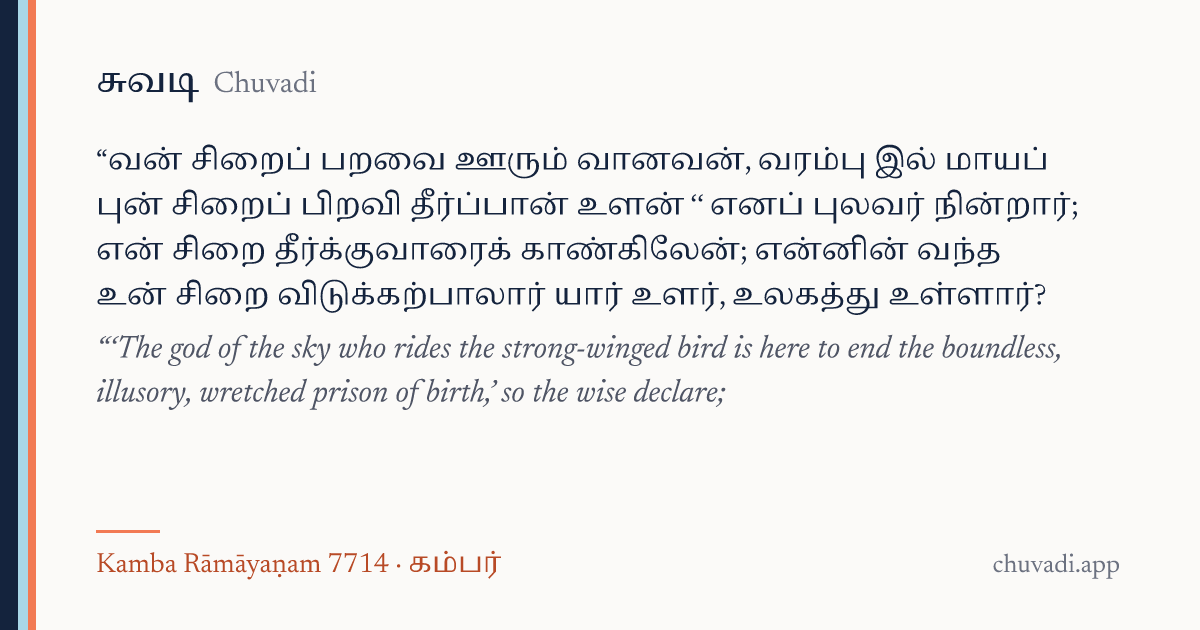
வன்சிறைப் பறவை ஊரும் வானவன் - வலிமையான சிறகுகளை உடைய கருடனை ஊர்தியாக ஏறிச் செலுத்தும் திருமால்; வரம்பு இல்மாயப் புன் சிறைப் பிறவி தீர்ப்பான் உளன் - எல்லையற்ற மாயா காரியமாகிய இழிந்த பிறவிச் சிறையைத் தீர்ப்பதற்காக உளன்; என்று புலவர் நின்றார் - என்று நல்லறிவாளர் சொல்லி உள்ளனர்; என் சிறை தீர்க்குவாரைக் காண்கிலேன் - (அச்சொல் தவிர) என் சிறை வாழ்க்கையைத் தீர்த்து விடுவிப்பவர்களைக் காண்கிலேன்; என்னின் வந்த உன்சிறை விடுக்கற்பாலார் - எனக்காக உனக்குக் கிட்டியுள்ள சிறை வாழ்க்கையில் இருந்து விடுவிப்பவர்கள்; உலகத்து உள்ளார் யார் உளர் - உலகத்தில் உள்ளவர்களில் யாவர் உளர்?
கள்ள மாய வாழ்வு எலாம் விள்ள ஞானம் வீசு தாள் வள்ளல் வாழி (கம்ப. 2578) என்றார் பிற இடத்திலும்.
ஆங்கிலம் · English translationAI
Translation
- “‘The god of the sky who rides the strong-winged bird
- is here to end the boundless, illusory, wretched prison of birth,’ so the wise declare;
- but I see no one to end my imprisonment; and from your prison, which came
- through me, who is there in the world able to set you free?”
What the poem says
Cītai recalls that sages proclaim Viṣṇu, who rides the eagle Garuḍa, as the one who frees souls from the prison of rebirth. Yet, she laments, she sees no one releasing her from her prison, and who in the world could free her father from the captivity he has fallen into because of her? There is a hidden irony: Irāmaṉ is himself that Viṣṇu.