



கம்பராமாயணம் 7715 · யுத்த 16.39
பாடல் · The poem
Tap a word to see its gloss in the commentary and where else it occurs.
பொருள் · Meaning in Tamil
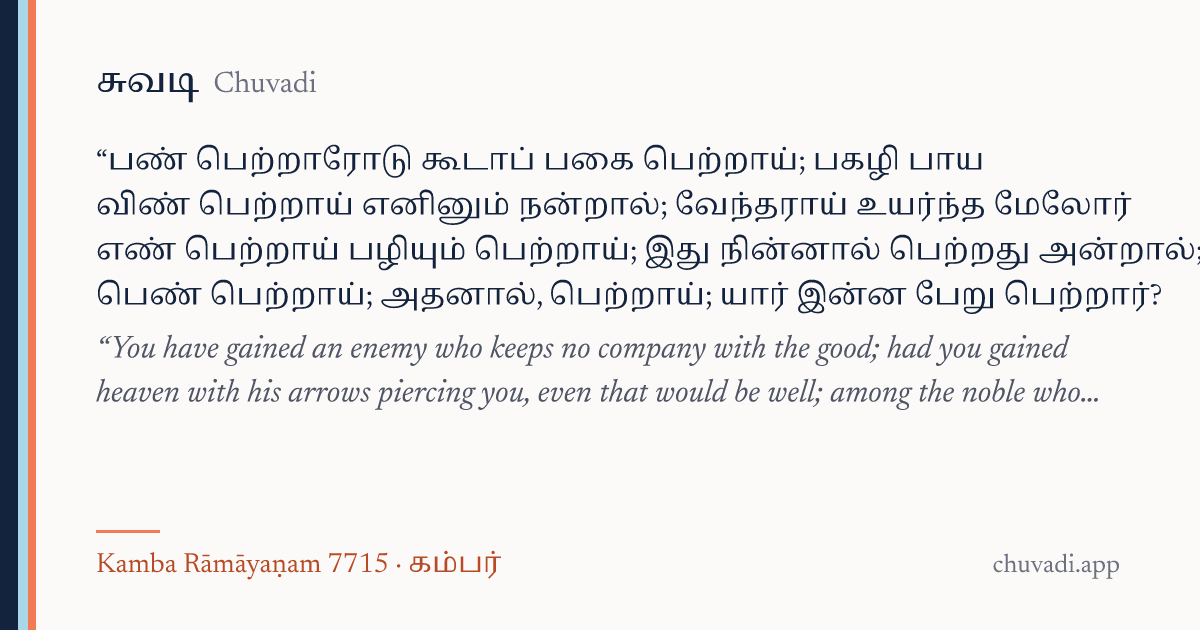
பண் பெற்றாரொடு கூடாப் - நல்ல பண்புடையவர்களோடு சேர்தல் இல்லாத; பகை பெற்றாய் - பகைவனைப் பெற்றாய்; பகழி பாய விண்பெற்றாய் எனினும் நன்றால் - (அத்தன்மையனான பகைவனிடம் சிறைப்பட்டிருப்பதை விட) அவனது அம்பு பாய்ந்து வீர சொர்க்கம் அடைந்தாய் எனினும் நல்லது; வேந்தராய் உயர்ந்த மேலோர் எண் பெற்றாய் - வேந்தர்களாகி உயர்வு எய்திய மேலோர்களால் எண்ணப்படும் தன்மையைப் பெற்றுச் சிறந்தாய், பழியும் பெற்றாய் - (அப்படிப்பட்ட நீ பழியையும் அடைந்தாய்; இது நின்னால் பெற்றது அன்றால் - அப்பழி உன் செயலால் தேடிக் கொண்டது அன்று; பெண் பெற்றாய் அதனால் பெற்றாய் - (நீ ஒரு) பெண்ணைப் பெற்றாய் அதனால் பெற்றாய் அதனால் இந்தப் பழியைப் பெற்றாய்; இன்ன பேறு பெற்றார் யார் - (உலகில் உன்னைப் போல்) இவ்வாறான பேறு பெற்றார் யார்.
யான் பிறத்தலால் துறந்த பெரியாள்” கம்ப. 2366. என்று பரதன் குகனிடம் கூறுவதை எண்ணுக. பண் - பண்பு. எண் - எண்ணப்படும் சிறப்பு. ஆல் - அசைகள்.
ஆங்கிலம் · English translationAI
Translation
- “You have gained an enemy who keeps no company with the good; had you gained heaven
- with his arrows piercing you, even that would be well; among the noble who rose high as kings
- you gained high esteem, and you have gained disgrace too; this you did not earn by yourself;
- you begot a daughter; by that you gained it; who else has gained such a gain?”
What the poem says
Cītai tells her father that it would have been better for him to fall in battle, pierced by his enemy's arrows, and win a hero's heaven, than to be captured by such a base foe. He was counted among the greatest of kings, yet now he bears disgrace, not through any act of his own but because he had a daughter: her. She speaks with bitter irony of this “gain”, echoing Paratan's grief that his birth brought misfortune on others.