



கம்பராமாயணம் 7716 · யுத்த 16.40
பாடல் · The poem
Tap a word to see its gloss in the commentary and where else it occurs.
பாட வேறுபாடு · Project Madurai reads
பொருள் · Meaning in Tamil
பாசம் சுற்றுண்ட நாஞ்சில் - கயிற்றினால் சுற்றிக் கட்டப்பட்ட கலப்பை; சுமையொடும் சூடுண்டு - சுமையுடன் சாட்டையால் அடிபட்டும்; ஆற்ற எற்றுண்டும் - மிகத் தாற்றுக் கோலால் குத்துண்டும்; அளற்று நீங்கா - சேற்று வயலை நீங்காது; விழு சிறு குண்டை என்ன - தடுமாறி விழுகிற சிறிய எருது போல; பற்றுண்ட நாளே - பகைவனால் பற்றப்பட்ட காலத்திலேயே; மாளாப் பாவியேன் - நீங்காத தீவினை உடைய நான்; உம்மை எல்லாம் விற்று உண்டேன் - உங்களை எல்லாம் விற்று உண்டவளாகி விட்டேன்; நரகில் வீழ்ந்தால் - நரகத்தில் விழுந்தால்; மீளும் விதி எனக்கு உண்டோ - மீளும் வழி எனக்கு உள்ளதோ? நாஞ்சில் - கலப்பை, சூடுண்ணல் - சூட்டுக் கோலால் சுடப்படுதல் எனினும் அமையும். மாட்டு வாகட நூல்களில் நோய்க்குச் சூடிடும் முறைகள் கூறப்பட்டிருத்தலை நினைக. எற்றுண்ணல் - தாற்றுக் கோலால் குத்துதல், அளறு - சேறு, குண்டை - எருது, உம்மையெல்லாம் விற்று உண்டேன். அயோத்திக்கும், மிதிலைக்கும் வீரர்களை அனுப்பியதாக இராவணன் சொன்னதை உட்கொண்டு இருதரப்பாரையும் உளப்படுத்திக் கூறியது.
ஆங்கிலம் · English translationAI
Translation
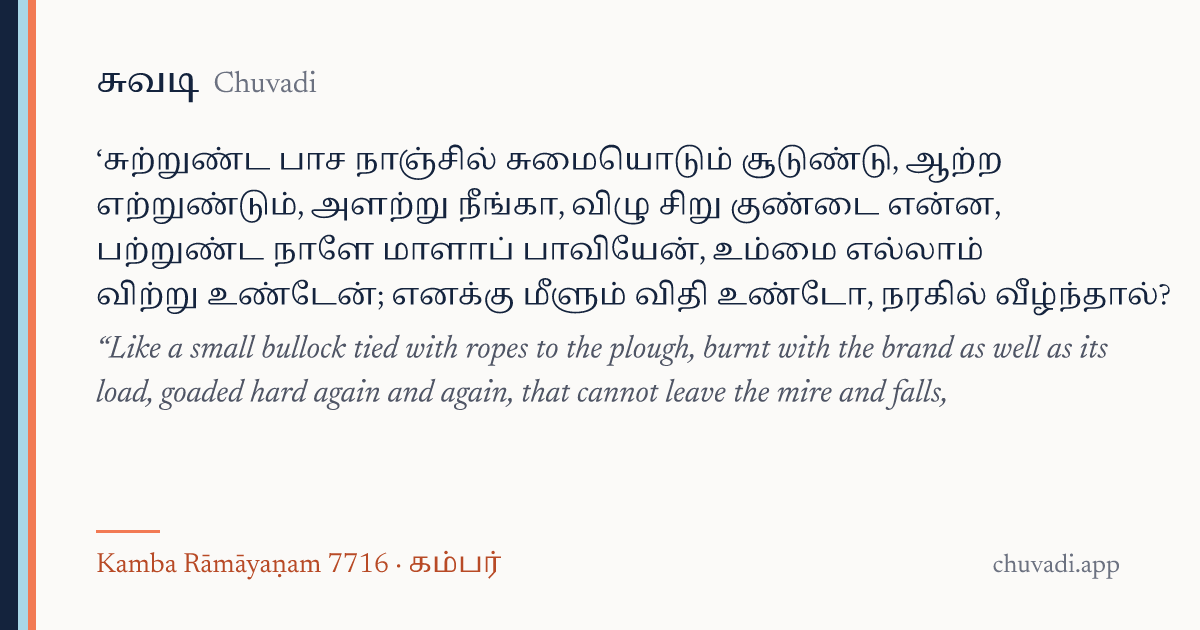
- “Like a small bullock tied with ropes to the plough, burnt with the brand as well as its load,
- goaded hard again and again, that cannot leave the mire and falls,
- I, a sinner who did not die on the very day I was seized, have sold all of you
- and eaten the price; if I fall into hell, is there any fate by which I could return?”
What the poem says
Cītai compares herself to a small ox yoked to a plough, beaten, branded and goaded, stumbling in the mud. She did not die on the day she was abducted, and so, she says, she has as good as sold her whole family and lived on the proceeds. She has in mind Irāvaṇaṉ's claim that he has sent warriors against both Ayōttī and Mithilā, so she counts both houses as ruined through her. Such a sinner could never climb out of hell.