



கம்பராமாயணம் 7718 · யுத்த 16.42
பாடல் · The poem
Tap a word to see its gloss in the commentary and where else it occurs.
பொருள் · Meaning in Tamil
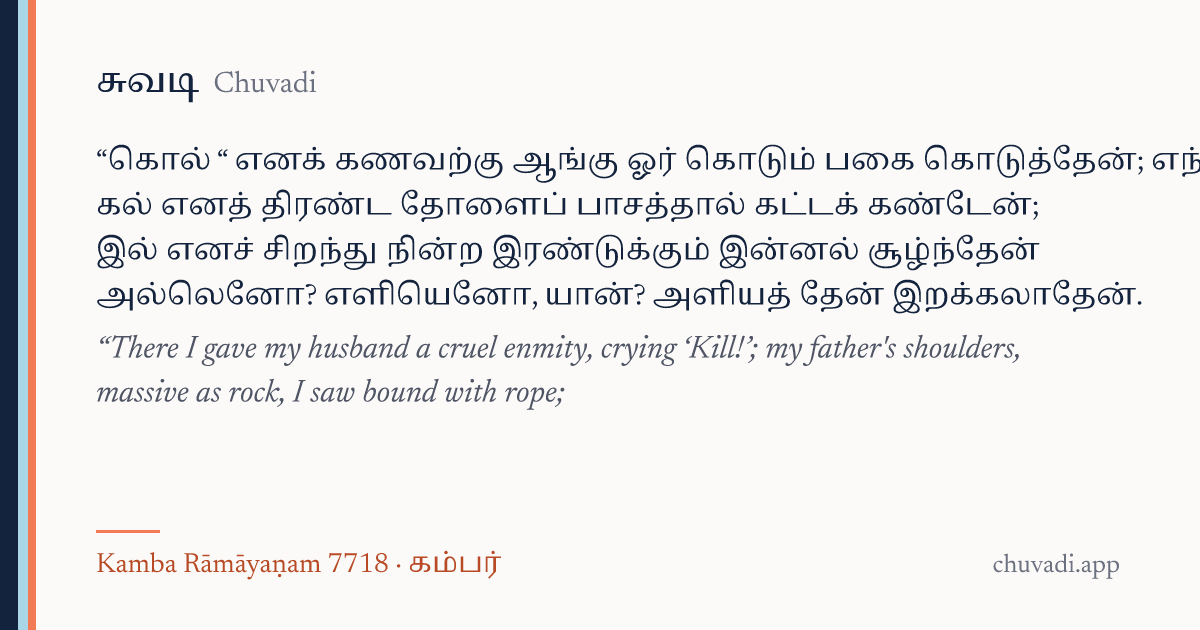
ஆங்கு - அப்பஞ்சவடியில்; கொல் என - கொல்வாயாக என்று; கணவற்கு ஓர் கொடும் பகை கொடுத்தேன் - கணவனுக்கு ஒரு கொடிய பகையைத் தந்தேன்; எந்தை - (இப்போது இலங்கையில்) எனது தந்தையினது; கல் எனத் திரண்ட தோளை - மலை போல் திரண்ட வலிய தோள்களை; பாசத்தால் கட்டக் கண்டேன் - கயிற்றினால் கட்டியிருப்பதைக் கண்டேன்; இல் எனச் சிறந்து நின்ற - (ஒரு பெண்ணுக்கு) வீடு என்பதற்குரிய சிறப்புப் பொருந்திய; இரண்டுக்கும் இன்னல் சூழ்ந்தேன் - பிறந்த வீடு, புகுந்த வீடு ஆகிய இரண்டுக்கும் துன்பத்தை எண்ணியவளானேன்; அல்லெனோ - இது உண்மையல்லவா; யான் எளியெனோ - நான் எளிமையானவளோ? இறக்கலாதேன் - (இப்படிப் பல செய்தும்) இறக்கலாகாதவளாகிய (நான்); அளியத்தேன் - இரங்கத் தக்கவள்.
ஒரு பெண்தன் பிறந்த வீட்டிற்கும் புகுந்த வீட்டிற்கும் பெருமை தேட வேண்டியவள் என்ற உலகியல் நடைமுறை உட்கொண்டு தான், "இரண்டுக்கும் இன்னல் சூழ்ந்தேன்" என்கிறாள். இறந்து படாமையால், தான் கருணை செய்யத் தக்கவள் அல்லள் என்பதை உணர்த்திற்று.
ஆங்கிலம் · English translationAI
Translation
- “There I gave my husband a cruel enmity, crying ‘Kill!’; my father's
- shoulders, massive as rock, I saw bound with rope;
- on both the houses that stand foremost for a woman, I brought ruin;
- is it not so? Am I so little? I am pitiable, I who cannot die.”
What the poem says
Cītai blames herself. In the Pañcavaṭi forest she urged Irāmaṉ to kill and catch the golden deer, and so drew him into his feud with Irāvaṇaṉ. Now she sees her father's rock-like shoulders bound. A woman is expected to bring honour to both her father's house and her husband's, but she has brought disaster to both. She calls herself pitiable because, after all this, she still cannot die.