



கம்பராமாயணம் 7724 · யுத்த 16.48
பாடல் · The poem
Tap a word to see its gloss in the commentary and where else it occurs.
பாட வேறுபாடு · Project Madurai reads
பொருள் · Meaning in Tamil
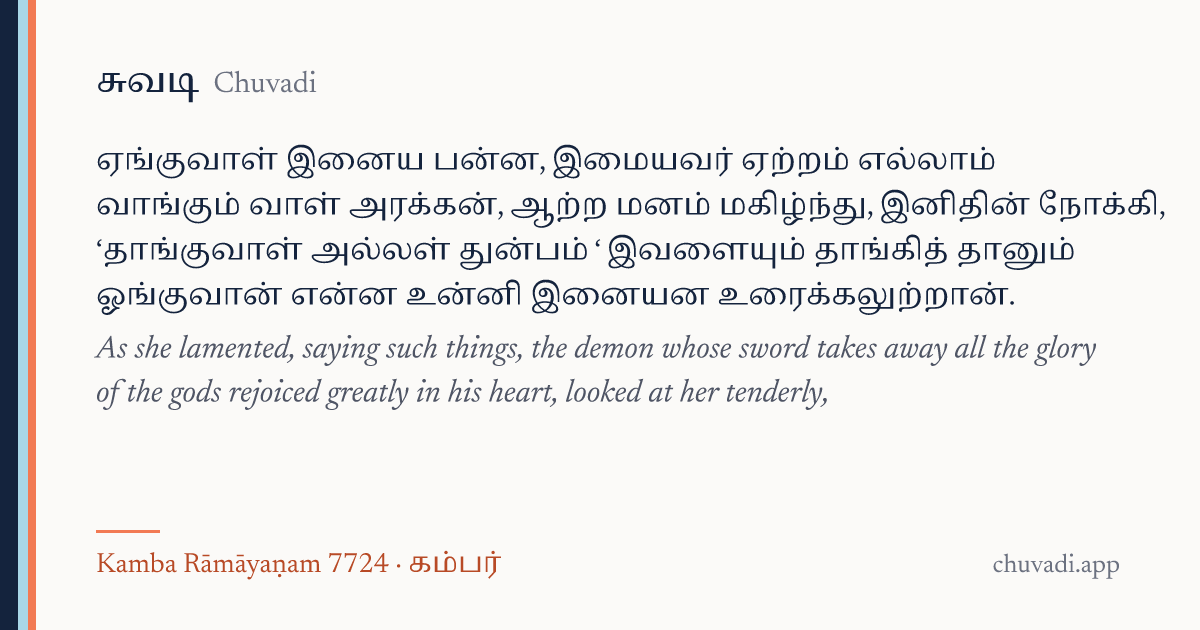
ஏங்குவாள் இனைய பன்ன - துன்பத்தால் வருந்துபவளாகிய சீதை இவ்வாறு சொல்ல; இமையவர் ஏற்றம் எல்லாம் வாங்கும் வாள் அரக்கன் - இமையவர்களுடைய பெருமையை எல்லாம் நீக்கும் வாட்படையை உடைய இராவணன்; ஆற்ற மனம் மகிழ்ந்து - மிக மனம் மகிழ்ந்து; இனிதின் நோக்கி - காதலோடு பார்த்து; துன்பம் தாங்குவாள் அல்லள் - (இச்சீதை இனிமேல்) துன்பத்தைத் தாங்க மாட்டாள்; இவளையும் தாங்கி - எனவே இவளைத் தாங்கிக் காத்து; தானும் ஓங்குவான் - தானும் (இவள் மனத்தில் ஓங்கிய இடம் பெறலாம்; என்ன உன்னி - என்று எண்ணி; இனையன உரைக்கலுற்றான் - இவ்வாறான சொற்களைச் சொல்லத் தொடங்கினான்.
பன்னல் - பலமுறை கூறல், ஏற்றம் - பெருமை. ஆற்ற - மிக. வாள் - இராவணனுடைய வாளுக்குச் சந்திர காசம் என்று பெயர் சிவபிரான் உமையோடு உயர்மலையில் இருந்த போது தொடிப்பொலி தடக்கையால் அம்மலையைப் பெயர்த்து எடுக்க முயன்று, அம்மலைக் கீழ் அகப்பட்டு வருந்திச் சாமவேதம் பாடி மீண்ட போது சிவபிரான் கொடுத்த வாள் அது என்பர்.
ஆங்கிலம் · English translationAI
Translation
- As she lamented, saying such things, the demon whose sword takes away all the glory
- of the gods rejoiced greatly in his heart, looked at her tenderly,
- and thinking, “She cannot bear this sorrow; by supporting her
- I too will rise high,” began to speak words such as these.
What the poem says
Irāvaṇaṉ is delighted to see Cītai broken. He judges that she can bear no more, and that by offering to relieve her suffering he can win a place in her heart. His sword, which strips the gods of their pride, is Candrahāsa. Tradition says Śiva gave it to him after Irāvaṇaṉ tried to uproot Mount Kailāsa, was pinned beneath it and sang the Sāma Veda until he was released.