



கம்பராமாயணம் 7735 · யுத்த 16.59
பாடல் · The poem
Tap a word to see its gloss in the commentary and where else it occurs.
பொருள் · Meaning in Tamil
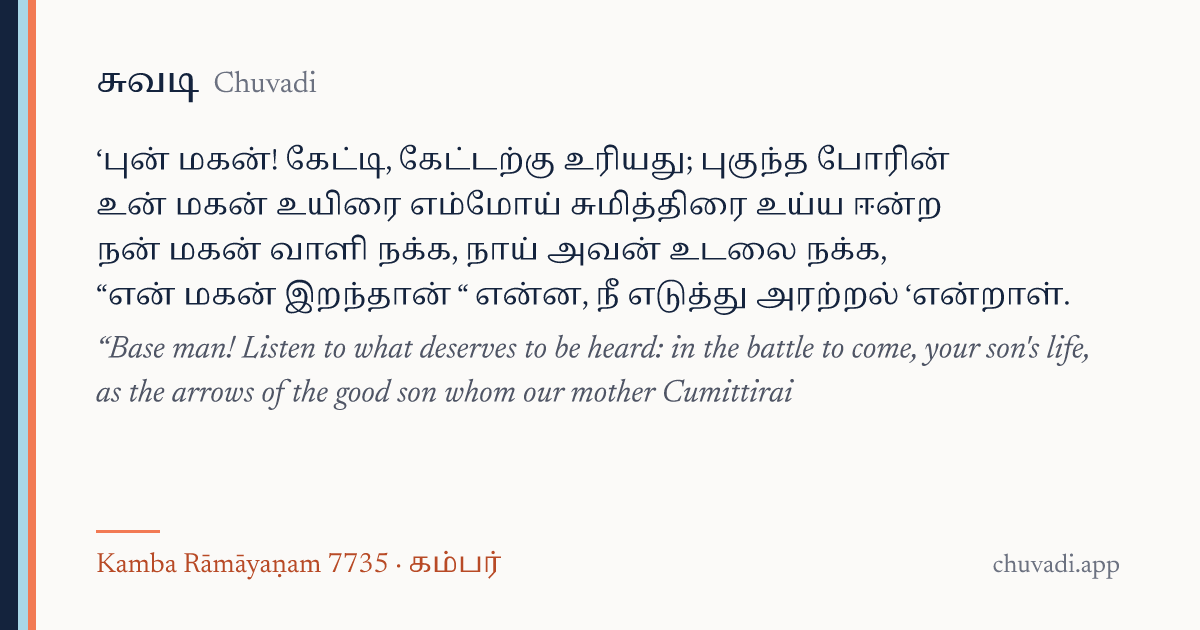
புன்மகன் - அற்பமகனே; கேட்டற்கு உரியது கேட்டி - கேட்பதற்கு உரியனவற்றை (மீண்டும்) கேட்பாய்; புகுந்த போரின் - எதிர்வர உள்ள போரில்; உன் மகன் உயிரை - உன் மகனுடைய உயிரை; எம்மோய் சுமித்திரை - எமது தாயாகிய சுமித்திரை; உய்ய ஈன்ற - (உலகில்) நன்மை நிலைப்பெறப் பெற்ற; நன்மகன் - நற்பண்புகள் உள்ள மகனாகிய இலக்குவன்; வாளி நக்க - அம்புகள் பட்டு அழித்தலால்; அவன் உடலை நாய் நக்க - அவனுடைய உயிரற்ற உடலை நாய்கள் நக்கும் போது; என் மகன் இறந்தான் என்ன - என் மகன் இறந்து பட்டானே என்று சொல்லிக் கொண்டு; நீ எடுத்து அரற்றல் என்றாள் - நீ பெரும் குரல் எழுப்பிப் புலம்புதல் ஆகும் என்று கூறினாள் சீதை.
உன் மகன் - இராவணனுக்கு மூவர் அக்ககுமாரன், அதிகாயன், இந்திரசித்தன், அக்கன் சுந்தர காண்டத்தில் அனுமனிடம் அறை பட்டு இறந்தவன். மீதி உள்ள இருவரில் ஒருவரையே இச்சொல் குறித்தது எனினும் சிலர் இந்திரசித்தனை இது குறிப்பதாகச் சொல்பவர். நாம் இதனைப் பொதுச்சொல் எனவே கொள்ளலாம். எம்மோய் - கணவனின் சிறிய தாயைத் தன் தாயாக மருகியர் கருதி வந்தது குறித்து நின்றது. நரியவனுடலம் - என்ற பாடம் ஓரளவு பொருந்துமோ எனத் தோன்றுகிறது.
ஆங்கிலம் · English translationAI
Translation
- “Base man! Listen to what deserves to be heard: in the battle to come,
- your son's life, as the arrows of the good son whom our mother Cumittirai
- bore for the world's salvation lick it up, and as dogs lick his body,
- you will raise a wail, crying ‘My son is dead!’” she said.
What the poem says
Cītai ends with a prophecy. In the coming battle Ilakkuvaṉ, son of Cumittirai, whom she calls “our mother” as a wife calls her husband's stepmother, will kill Irāvaṇaṉ's son. Dogs will lick the corpse, and Irāvaṇaṉ will wail, “My son is dead!” Of his sons Akṣakumāraṉ has already been killed by Aṉumaṉ; the words fit Atikāyaṉ, whose death comes in the next chapter, and Intiracittaṉ, who later falls to Ilakkuvaṉ.