



கம்பராமாயணம் 7740 · யுத்த 16.64
பாடல் · The poem
Tap a word to see its gloss in the commentary and where else it occurs.
பொருள் · Meaning in Tamil
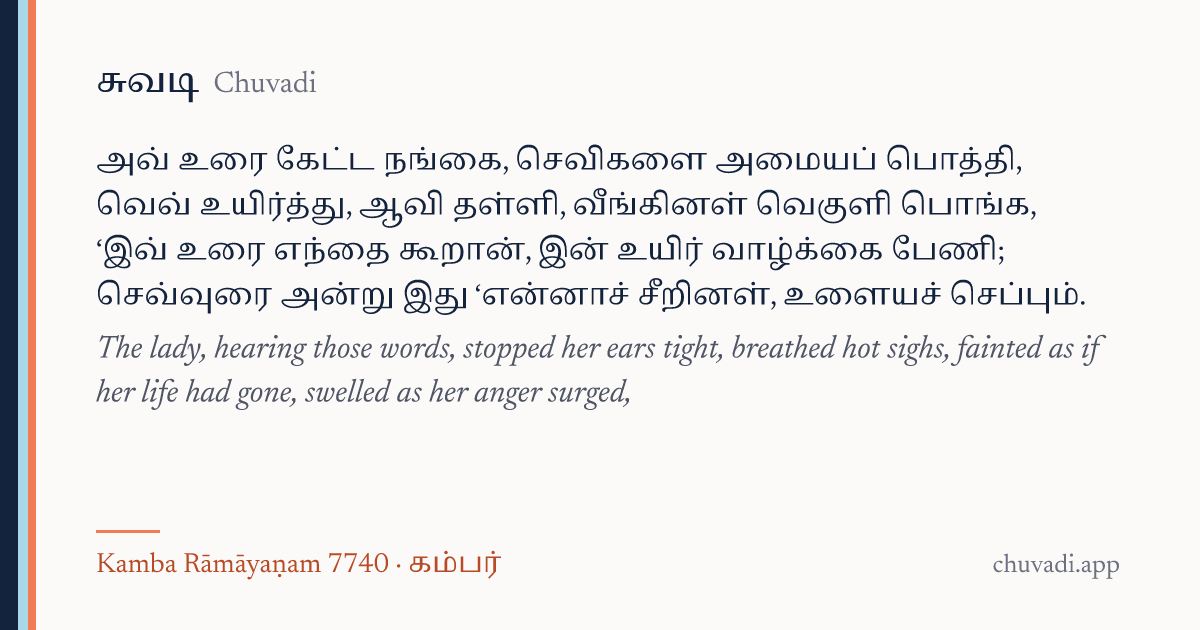
அவ் உரை கேட்ட நங்கை - அந்தச் சொற்களைக் கேட்ட பெண்ணாகிய சீதை; செவிகளை அமையப் பொத்தி - (தன்) காதுகளைக் கைகளால் இறுக்கமாக மூடிக்கொண்டு; வெவ் உயிர்த்து - வெப்பமான பெருமூச்சு விட்டு; ஆவி தள்ளி - உயிர் (போய் விட்டது எனும்படி) மயக்கமடைந்து; வெகுளி பொங்க வீங்கினள் - சினம் மிகப் பொங்கக் கிளர்ந்து எழுந்து; இன் உயிர் வாழ்க்கை பேணி - இனிய உயிருடன் வாழும் வாழ்க்கையைச் சிறப்பு எனக் கருதி; எந்தை இவ்உரை கூறான் - என் தந்தையாகிய சனகன் இப்படிப்பட்ட சொற்களைச் சொல்ல மாட்டான்; செவ்வுரை அன்று இது என்னா - இது செம்மையான சொற்களும் அல்ல என்று; சீறினள் உளையச் சொன்னாள் - சீறி (மாயா சனகனின் மனம் வருந்தும்படி கூறத் தொடங்கினாள்.
செவிகளை அமையப் பொத்தல் - கேட்கத் தகாதன கேட்க நேரும்போது செய்யும் செயல், இவ்உரை எந்தை கூறான் - தன் தந்தையாகிய சனகனின் அறவழியில் சீதை கொண்டிருந்த நம்பிக்கை குறித்து வந்தது. உயிர்த்தல் - பெருமூச்சு விடல், உளைதல் - மனம் வருந்துதல், அமைய - முழுவதுமாக, இறுக, எந்தை - மரூஉ மொழி.
ஆங்கிலம் · English translationAI
Translation
- The lady, hearing those words, stopped her ears tight,
- breathed hot sighs, fainted as if her life had gone, swelled as her anger surged,
- and saying, “My father would not speak these words to keep his sweet life;
- this is not righteous speech,” she flared up and spoke words to wound him.
What the poem says
Cītai covers her ears, as one does on hearing what should not be heard. She sighs, nearly faints, and then rises in fury. Her faith in her father's righteousness is unshaken: Caṉakaṉ would never say such things simply to save his own life. She refuses to accept these words as just and turns on him with stinging reproach.