



கம்பராமாயணம் 7761 · யுத்த 16.85
பாடல் · The poem
Tap a word to see its gloss in the commentary and where else it occurs.
பொருள் · Meaning in Tamil
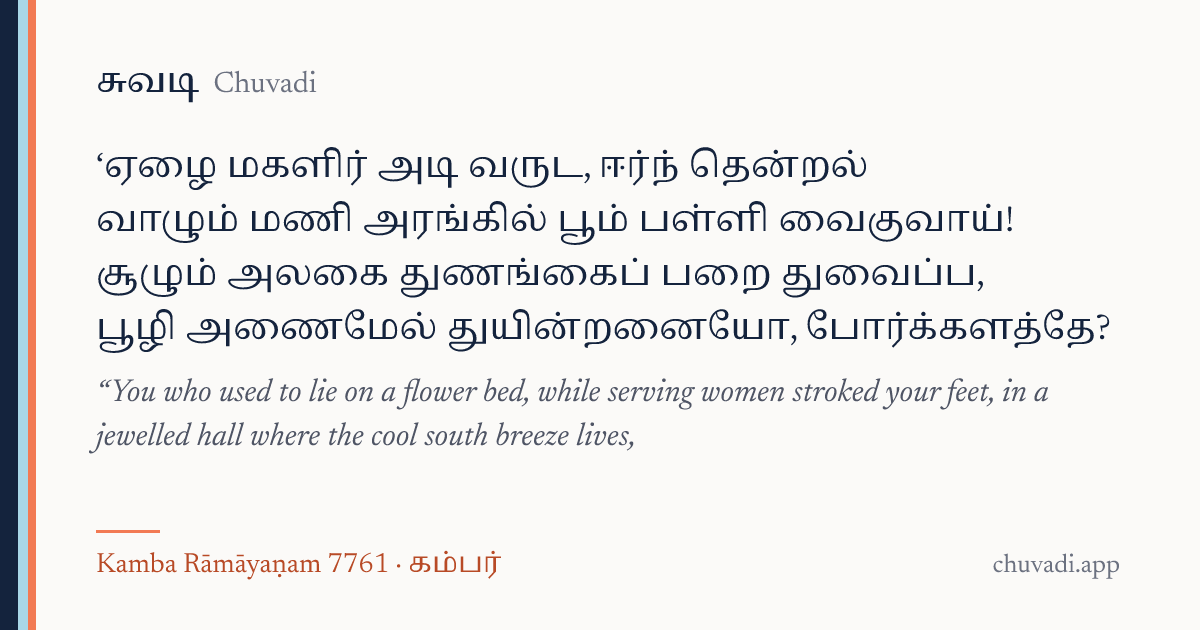
ஏழை மகளிர் அடிவருட - பணிப் பெண்கள் காலைப் பிடிக்க; ஈர்ந்தென்றல் வாழும் மணி அரங்கில் - குளிர்ந்த தென்றல் காற்று வாழ்ந்து வீசுகிற அழகிய பள்ளி அரங்கில்; பூம்பள்ளி வைகுவாய் - அழகிய (மெல்லிய) படுக்கையில் படுத்திருந்தவனே! போர்க்களத்தே - போர்க்களத்தின் கண்; சூழும் அலகை - சூழ்ந்துள்ள பேய்கள்; துணங்கைப் பறை துவைப்ப - துணங்கைக் கூத்துப் பறை போல் ஒலி எழுப்ப; பூழி அணை மேல்துயின்றனையோ - புழுதிப் படுக்கை (மேல்) படுத்து உறங்கினாயோ.
மலரணையில் துயின்றவன் புழுதிப் படுக்கையில் உறங்கும்படி நேர்ந்த நிலை மாறிய தன்மையை இப்பாடல் விளக்குகிறது. ஏழை - அறியாமை உடைய எனினும் ஆம். ஈர் - குளிர்ச்சி. அலகை - பேய், துணங்கை - கை கோத்து ஆடும் ஒருவகைக் கூத்து. பூழி - புழுதி. ஈர்ந் தென்றல் - பண்புத் தொகை. ஓகாரம் - இரக்கப் பொருளைக் குறித்து வந்தது.
ஆங்கிலம் · English translationAI
Translation
- “You who used to lie on a flower bed, while serving women stroked your feet,
- in a jewelled hall where the cool south breeze lives,
- have you now gone to sleep on a pillow of dust on the battlefield,
- while the ghouls that crowd around beat the drum for the tuṇaṅkai dance?”
What the poem says
Irāvaṇaṉ contrasts his brother's former life with his death. Kumpakaruṇaṉ, famous for his long sleeps, once slept on soft flower beds in a jewelled chamber cooled by the south wind, with maidservants massaging his feet. Now he sleeps on the dust of the battlefield, while ghouls beat drums for the tuṇaṅkai, a dance performed hand in hand over the slain.