



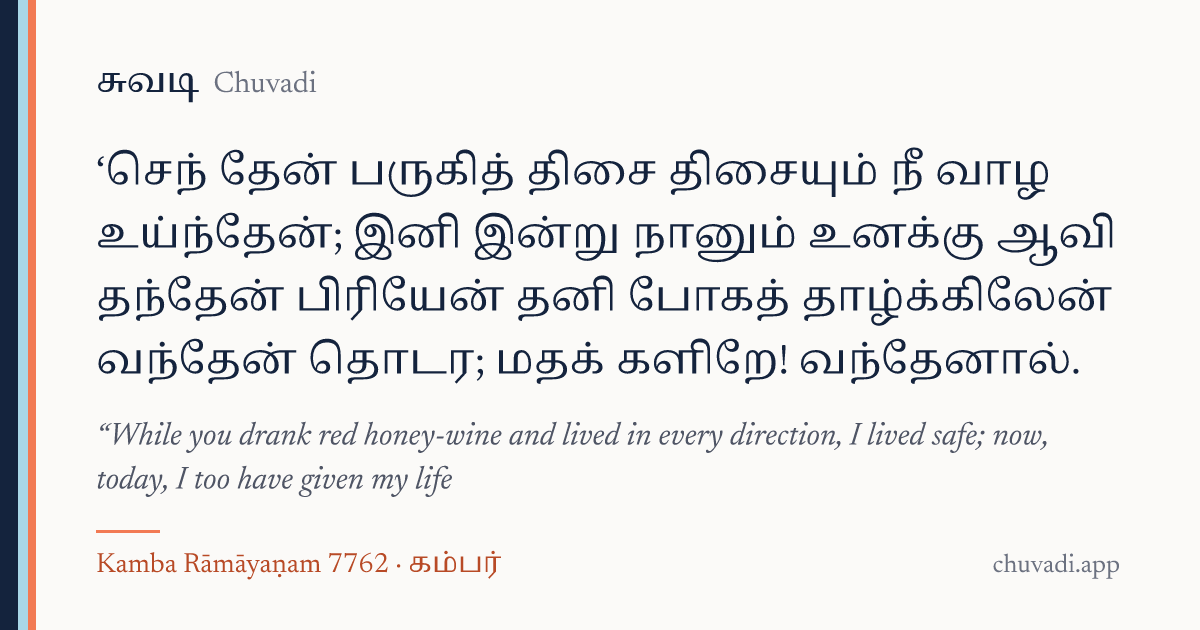
கம்பராமாயணம் 7762 · யுத்த 16.86
பாடல் · The poem
Tap a word to see its gloss in the commentary and where else it occurs.
பாட வேறுபாடு · Project Madurai reads
பொருள் · Meaning in Tamil
மதக் களிறே - மதம் கொண்ட யானை போன்றவனே! செந்தேன் பருகி - சிவந்த நிறமுள்ள மதுவை உண்டு; திசை திசையும் நீ வாழ - பல திசைகளிலும் சென்று நீ (வெற்றி பெற்றுச் சிறந்து) வாழ, உய்ந்தேன் - (நான் பாதுகாப்பாக) வாழ்ந்திருந்தேன்; இனி இன்று நானும் உனக்கு ஆவி தந்தேன் - இனிமேல் இப்பொழுது நானும் உனக்காக உயிரைத் தந்தவனாகிப், பிரியேன் - பிரியாமல்; தொடர வந்தேன் - உன்னைத் தொடர்ந்து வந்திட்டேன்; தனிப்போகத் தாழ்க்கிலேன் வந்தேனால் - (நீ) தனியே செல்லக் காலம் தாழ்த்தாதவனாய் வந்து விடுகிறேன்.
இவ்வாற்றாமைப் பாடல்கள் இராவணன் தம்பி மீது கொண்டிருந்த அளப்பரிய பாசத்தையும் நம்பிக்கையையும் விளக்கிக் காட்டுவனவாய் உள்ளன. தந்தேன், வந்தேன் - விரைவு காரணமாக எதிர்காலம் இறந்த காலமாகக் கூறப்பட்ட கால வழுவமைதிகள் நானும் - உம்மை இறந்தது தழீஇய எச்ச உம்மை, ஆல் - தேற்றப் பொருளில் வந்த இடைச் சொல்.
ஆங்கிலம் · English translationAI
Translation
- “While you drank red honey-wine and lived in every direction,
- I lived safe; now, today, I too have given my life
- for you; I will not part from you; I will not delay while you go alone;
- I have come to follow; O rutting elephant, I have come!”
What the poem says
Irāvaṇaṉ says that he lived in safety while Kumpakaruṇaṉ feasted and won victories in every quarter. Now he vows to give his own life for his brother, never to be parted from him and not to let him travel alone: “I have come.” Speaking of a future act in the past tense shows how urgent the vow is. These laments show the depth of Irāvaṇaṉ's love for and trust in his brother.