



கம்பராமாயணம் 7763 · யுத்த 16.87
பாடல் · The poem
Tap a word to see its gloss in the commentary and where else it occurs.
பொருள் · Meaning in Tamil
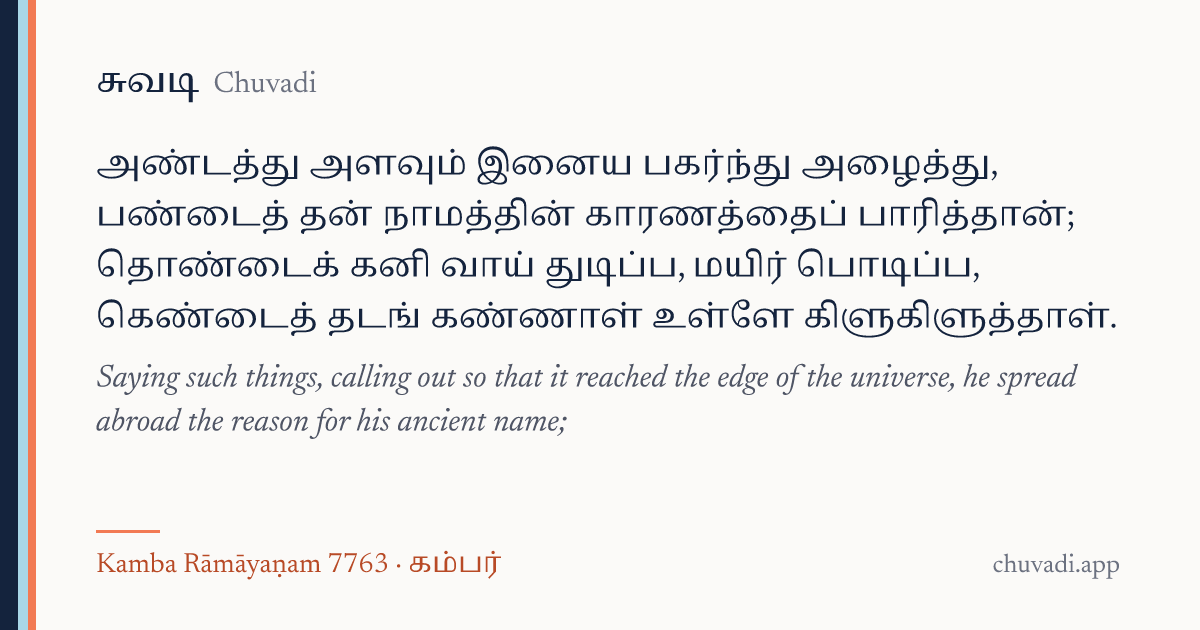
இனைய பகர்ந்து - இத்தகைய சொற்களைச் சொல்லி; அண்டத்து அளவும் அழைத்து - வானமுகட்டு அளவு அரற்றல் குரல் எட்டும்படி கூவி அழைத்து; பண்டைத் தன் நாமத்தின் காரணத்தைப் பாரித்தான் - பழமையான தன் பெயரின் காரணத்தைப் பலரும் அறிய வளர்த்தான்; கெண்டைத் தடங்கண்ணாள் - கெண்டை மீன் போல் பிறழும் பெரிய கண்ணை உடைய சீதை; தொண்டைக் கனிவாய் துடிப்ப - கொவ்வைக் கனி போன்ற சிவந்த உதடுகள் துடிக்க; மயிர் பொடிப்ப - மயிர்க் கூச்செறிய; உள்ளே கிளுகிளுத்தாள் - மனத்தின் உள்ளே குதூகலிப்புக் கொண்டாள்.
பண்டைத் தன் நாமத்தின் காரணத்தைப் பாரித்தல் - முன்பு கைலாய மலையை எடுக்க முயன்று அதன் கீழ் அகப்பட்டு அழுது கதறிய போது, சிவபெருமானால் அளிக்கப் பெற்ற பெயர் இராவணன் என்பது. இராவணம் - அழுகை (அல்) கதறல் என்று பொருள் படும். அழுகை காரணமாகப் பெற்ற பெயர் இது. பாரித்தல் - வளர்த்தல். உள்ளே கிளுகிளுத்தல் - துன்பம் கொண்டார்க்கு முன் தன் மகிழ்ச்சியை வெளிக்காட்டுதல் பண்பாடு உடையார் செயல் அன்று ஆகையால் இவ்வாறு கூறினார் வாய் துடித்தல், மயிர் பொடித்தல் - மகிழ்ச்சி காட்டும் மெய்ப்பாட்டுக் குறிகள்.
ஆங்கிலம் · English translationAI
Translation
- Saying such things, calling out so that it reached the edge of the universe,
- he spread abroad the reason for his ancient name;
- her red-fruit lips quivering, her hair standing on end,
- the lady with large eyes like the keṇṭai fish thrilled within.
What the poem says
Irāvaṇaṉ's wailing fills the universe, living up to his name. He was named Rāvaṇa, “the one who roars or wails”, by Śiva, after he was pinned beneath Mount Kailāsa and cried out. Cītai, hearing that Kumpakaruṇaṉ is dead, quivers with joy: her lips tremble and her hair stands on end. Yet she rejoices only inwardly, since a well-bred person does not show delight before someone in mourning.