



கம்பராமாயணம் 7766 · யுத்த 16.90
பாடல் · The poem
Tap a word to see its gloss in the commentary and where else it occurs.
பாட வேறுபாடு · Project Madurai reads
பொருள் · Meaning in Tamil
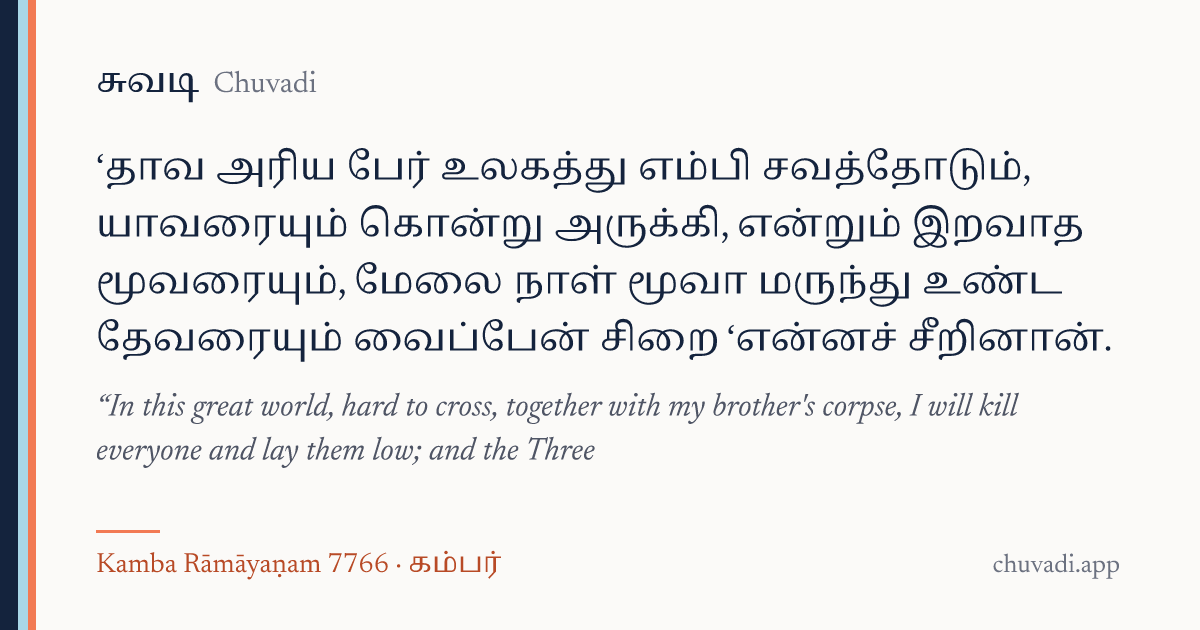
தாவ அரிய பேர் உலகத்து - கடத்தற்கு அரிய மிகப் பரந்து பட்ட நிலவுலகில் உள்ள; யாவரையும் - எல்லாரையும்; கொன்று - கொன்று அழித்து; எம்பி சவத்தோடும் அருக்கி - என் தம்பியின் உயிரற்ற உடலோடு அடங்குமாறு செய்து; என்றும் இறவாத மூவரையும் - என்றைக்கும் இறந்து படாத (அரி அரன் அயன் என்ற) மூவரையும்; மேலை நாள் மூவா மருந்து உண்ட தேவரையும் - முற்காலத்தில் சாவா மருந்தாகிய அமிழ்தத்தை உண்ட தேவரையும்; சிறை வைப்பேன் - சிறையில் வைப்பேன்; என்னச் சீறினான் - என்று சீறினான்.
தன் தம்பியைக் கொன்ற இராமபிரானைச் சினவாமல், மண்ணவரை அழிப்பேன், மூவரையும் தேவரையும் சிறை வைப்பேன் என்றமை காண்க. துயரத்தால் தோன்றிய சீற்றம் இது. இறவாதவர்களைச் சிறை வைத்து இறத்தற்கு உரியாரை அழிப்பேன் என்றபடி. தாவ அரிய - கடத்தற்கு அரிய, தா அரிய எனப் பிரித்து அழிவு இல்லாத எனினுமாம். அருக்கி - அடங்குவித்து, மூவா - சாவா.
ஆங்கிலம் · English translationAI
Translation
- “In this great world, hard to cross, together with my brother's corpse,
- I will kill everyone and lay them low; and the Three
- who never die, and the gods who long ago drank
- the nectar against old age, I will put in prison,” he raged.
What the poem says
Grief turns into fury. Irāvaṇaṉ swears that he will kill every living being on earth and lay them beside his brother's body, and will imprison the immortal Trinity of Viṣṇu, Śiva and Brahmā, along with the gods who drank the nectar of immortality. Strikingly, he does not rage against Irāmaṉ, the actual slayer; his anger is the wild anger of grief, aimed at mortals and immortals alike.