



கம்பராமாயணம் 7767 · யுத்த 16.91
பாடல் · The poem
Tap a word to see its gloss in the commentary and where else it occurs.
பாட வேறுபாடு · Project Madurai reads
பொருள் · Meaning in Tamil
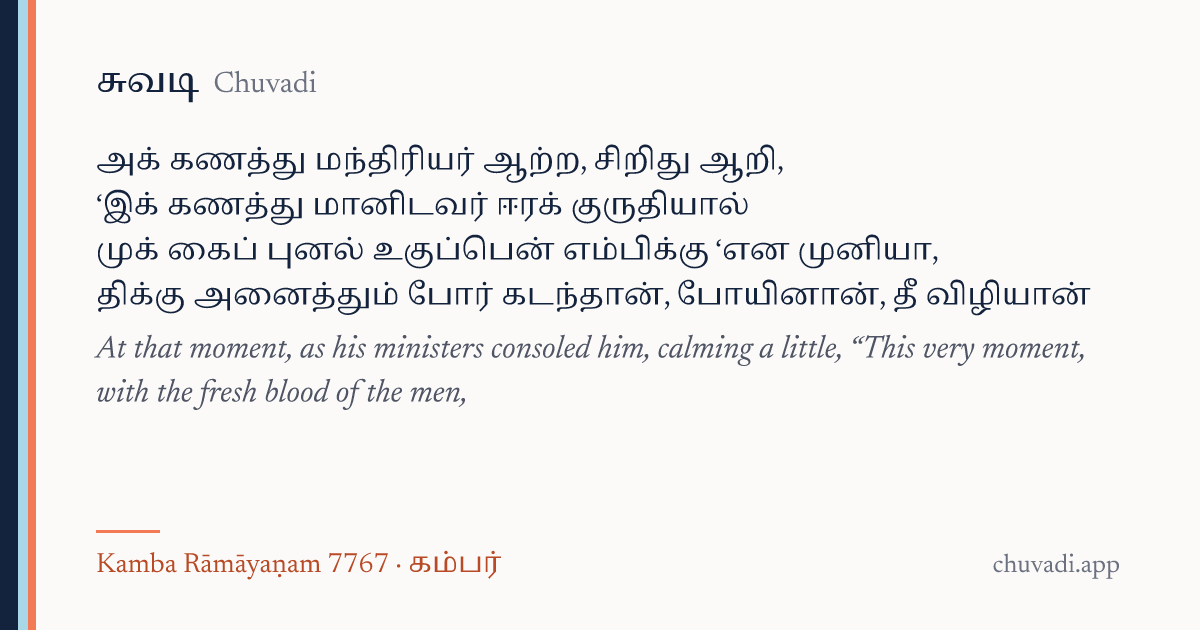
திக்கு அனைத்தும் போர் கடந்தான் - எல்லாத் திசைகளிலும் சென்று போர் செய்து வெற்றி பெற்றவனாகிய இராவணன்; அக்கணத்து மந்திரியர் ஆற்ற சிறிது ஆறி - அந்த நேரத்தில் அமைச்சர்கள் ஆறுதல் கூறச் சிறிது (சினம்) தணிந்து; இக்கணத்து - இப்பொழுது; மானிடவர் ஈரக் குருதியால் - மனுசரான இராம இலக்குவருடைய பச்சை இரத்தத்தால்; எம்பிக்கு - என்தம்பியாகிய கும்பகருணனுக்கு; முக்கைப் புனல் உகுப்பேன் - மூன்று முறை கையால் இறைத்தல் ஆகிய நீர்க்கடன் செய்வேன்; என முனியா - என்று சினந்து; தீ விழியான் போயினான் - (சினத்தால்) தீ வெளிப்படும் கண்களை உடையவனாய்ச் சீதை இருக்கும் இடத்தை விட்டு) அப்பால் போனான்.
முக்கைப் புனல் உகுத்தல். இறந்தவர்க்கு மூன்று முறை கையொலி நீர் இறைத்துச் செய்யும் நீத்தார்கடன். மந்திரியர் - உடன் இருந்த மகோதரனை மட்டும் குறித்தது. இழிப்பினால் ஒருமையைப் பன்மையாகக் கூறினார் என்க. முனியா - செய்யா என்னும் வாய்பாட்டு இறந்த கால உடன்பாட்டு வினை எச்சம்.
ஆங்கிலம் · English translationAI
Translation
- At that moment, as his ministers consoled him, calming a little,
- “This very moment, with the fresh blood of the men,
- I will pour the three handfuls of water for my brother,” so saying in anger,
- he who had conquered every quarter in war went away, his eyes flashing fire.
What the poem says
His counsellors calm Irāvaṇaṉ a little. He vows to perform his brother's funeral rite, the offering of three handfuls of water, using instead the fresh blood of the two men, Irāmaṉ and Ilakkuvaṉ. With eyes blazing, the conqueror of all directions leaves the place where Cītai sits. The plural “ministers” refers to Makōtaraṉ alone and is used in contempt.