



கம்பராமாயணம் 7768 · யுத்த 16.92
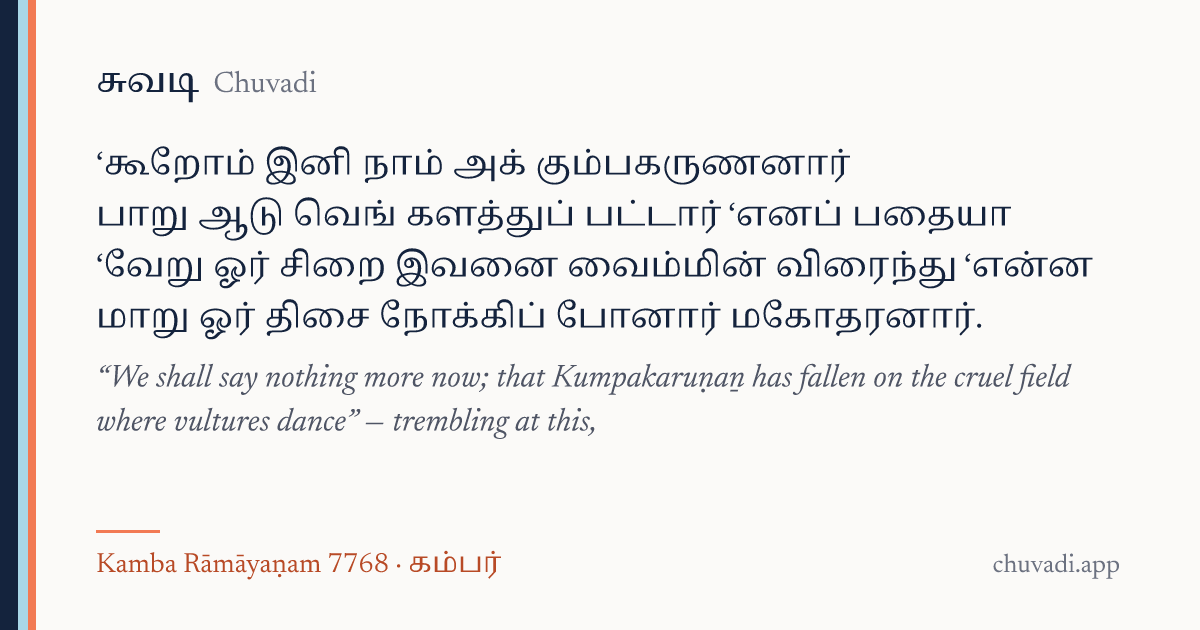
பாடல் · The poem
Tap a word to see its gloss in the commentary and where else it occurs.
பொருள் · Meaning in Tamil
இனி நாம் கூறோம் - இனிமேல் நாம் (வேறு ஒன்றும்) சொல்வதற்கில்லை (ஏனெனில்); அக்கும்பகருணனார் பாறு ஆடு வெங்களத்துப் பட்டார் - அந்தக் கும்பகருணனார் பருந்துகள் பறக்கின்ற கொடிய போர்க்களத்தில் இறந்து அழிந்தார்; எனப் பதையா - என்று சொல்லி உடல் பதைத்து; இவனை வேறு ஓர் சிறை விரைந்து வைம்மின் என்ன - இந்த மாயாசனகனை மற்றொரு சிறையில் விரைவாக அடைத்து வையுங்கள் என்று சொல்லிவிட்டு; மகோதரனார் மாறு ஓர் திசை நோக்கிப் போனார் - மகோதரன் வேறு ஒரு திசையை நோக்கிப் போனார்
மகோதரன் இராவணனுடன் செல்லாது வேறு ஒரு திசையில் செல்லுதல், தான் கூறியே கும்பகருணனைப் போருக்கு அனுப்பியதை எண்ணி இராவணன் தன் மீது சினந்து சீறுவானோ என்ற அச்சத்தால் என்க. பாறு - பருந்து, மாறு ஓர் திசை - வேறு ஒரு திசை பதையா - செய்யா என்னும் வாய்பாட்டு உடன்பாட்டு வினைஎச்சம். மகோதரனார் - பன்மை இழிவுக்குறிப்பு.
ஆங்கிலம் · English translationAI
Translation
- “We shall say nothing more now; that Kumpakaruṇaṉ
- has fallen on the cruel field where vultures dance” — trembling at this,
- “Put this man in another prison, quickly,” he said,
- and went off in another direction, did Makōtaraṉ.
What the poem says
Makōtaraṉ, shaken by the news, says there is nothing more to be said now that Kumpakaruṇaṉ has fallen on the vulture-haunted battlefield. He orders the false Caṉakaṉ to be locked away in another prison and slips off in a different direction from Irāvaṇaṉ, afraid of his anger, since it was on his advice that Kumpakaruṇaṉ was sent to war. Calling him “Makōtaraṉār” with an honorific plural is ironic.