



கம்பராமாயணம் 7780 · யுத்த 17.9
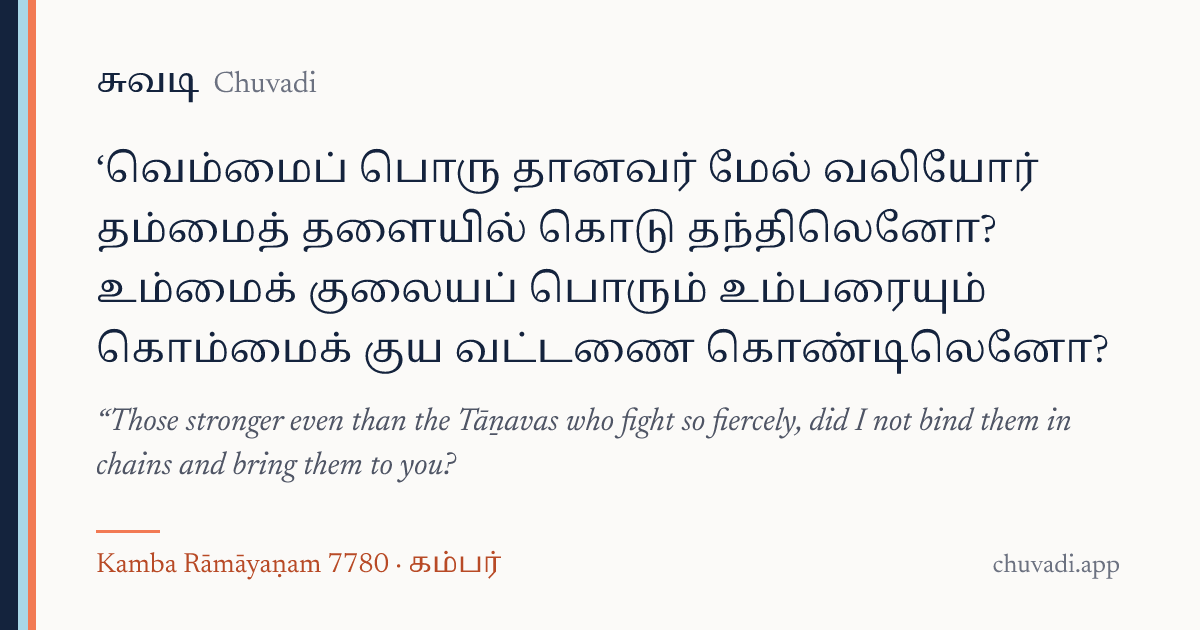
பாடல் · The poem
Tap a word to see its gloss in the commentary and where else it occurs.
பொருள் · Meaning in Tamil
வெம்மைப் பொருதானவர் மேல் வலியோர் - கொடுமையாகப் போர் செய்கின்ற தானவரை விட வலிமையுடையவர்; தம்மைத் தளையில் கொடு தந்திலனோ - தம்மைத் தளையிட்டுப் பிணித்து வந்து (உன்னிடம்) கொடுத்திலனோ? உம்மைக் குலையப் பொரும் உம்பரையும் - உம்மையும் நடுங்குமாறு போர் செய்யும் (வலி படைத்த) தேவர்களையும்; கொம்மைக்குய வட்டணை - திரட்சியான வாளால் இடம் வலமாகச் சாரிதிரிந்து; கொண்டிலனோ - பொருது வெற்றி கொண்டிலனோ?
கொம்மை - திரட்சி. குயம் - வாள், மார்பும் ஆம். வட்டணை கொள்ளுதல் - இடம் வலமாகச் சாரிதிரிந்து வெற்றி கொள்ளுதல், சுழல அடித்தலும் ஆம். குயவட்டணை கொள்ளல் என்பதற்கு மார்பில் தாளம் போட்டிலனோ என உரைப்பாரும் உளர்
ஆங்கிலம் · English translationAI
Translation
- “Those stronger even than the Tāṉavas who fight so fiercely,
- did I not bind them in chains and bring them to you?
- And the gods who fight so that even you trembled,
- did I not defeat them, wheeling about with my massive sword?”
What the poem says
Atikāyaṉ recalls his past exploits: he captured warriors mightier than the fierce Tāṉavas and brought them in chains to his father, and he defeated in sword-fight, circling left and right, the gods who had once made even Irāvaṇaṉ tremble. Some read the last phrase instead as beating a rhythm on his chest in triumph.