



கம்பராமாயணம் 7799 · யுத்த 17.28
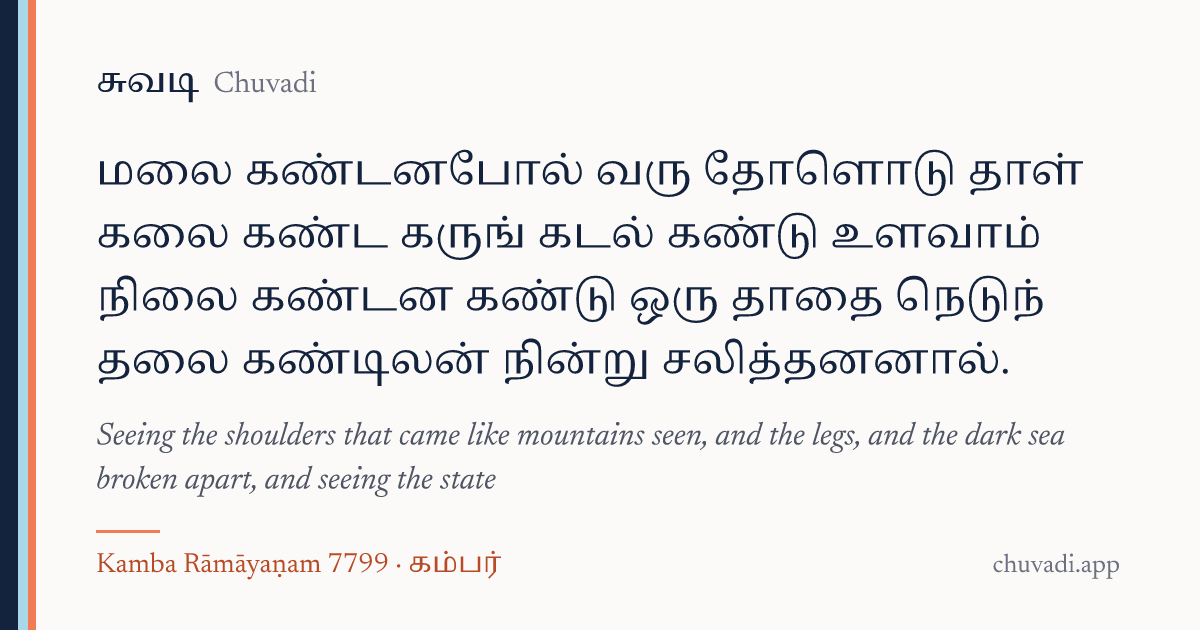
பாடல் · The poem
Tap a word to see its gloss in the commentary and where else it occurs.
பொருள் · Meaning in Tamil
மலை கண்டன போல் வரு தோளொடு - மலையைக் கண்டாற் போன்று (விளங்கி) வருகின்ற தோள்களுடன்; தாள் கலை கண்ட கருங்கடல் கண்டு - தாள்களும் கலைதல் பொருந்திய கருமையான கடலைக் கண்டு; (கும்பகருணன் உடல்) உளவாம் நிலை கண்டன கண்டு - (அவனுக்கு) நேர்ந்துள்ள நிலைமைகளை (மனத்தில்) எண்ணிக் கண்டு; (வருந்திய அதிகாயன்) ஒரு தாதை நெடுந் தலை கண்டிலென் - ஒப்பற்ற தந்தையாகிய (கும்பகருணனது) பெரிய தலையைக் கண்டிலேன் என்று; நின்று சலித்தனனால் - (எண்ணி) நின்று வருந்தினான்.
கலைகண்ட கருங்கடல் - கலைதல் பொருந்திய கருமையான கடல், ஈண்டுக் கும்பகருணன் உடம்பு. தோளும் தாளும் தலையும் அற்ற தாதையின் உடம்பு கண்டு அதிகாயன் வருந்தினான் என்க. சலித்தல் - வருந்துதல்.
ஆங்கிலம் · English translationAI
Translation
- Seeing the shoulders that came like mountains seen, and the legs,
- and the dark sea broken apart, and seeing the state
- they had come to, he could not see the great head
- of the one who was a father to him, and he stood and grieved.
What the poem says
Atikāyaṉ finds Kumpakaruṇaṉ's body, his uncle, whom he regards as a father. The arms lie like mountains and the legs apart, and the trunk is like a dark sea broken up. Seeing how the body has been hacked to pieces, and unable to find the great head anywhere, he stands there grieving.