



கம்பராமாயணம் 7806 · யுத்த 17.35
பாடல் · The poem
Tap a word to see its gloss in the commentary and where else it occurs.
பாட வேறுபாடு · Project Madurai reads
பொருள் · Meaning in Tamil
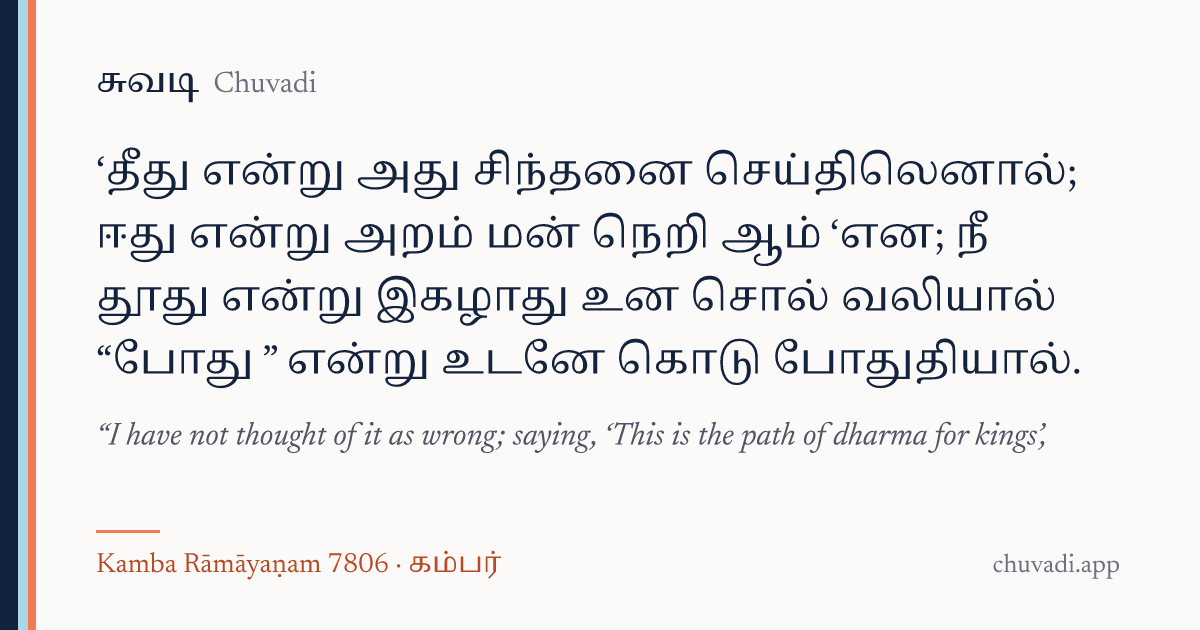
அது தீது என்று சிந்தனை செய்திலெனால் - அவ்வாறு (செய்யக் கருதிய செயல்) தீமை பயப்பது என்று சிந்தனை செய்ய மாட்டேன்; ஈது என்று மன் அறம் நெறி ஆம் என - இதுவே எப்பொழுதும் மன்னர்களுக்கு உரிய அறவழி ஆகும் என்று; நீ தூது என்று இகழாது - நீ தூதுவன் தானே என்று (அவ்விலக்குவன்) இகழாதவாறு; உன சொல் வலியால் - உன் சொல்லாற்றலால்; உடனே போது என்று கொடு போதுதியால் - உடனே உடன் வருவாய் என்று (அவனை இங்கு) அழைத்துக் கொண்டு வருவாய்.
அது - இலக்குவனை முண்டமாக்க எண்ணிய எண்ணம்.
ஆங்கிலம் · English translationAI
Translation
- “I have not thought of it as wrong;
- saying, ‘This is the path of dharma for kings’,
- so that he does not scorn you as a mere envoy, by the power of your words
- say ‘Come’, and at once bring him back with you.”
What the poem says
Atikāyaṉ sees nothing wrong in his plan: challenging an enemy to single combat is the dharma of kings. He tells Mayiṭaṉ to speak forcefully, so that Ilakkuvaṉ will not dismiss him as a mere messenger, and to bring him back at once to fight.