



கம்பராமாயணம் 7816 · யுத்த 17.45
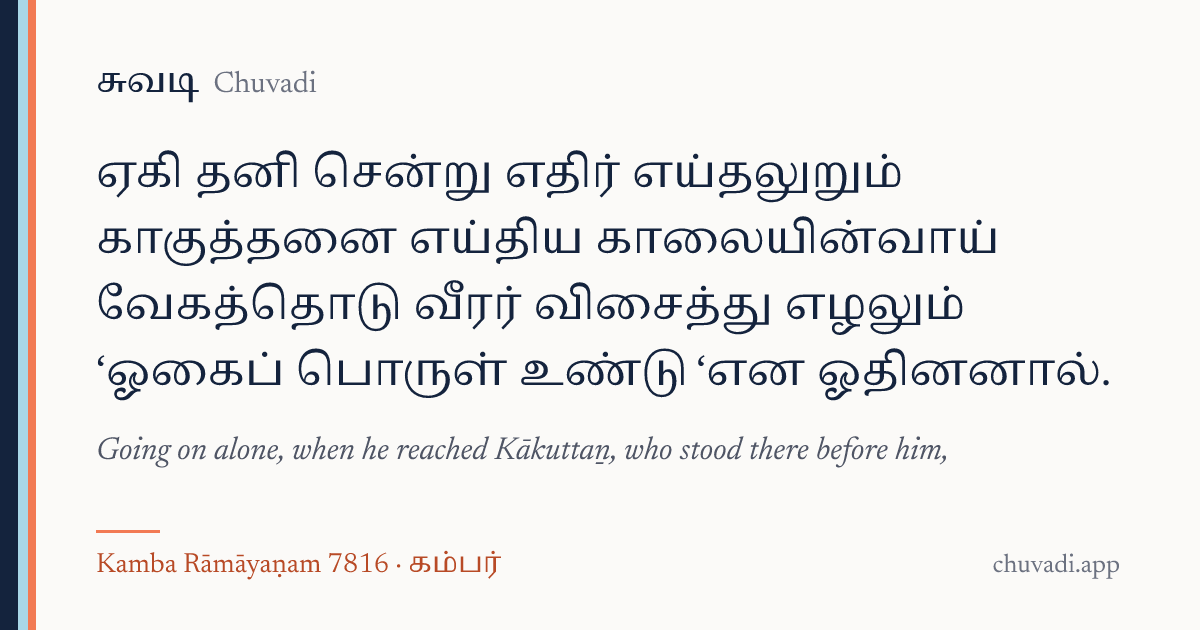
பாடல் · The poem
Tap a word to see its gloss in the commentary and where else it occurs.
பொருள் · Meaning in Tamil
தனி சென்று ஏகி - (மயிடன்) தனியே சென்று போய்; எதிர் எய்தலுறும் காகுத்தனை - தன் முன்பு சேர்ந்த இராமனை; எய்திய காலையின் வாய் - அடைந்த அப்பொழுதில்; வீரர் வேகத்தொடு விசைத்து எழலும் - (வானர) வீரர்கள் சினம் கொண்டு வேகமாக (அவனைப் பற்ற) எழுந்தபோது; ஓகைப் பொருள் உண்டு என ஓதினனால் - (அந்த மயிடன்) (உங்களுக்கு) மகிழ்ச்சிச் செய்தி ஒன்று உண்டு எனக் கூறினான்.
ஓகைப் பொருள் உண்டு என இராமன் வானர வீரரைப் பார்த்துக் கூறுவதாகக் கொள்வாரும் உளர் பற்றப்பட்ட மயிடன் அவர்களால் தனக்கு இடையூறு வரக்கூடாது என எண்ணி இவ்வாறு கூறினான் எனக் கொள்ளலே பொருந்தும். மேலும் தூதுவனாக வந்தவன் தனக்கு ஏற்பட இருந்த துன்பத்தைத் தன் பேச்சாற்றலால் வென்றான் எனக் கொள்ளலாம். 47 ஆம் பாடலில் இராமன் "என் வந்த குறிப்பு” என வினவுவதாக வருதலால் இதை மயிடன் கூற்றாகக் கொள்ளலே நேரிது என்க. ஓகைப்பொருள் - மகிழ்ச்சிச் செய்தி.
ஆங்கிலம் · English translationAI
Translation
- Going on alone, when he reached
- Kākuttaṉ, who stood there before him,
- and the warriors sprang up swiftly against him,
- he said, “There is news to make you glad.”
What the poem says
Mayiṭaṉ goes alone to Irāmaṉ, called Kākuttaṉ as a descendant of Kakutstha. When the monkey warriors leap up to seize him, he calls out that he brings welcome news, a clever stroke to save himself. Some take the words as Irāmaṉ's, but since Irāmaṉ asks his purpose two verses later, it is better read as the envoy's.