



கம்பராமாயணம் 7833 · யுத்த 17.62
பாடல் · The poem
Tap a word to see its gloss in the commentary and where else it occurs.
பொருள் · Meaning in Tamil
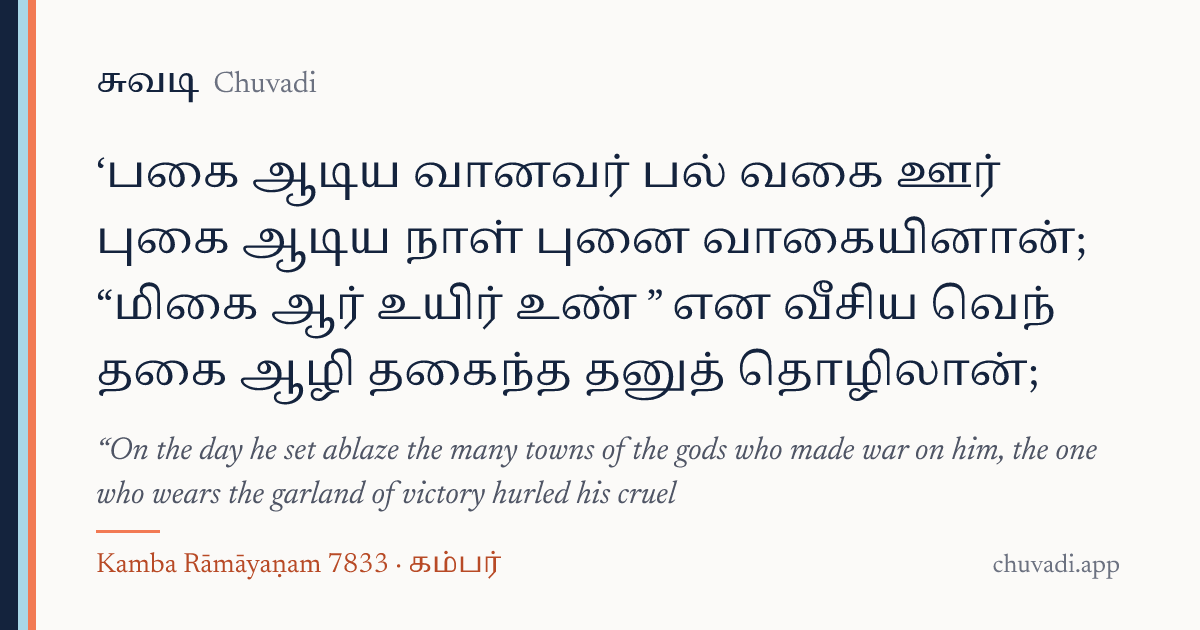
பகை ஆடிய வானவர் பல்வகை ஊர் - (இவ்வதிகாயனோடு) பகைமை கொண்ட தேவர்களின் பல பகுப்புகள் கொண்ட ஊர்களை; புகை ஆடிய நாள் - (இவன்) சுட்டு எரிக்கத் தொடங்கிய காலத்தில்; புனை வாகையினான் - வெற்றிக்குறியாகிய வாகை மாலை அணிந்த திருமால்; மிகை ஆர் உயிர் உண் என வீசிய - (இவனது) தேவையற்ற குற்றமுள்ள இனிய உயிரை அழிப்பாய் என்று வீசிய; வெந்தகை ஆழி தகைந்த தனுத் தொழிலோன் - கொடிய தன்மை பொருந்திய சக்கரப் படையைத் தடுத்த வில்லாற்றல் தொழில் உடையவன்
பல்வகை ஊர் பல பகுப்புக்களைக் கொண்ட ஊர் புனை வாகையினான் - வாகை மாலை புனைந்த திருமால். வெற்றிக் குறியாக வாகை மாலை புனைதலை
இலைபுனை வாகை சூடி இகல் மலைந்து அலை கடல் தானை அரசு அட்டு ஆர்ந்தன்று
என்ற புறப்பொருளின் வெண்பா மாலைச் சூத்திரம் விளக்கும். மிகை - தேவையற்ற, ஆழி - சுதர்சனம் என்னும் பெயருடைய சக்கரம். தகைந்த - தடுத்த.
ஆங்கிலம் · English translationAI
Translation
- “On the day he set ablaze the many towns of the gods who made war on him,
- the one who wears the garland of victory hurled his cruel
- discus, saying ‘Devour his surplus life’;
- and he held it off by the work of his bow.”
What the poem says
When Atikāyaṉ was burning the towns of the gods who opposed him, Viṣṇu, wearing the vākai garland of victory, flung his discus Sudarśana at him, telling it to take his life. Atikāyaṉ stopped the discus with his archery. The vākai garland as a sign of victory is a convention of classical Tamil war poetry.