



கம்பராமாயணம் 7861 · யுத்த 17.90
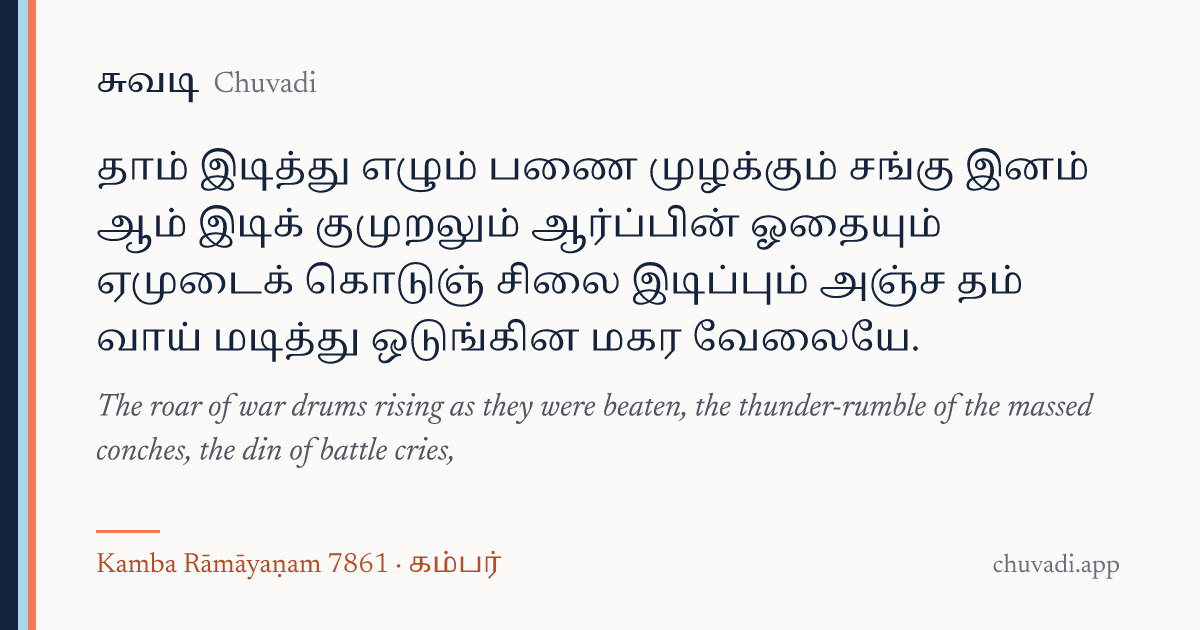
பாடல் · The poem
Tap a word to see its gloss in the commentary and where else it occurs.
பாட வேறுபாடு · Project Madurai reads
பொருள் · Meaning in Tamil
தாம் இடித்து எழும் பணை முழக்கும் - தாம் அடிக்கப் படுவதால் எழுந்த போர் முரசின் ஒலியும்; சங்கு இனம் ஆம் இடிக் குமுறலும் - சங்குகளின் தொகுதிகளில் இருந்து தோன்றுகின்ற இடிபோன்ற குமுறலும்; ஆர்ப்பின் ஓதையும் - (வீரர்கள்) ஆர்த்தலால் தோன்றிய ஓசையும்; ஏமுடைக் கொடுஞ் சிலை இடிப்பும் - பாதுகாவல் உடைய கொடிய வில்லின் (நாணைத் தெறித்தலால்) உண்டான ஓசையும்; அஞ்சி - (ஆகிய பேரொலிகளுக்கு) அஞ்சி; மகர வேலையே தம் வாய் மடித்து ஒடுங்கின - மகர மீன்களைக் கொண்டுள்ள கடல் தம் வாயை மடித்துக் கொண்டு ஒடுங்கின.
பிற ஓசைகளுக்குக் கடலின் ஒலி குறைந்து விட்டதை கடல் அவ்வோசைகளைக் கேட்டு அஞ்சி வாய் மூடி ஒடுங்கியது எனக் கற்பனை செய்கிறார் கம்பர். ஏதுத் தற்குறிப்பேற்ற அணி.
ஆங்கிலம் · English translationAI
Translation
- The roar of war drums rising as they were beaten, the thunder-rumble
- of the massed conches, the din of battle cries,
- and the twang of cruel, guarding bows so terrified
- the seas full of makaras that they shut their mouths and shrank away.
What the poem says
The noise of battle is overwhelming: drums, conches, war cries and the snap of bowstrings. Next to it the ocean's own roar can no longer be heard.
The poet imagines a reason for this: the sea, home of the makara sea monsters, has been frightened into silence, folded its lips and cowered. This is the figure of fancied cause, in which the poet invents a cause for a natural fact.