



கம்பராமாயணம் 787 · பால 12.49
பாடல் · The poem
Tap a word to see its gloss in the commentary and where else it occurs.
பொருள் · Meaning in Tamil
வெய்ய காமன் - கொடுமையுள்ள மன்மதன்; நீடு கொற்ற வில் - நீண்ட வெற்றியுடைய வில்லினால்; வெம் சரங்கள் - கொடிய அம்புகளை; பஞ்சு அரங்கு தீயின் - பஞ்சை அழிக்கும் நெருப்புப் போல; ஆவி பற்ற - என்னுயிரைப் பற்றி நிற்கவும்; நெஞ்சு அரங்க - (அதனால்) என் மனம் சிதையுமாறு; எய்ய - பிரயோகித்தலால்; சஞ்சலம் கலந்த - துன்பம் வந்து கலங்கும்; போது - இப்போது; உய்ய வந்து - (நான்) உயிர் பிழைக்கும்படி என் அருகே வந்து; தையலாரை - (ஆதரவற்ற) பெண்களை; அஞ்சல் அஞ்சல் என்கிலாத - அஞ்சாதீர் அஞ்சாதீர் என்று கூறி அபயம் அளிக்காத; ஆண்மை - ஆண்மை; என்ன ஆண்மையே - எத்தகைய ஆண்மையோ?
வருந்தும் பெண்களை அணுகி அஞ்சல் என்று அபயம் அளிப்பதே ஆண்மைக்கு அழகு. ஆனால், அப்படிச் செய்யாத இப்பிரானது ஆண்மை என்ன ஆண்மை என்று வெறுப்பினால் இயற்பழிக்கின்றாள் சீதை.
ஆங்கிலம் · English translationAI
Translation
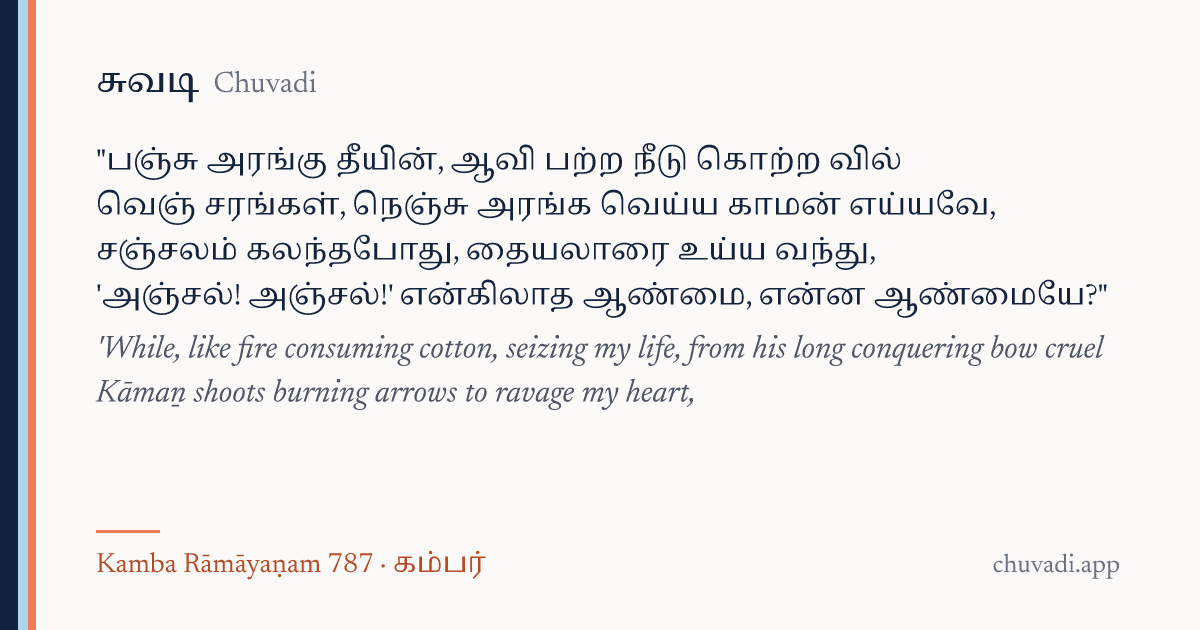
- 'While, like fire consuming cotton, seizing my life, from his long conquering bow
- cruel Kāmaṉ shoots burning arrows to ravage my heart,
- now, when I am in turmoil, not to come and save a woman
- and say "Fear not, fear not!": what kind of manhood is that manhood?'
What the poem says
Cītai's longing turns to reproach. Kāmaṉ, the god of love, keeps shooting his arrows into her, and her life burns away like cotton in fire.
A true hero, she says, comes to the rescue of a woman in distress and tells her not to be afraid. What sort of manliness does Irāmaṉ have, if he leaves her suffering like this? Blaming the beloved out of frustrated love is a recognised mood in Tamil love poetry.