



கம்பராமாயணம் 7912 · யுத்த 17.141
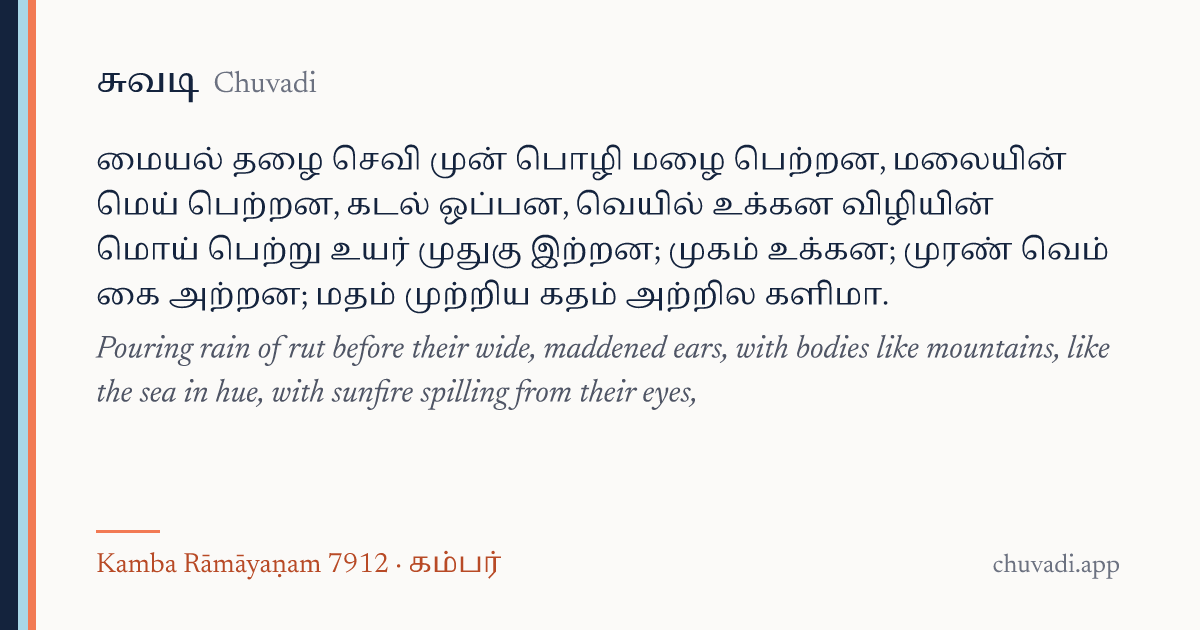
பாடல் · The poem
Tap a word to see its gloss in the commentary and where else it occurs.
பொருள் · Meaning in Tamil
மய்யல் தழை செவிமுன் பொழி மழை பெற்றன - மத மயக்கம் உள்ள தழைத்த (பெரிய) தன் காதுகளின் மூலம் மதநீர் ஆகிய மழையைப் பொழிவனவும்; மலையின் மெய் பெற்றன - மலை போன்ற உடலைப் பெற்றனவும்; கடல் ஒப்பன - கடல் போல் (கருநிறம்) உள்ளனவும்; விழியின் வெயில் உக்கன - கண்களில் சினத்தை வெளியிடுவனவும் ஆகிய வலிமிகு யானைகள்; மொய் பெற்று உயர் முதுகு இற்றன - வலிமை பெற்று உயர்ந்த முதுகு உடைந்தனவும்; முகம் உக்கன - முகம் அழிந்தனவும்; முரண் வெங்கய் அற்றன - மாறுபாடு கொண்ட கொடிய துதிக்கைகள் அற்றனவும் ஆய் இருந்தன எனினும் அவை; கணிதத்து இயல் மதம் முற்றிய - கணத்துக்குக் கணம் மாறுபடும் இயல்புள்ள மதக்களிப்பு மாத்திரம் முற்றி இருந்தன.
மய்யல் - மத மயக்கம். கதமா - கறுவு கொண்ட விலங்கு. கறுவைத்துப் பழி வாங்கல் யானையின் குணங்களில் ஒன்று. எனவே தான் “யானை அறிந்தறிந்தும் பாகனையே கொல்லும்” என்று நாலடியார் குறிப்பிடுகிறது. கணிதத்தியல் - கணத்துக்குக் கணம் மாறும் இயல்பு.
ஆங்கிலம் · English translationAI
Translation
- Pouring rain of rut before their wide, maddened ears, with bodies like mountains,
- like the sea in hue, with sunfire spilling from their eyes,
- they had their high, strong backs broken, their faces shattered, their fierce
- hostile trunks cut off; yet the rutting beasts in full musth did not lose their rage.
What the poem says
The war elephants are described in their full terror: musth streaming like rain past their great flapping ears, bodies like hills, dark as the sea, eyes blazing. Ilakkuvaṉ's arrows break their backs, smash their faces and cut off their trunks, yet their maddened fury does not abate.
The commentary notes that elephants were proverbially vengeful, citing a line from the Nālaṭiyār saying an elephant will knowingly kill even its own keeper.