



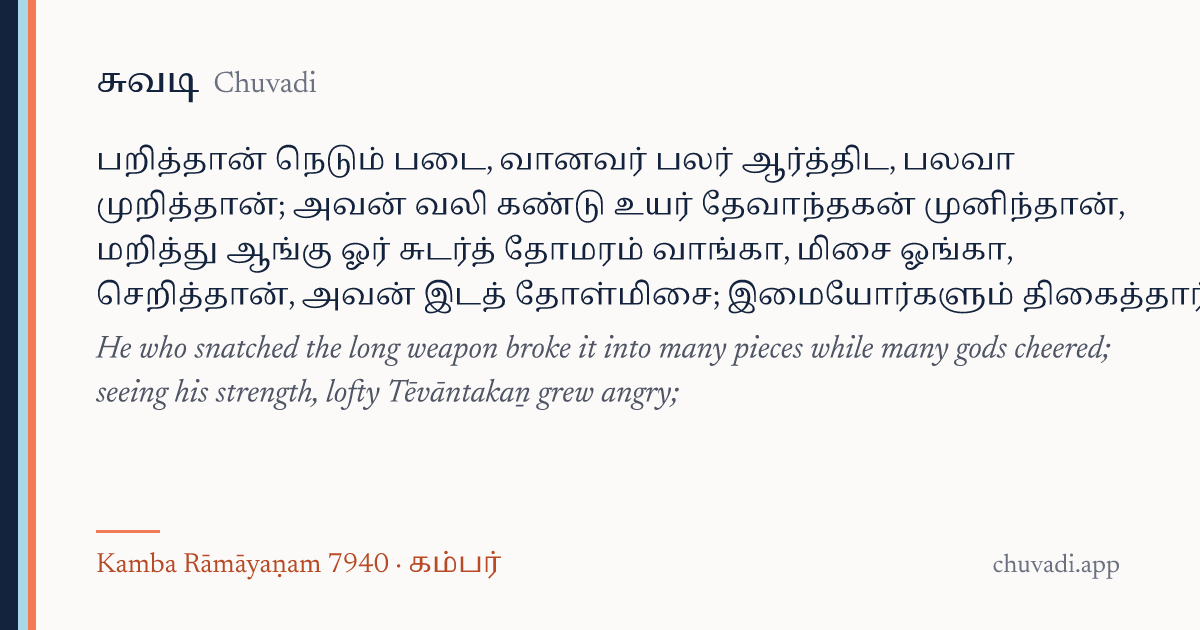
கம்பராமாயணம் 7940 · யுத்த 17.169
பாடல் · The poem
Tap a word to see its gloss in the commentary and where else it occurs.
பாட வேறுபாடு · Project Madurai reads
பொருள் · Meaning in Tamil
நெடும் படை பறித்தான் - (தேவாந்தகன் உடைய) நீண்ட வில்லைப் பிடுங்கியவனாகிய (அனுமன்); பலர் வானவர் ஆர்த்திட - பல தேவர்கள் (மகிழ்ச்சியால்) பேரொலி செய்ய; பலவா முறித்தான் - (அந்த வில்லைப்) பல துண்டுகள் ஆகும்படி முறித்தான்; உயர் தேவாந்தகன் - (வீரத்தில்) சிறந்த தேவாந்தகன்; அவன் வலி கண்டு முனிந்தான் - அந்த அனுமனுடைய வலிமையைக் கண்டு சினந்தவனாய்; ஆங்கு மறித்து ஒரு சுடர்த் தோமரம் வாங்கா மிசை ஓங்கா - அப்போது மீண்டும் ஒரு ஒளி பொருந்திய தோமரம் என்னும் படையை எடுத்து மேல் ஓங்கி; அவன் இடத்தோள் மிசை செறித்தான் - அந்த அனுமனுடைய இடது தோளின் மீது நெருங்க அடித்தான்; இமையோர்களும் திகைத்தார் - (அச்செயல் கண்ட) தேவர்களும் திகைத்தார்கள்.
மறித்து - மீண்டும், தோமரம் - பகைவர் மீது எறியும் நீண்ட உலக்கை போன்ற போர்க் கருவி போலும். 167, 168 ஆகிய இரு பாடல்களும் அந்தாதி அமைப்பைப் பெற்றுள்ளமை காண்க.
ஆங்கிலம் · English translationAI
Translation
- He who snatched the long weapon broke it into many pieces
- while many gods cheered; seeing his strength, lofty Tēvāntakaṉ grew angry;
- in turn he took up a blazing tōmaram, raised it high,
- and drove it into his left shoulder; even the gods were stunned.
What the poem says
Aṉumāṉ snaps the bow into many pieces as the watching gods shout for joy. Furious at this display of strength, Tēvāntakaṉ seizes a gleaming tōmaram, a heavy club-like missile, swings it overhead and smashes it into Aṉumāṉ's left shoulder, leaving even the gods aghast.
This verse begins with the word that ended the last one ("snatched"), a linking device called antāti.