



கம்பராமாயணம் 7948 · யுத்த 17.177
பாடல் · The poem
Tap a word to see its gloss in the commentary and where else it occurs.
பாட வேறுபாடு · Project Madurai reads
பொருள் · Meaning in Tamil
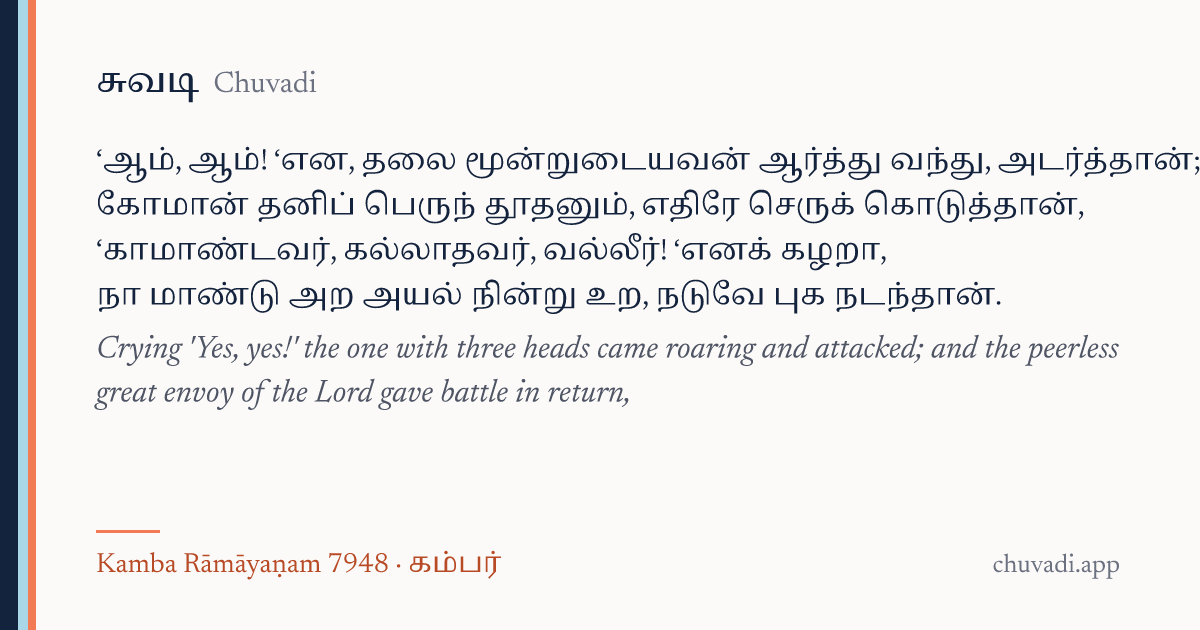
ஆம் ஆம் என தலை மூன்றுடையான் ஆர்த்து வந்து அடர்த்தான் - (அனுமன் சொல் கேட்டு) ஆம் ஆம் என்று சொல்லிக் கொண்டு முத்தலையனான திரிசிரன் பேரொலி செய்து கொண்டு வந்து தாக்கினான்; கோமான் தனிப் பெருந் தூதனும் எதிரே செருக் கொடுத்தான் - தலைவன் ஆகிய இராமனது ஒப்பற்ற பெருந்தூதன் ஆகிய அனுமனும் (அவனுக்கு) எதிராகப் போர் தொடுத்து; காமாண்டவர் கல்லாதவர் வல்லீர் எனக் கழறா - காமத்தால் மிக்கவரும் கல்லாதவரும் ஆகிய (நீங்கள்) (காமம் இல்லாத கற்ற எங்களை) வெல்ல வல்லீராவீரோ என்று சொல்லி; அயல் நின்று உற - தூரத்தில் இருந்து நெருங்கி; நாமாண்டு அற - (கண்டவர்) நாக்கு வற்றி ஒழிய; நடுவே புக நடந்தான் - நடுவில் புகுந்து நடந்தான்.
காமாண்டவர் - காமத்தினால் மிக்கவர்; கல்லாதவர் - கல்வி அறிவிலார். இத்தொடர்க்கு வேறு பொருள் கூறுவதுண்டு. காமாண்டவர் - கா - காத்தல், மாண்டவர் - இல்லாதவர், காத்தல் இல்லாதவர். கல்லாதவர் - தற்காக்கும் தொழிலைக் கல்லாதவர். நாமாண்டு அற - நாக்கு வற்றி ஒழிய; ஈரம் வறளல் அச்சத்தாலாகும். வல்லீர் - இகழ்ச்சிக்குறிப்பு. புலனடக்கமும் கல்வியும் உள்ள எங்களை உங்களால் வெல்ல இயலாது என்பது கருத்து. கிட்கிந்தா கண்டத்தில் இராமன் அனுமனை,
“ஆற்றலும், நிறைவும் கல்வி அமைதியும் அறிவும் என்னும் வேற்றுமை இவனோடு இல்லையாம்”
(கம்ப. 3767) என்றும்,
“கல்லாத கலையும் வேதக் கடலுமே என்னும் காட்சி சொல்லாலே தோன்றிற்று அன்றே”
(கம்ப - 3768) என்றும் புகழும் சொற்களை இங்கு நினைவு கூர்க.
ஆங்கிலம் · English translationAI
Translation
- Crying 'Yes, yes!' the one with three heads came roaring and attacked;
- and the peerless great envoy of the Lord gave battle in return,
- taunting, 'You lustful, unlettered ones, you think you can win!'
- and, closing in from the side, he strode into their midst, so that tongues dried up in fear.
What the poem says
Tiriciraṉ, the three-headed demon, accepts the challenge with a roar and charges. Aṉumāṉ, Irāmaṉ's matchless envoy, meets him, mocking the two demon brothers: how can those ruled by lust and lacking learning hope to defeat the self-controlled and learned? He strides between them, a sight that makes the onlookers' mouths go dry with fear.
The commentary recalls that Irāmaṉ himself, on first meeting Aṉumāṉ, praised his strength, learning and wisdom.