



கம்பராமாயணம் 7953 · யுத்த 17.182
பாடல் · The poem
Tap a word to see its gloss in the commentary and where else it occurs.
பாட வேறுபாடு · Project Madurai reads
பொருள் · Meaning in Tamil
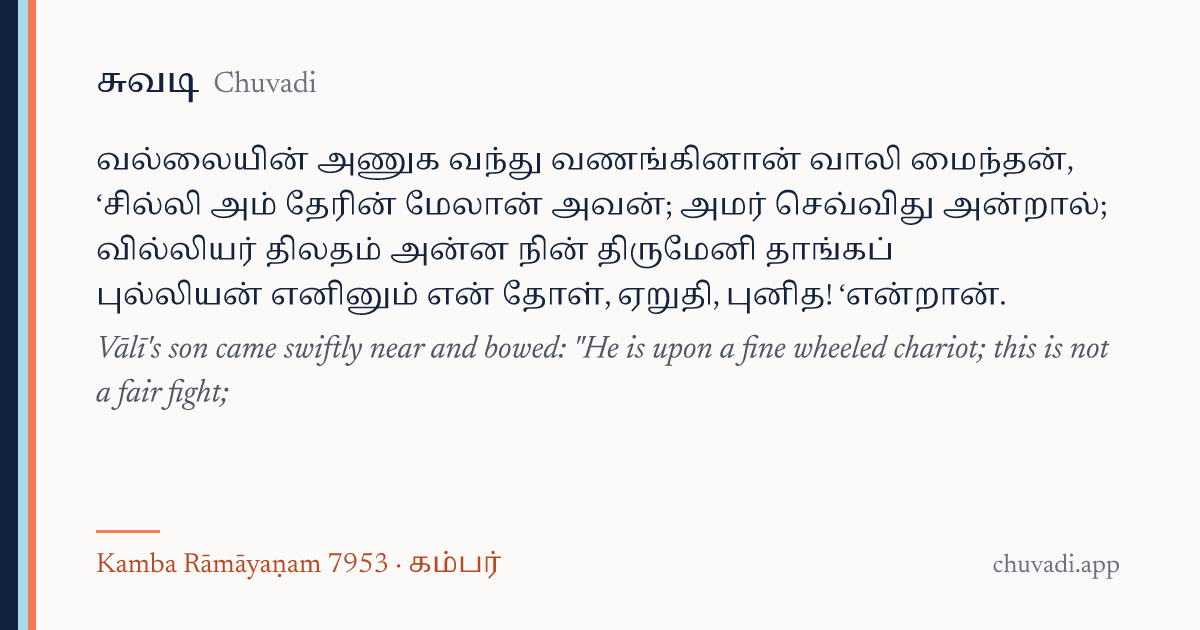
வல்லையின் அணுக வந்து வணங்கினான் வாலி மைந்தன் - விரைவாக (இலக்குவனை) நெருங்கி வந்து வணங்கியவனாகிய வாலிக்கு மகனான அங்கதன்; அவன் சில்லி அம் தேரின் மேலான் - அவ்வதிகாயன் சக்கரம் அமைந்த அழகிய தேரின் மேல் உள்ளான்; அமர் செவ்விது அன்றால் - (அவனோடு நிலத்தில் இருந்து) போரிடுவது செம்மை உடையதல்ல; வில்லியர் திலதம் அன்ன நின் திருமேனி - வில்லாளிகளில் திலகம் போன்ற உனது அழகிய மேனியை; தாங்கப் புல்லியன் எனினும் - தாங்குவதற்கு (ஒவ்வாத) புன்மை உடையவன் என்றாலும்; புனித என் தோள் ஏறுதி என்றான் - தூய்மையானவனே என் தோளின் மீது ஏறுக என்றான்.
வல்லை - விரைவாக, சில்லி - சக்கரம், வணங்கினன் - முற்றெச்சம். முதற்போர்ப் படலத்து அனுமன் செயலை (7232, 7233) இங்கு காண்க.
ஆங்கிலம் · English translationAI
Translation
- Vālī's son came swiftly near and bowed:
- "He is upon a fine wheeled chariot; this is not a fair fight;
- though I am too lowly to bear your sacred body, which is like the forehead mark among bowmen,
- climb onto my shoulders, O Pure One," he said.
What the poem says
Aṅkataṉ, the son of Vālī, hurries to Ilakkuvaṉ and bows. Atikāyaṉ fights from a chariot, he points out, and it is not a fair contest for Ilakkuvaṉ to fight him on foot. Modestly calling himself unworthy to carry the finest of archers, he offers his own shoulders as Ilakkuvaṉ's mount.
The commentary compares the earlier battle, where Aṉumāṉ carried Irāmaṉ in the same way.