



கம்பராமாயணம் 7971 · யுத்த 17.200
பாடல் · The poem
Tap a word to see its gloss in the commentary and where else it occurs.
பொருள் · Meaning in Tamil
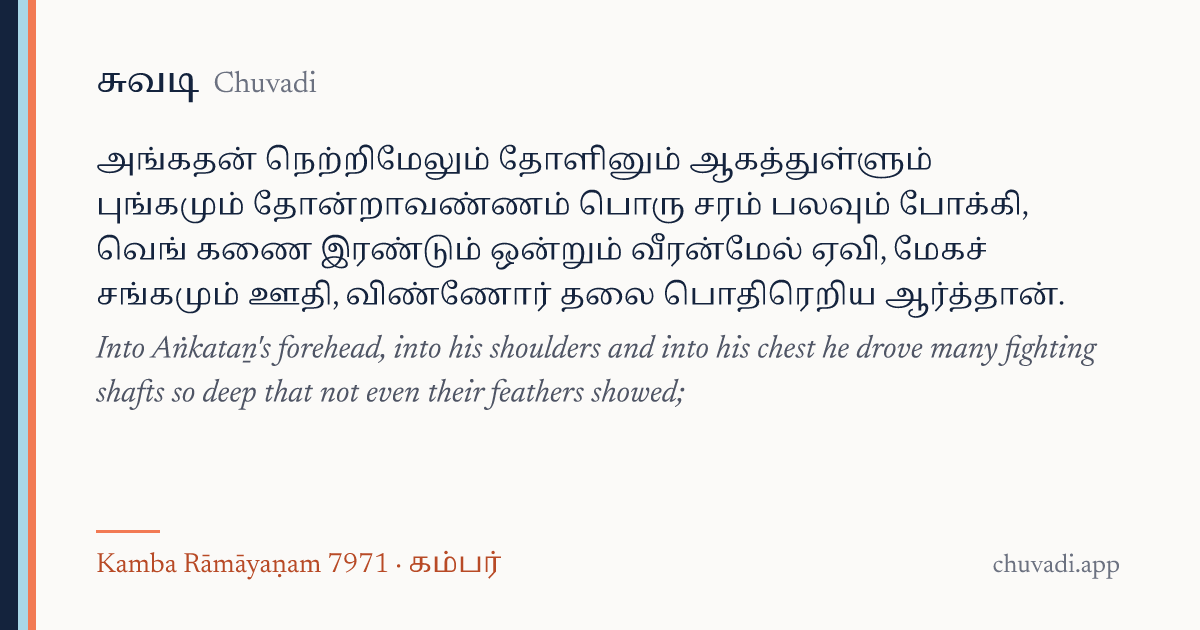
அங்கதன் நெற்றி மேலும் தோளினும் ஆகத்துள்ளும் - (அந்நிலையில் அதிகாயன்) அங்கதனது நெற்றியிலும், தோள்களிலும் மார்பின் உள்ளும்; பொருசரம்பலவும் - பொருகின்ற அம்புகள் பலவற்றைப்; புங்கமும் தோன்றா வண்ணம் போக்கி - நுனிகூட வெளித் தோன்றாதபடி (அழுந்துமாறு) செலுத்தி; வீரன் மேல் வெங்கணை இரண்டும் ஒன்றும் ஏவி - இலக்குவன் மீது கொடிய அம்புகள் மூன்றைச் செலுத்தி; மேகச் சங்கமும் ஊதி - மேகம் போல் ஒலிக்கும் (தன்) சங்கினை ஊதி; விண்ணோர் தலை பொதிரெறிய ஆர்த்தான் - தேவர்களின் தலை நடுக்கமுறுமாறு பேரொலி செய்தான்.
ஆகம் - மார்பு, புங்கம் - கூர்மையான நுனி, பொதிரெறிதல் - நடுக்கமுறுதல், நெற்றி தோள் ஆகம் என மேல் இருந்து கீழ்வரும் வரிசை நயம் காண்க. பொருசரம் - வினைத்தொகை. இரண்டும் ஒன்றும் எண்ணும்மை.
ஆங்கிலம் · English translationAI
Translation
- Into Aṅkataṉ's forehead, into his shoulders and into his chest
- he drove many fighting shafts so deep that not even their feathers showed;
- he shot two fierce arrows and one more at the hero,
- blew his cloud-voiced conch, and roared so that the gods' heads shook.
What the poem says
Atikāyaṉ turns his arrows on Aṅkataṉ, who is carrying Ilakkuvaṉ, and buries many of them in his forehead, shoulders and chest, so deep that not even the tips can be seen. He fires three arrows at Ilakkuvaṉ, then sounds his conch and roars until the gods tremble. The commentary notes the order of the wounds, from forehead down to chest.