



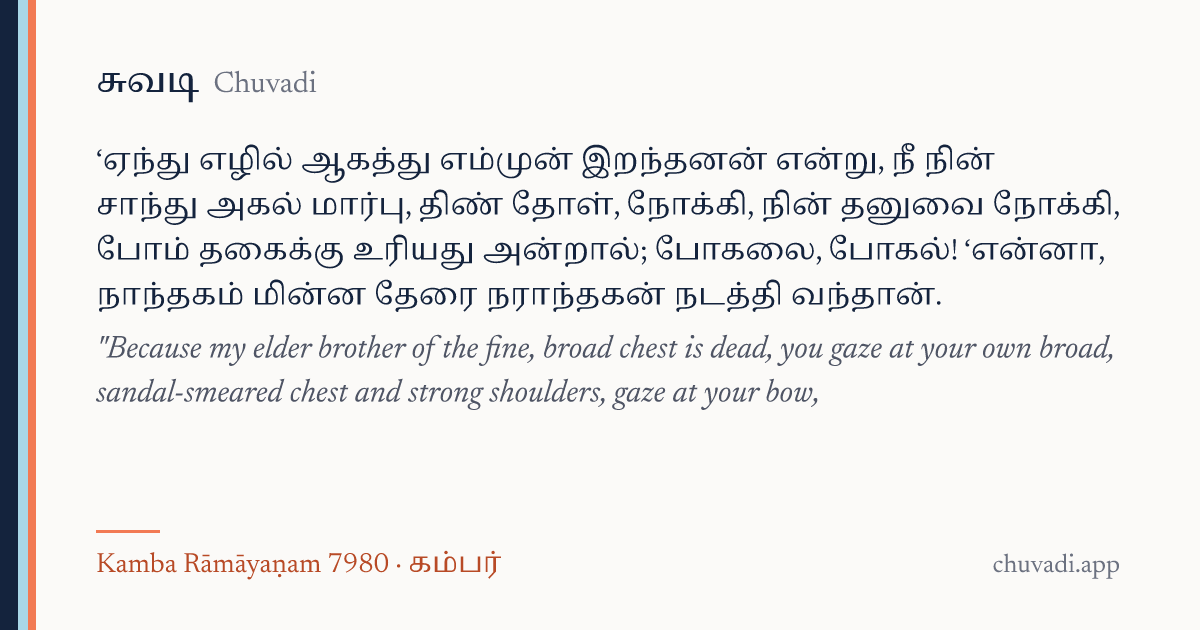
கம்பராமாயணம் 7980 · யுத்த 17.209
பாடல் · The poem
Tap a word to see its gloss in the commentary and where else it occurs.
பொருள் · Meaning in Tamil
எழில் ஏந்து ஆகத்து - அழகு பொருந்திய மார்பினை உடைய; எம்முன் இறந்தனன் - எமக்கு முன்னவன் ஆகிய (அதிகாயன்) இறந்து விட்டான்; என்று - என்று எண்ணி; நீ நின் - நீ உன்னுடைய; சாந்து அகல் மார்பு - சந்தனம் பூசப்பட்ட அகன்ற மார்பினையும்; திண் தோள் நோக்கி - அதற்குப் பிறகு உனது வில்லினையும் பார்த்துக் கொண்டு; போம் தகைக்கு உரியது அன்றால் - போகின்ற தகுதிக்கு உரியது அல்ல (இச்செயல்); போகலை போகல் என்னா - போகாதே போகாதே என்று (இலக்குவனைப் பார்த்துக்) கூறிக்கொண்டு; நராந்தகன் - நராந்தகன் என்பவன்; நாந்தகம் மின்ன - (தனது) வாள் மின்ன; தேரை நடத்தி - தேரைச் செலுத்திக் கொண்டு; வந்தான் - வந்தான்.
தனு - வில், நாந்தகம் - வாள்.
ஆங்கிலம் · English translationAI
Translation
- "Because my elder brother of the fine, broad chest is dead, you
- gaze at your own broad, sandal-smeared chest and strong shoulders, gaze at your bow,
- and think of leaving; it is not fitting for you to go; do not go, do not go!"
- So crying, with his sword flashing, Narāntakaṉ drove his chariot forward.
What the poem says
Another son of Irāvaṇaṉ, Narāntakaṉ, charges forward in his chariot, sword gleaming. He taunts Ilakkuvaṉ: having killed Narāntakaṉ's elder brother Atikāyaṉ, Ilakkuvaṉ is admiring his own chest, shoulders and bow and preparing to leave in triumph, but he will not be allowed to go.