



கம்பராமாயணம் 7981 · யுத்த 17.210
பாடல் · The poem
Tap a word to see its gloss in the commentary and where else it occurs.
பாட வேறுபாடு · Project Madurai reads
பொருள் · Meaning in Tamil
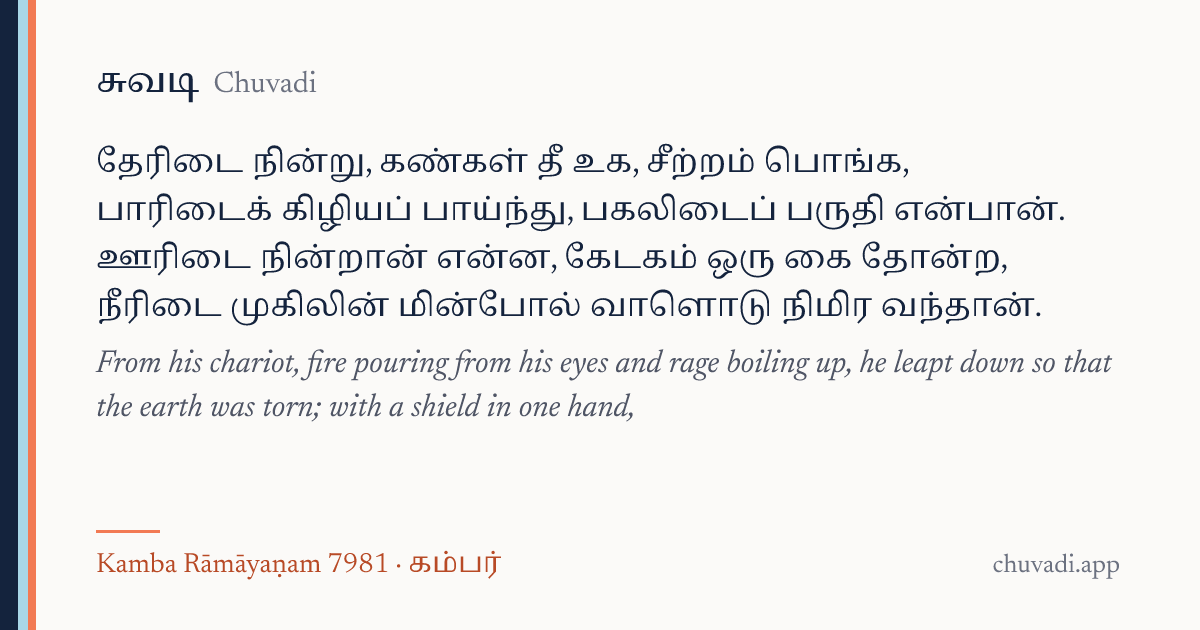
கண்கள் தீ உக - (நராந்தகன் தன்) கண்களில் இருந்து தீ வெளிப்பட; சீற்றம் பொங்க - சினம் மிகப் பொங்கி வர; தேரிடை நின்று - தேரில் இருந்து; பாரிடை கிழியப் பாய்ந்து - நிலவுலகு கிழியுமாறு பாய்ந்து; பகலிடைப் பரிதி என்பான் - பகலில் கதிரவன் என்பவன்; ஊரிடை நின்றான் என்ன - ஊர்கோளிடை நின்றுள்ளான் என்று சொல்லும்படி; கேடகம் ஒருகை தோன்ற - கேடயம் ஒரு கையில் விளங்க; நீருடை முகிலின் மின் போல் - நீருடைய கருமேகத்தின் இடையில் மின்னலைப் போல; வாளொடு நிமிர வந்தான் - வாளோடு நிமிர்ந்து வந்தான்.
ஆங்கிலம் · English translationAI
Translation
- From his chariot, fire pouring from his eyes and rage boiling up,
- he leapt down so that the earth was torn; with a shield in one hand,
- looking as the sun by day would look standing within its halo,
- he came on, tall, with his sword like lightning in a rain-filled cloud.
What the poem says
Narāntakaṉ jumps down from his chariot with such force that the ground splits, his eyes spitting fire. With a round shield in one hand he looks like the sun encircled by a halo, and his sword flashes in his dark form like lightning in a rain cloud.