



கம்பராமாயணம் 7985 · யுத்த 17.214
பாடல் · The poem
Tap a word to see its gloss in the commentary and where else it occurs.
பொருள் · Meaning in Tamil
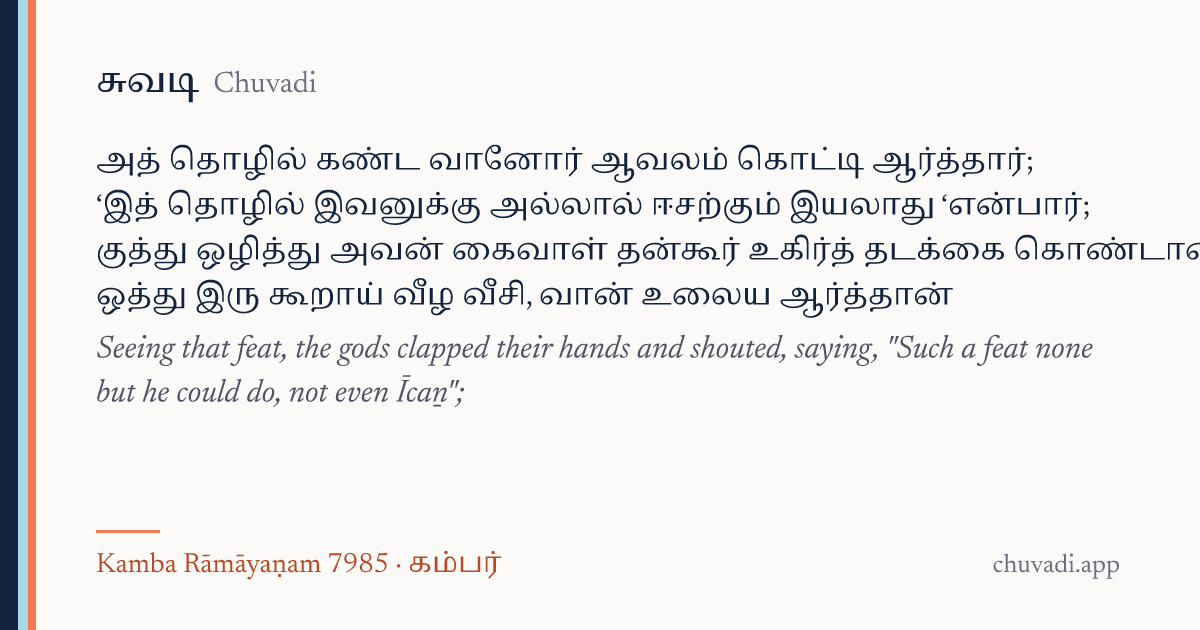
அத்தொழில் கண்டவானோர் - (அங்கதனுடைய) அந்த (வீரத்) தொழிலைக் கண்ட தேவர்கள்; ஆவலம் கொட்டி ஆர்த்தார் - கை கொட்டிப் பேரொலி செய்தார்கள்; இத்தொழில் - இந்த வீரத் தொழிலை; இவனுக்கு அல்லால் - இவனால் செய்ய இயலுமே அல்லாமல்; ஈசற்கும் - சிவபிரானுக்கும்; இயலாது என்பார் - செய்ய இயலாது என்பர்; குத்து ஒழித்து - அங்கதன் (நராந்தகனைக்) குத்துதல் தொழிலை விட்டு; அவன் கைவாள் - அந்த நராந்தகனுடைய கையில் உள்ள வாளைத்; தன் கூர் உகிர்த் தடக்கை கொண்டான் - தனது கூரிய நகங்களை உடைய நீண்ட கையால் (பற்றிப் பிடுங்க) கொண்டானாய்; இரு கூறாய் ஒத்து வீழ வீசி - (அது) இரு துண்டங்களாய் ஒத்து அமைந்து விழுமாறு (ஒடித்து) வீசி; வான் உலைய ஆர்த்தான் - தேவர்கள் கூட நடுங்கும் படியாகப் பேரொலி செய்தான்.
ஆவலம் கொட்டல் - கை கொட்டல், ஈசன் - ஈண்டுச் சிவன்.
ஆங்கிலம் · English translationAI
Translation
- Seeing that feat, the gods clapped their hands and shouted,
- saying, "Such a feat none but he could do, not even Īcaṉ";
- he stopped punching, took the other's sword in his great sharp-clawed hand,
- hurled it down broken into two equal halves, and roared so that heaven shook.
What the poem says
The gods clap and cheer, declaring that no one but Aṅkataṉ, not even Civaṉ, could have done such a thing. Aṅkataṉ stops pummelling Narāntakaṉ, wrenches the sword from his hand with his clawed fingers, snaps it into two equal pieces and flings them away, giving a roar that makes the heavens tremble.