



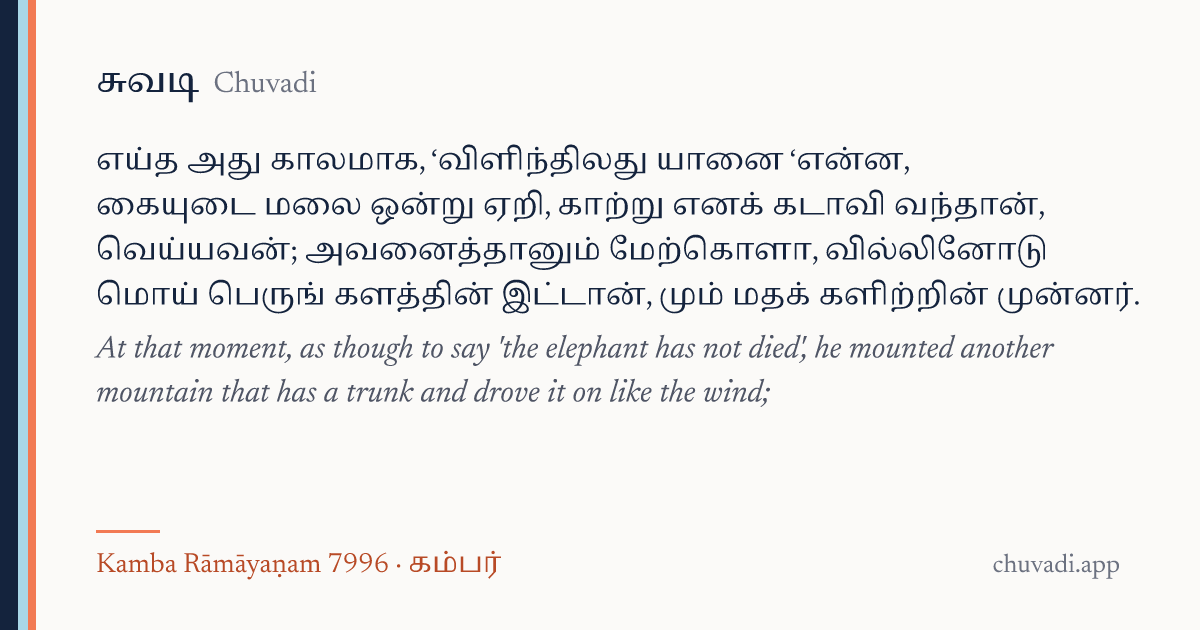
கம்பராமாயணம் 7996 · யுத்த 17.225
பாடல் · The poem
Tap a word to see its gloss in the commentary and where else it occurs.
பொருள் · Meaning in Tamil
எய்தது காலமாக - எய்த அந்தக் காலத்தில்; யானை விளிந்திலது என்ன - (போர் மத்தனுடைய) யானை இறக்க வில்லை என்று; (பார்ப்பவர் எண்ணும்படி) கையுடை மலை ஒன்று ஏறி - (அவ்வரக்கன்) கையுடைய மலையைப் போன்ற வேறு ஒரு யானை மீது ஏறி; காற்று எனக் கடாவி வந்தான் - (அதனைக்) காற்றினைப் போல் (விரைவாகக்) செலுத்திக் கொண்டு வந்தான்; வெய்யவன் - சினம் உடைய நீலன்; அவனை வில்லினோடு தானும் மேற்கொளா - அந்தப் போர் மத்தனை வில்லோடுதான் (யானையில் இருந்து) மேலே தூக்கி; மும்மதக் களிற்றின் முன்னர் - மூன்று மதங்களைப் பொழிகின்ற (அந்த) யானையின் முன்பு; மொய் பெருங் களத்தின் - (வீரர்கள்) நெருங்கிப் போரிடுகிற பெரிய போர்க்களத்தில்; இட்டான் - எறிந்தான்.
விளிதல் - அழிதல், கடாவி - செலுத்தி, மொய்த்தல் - நெருங்கல், மும்மதம் - கன்னமதம் கபோல மதம், பீஜ மதம் என்பன. அந்தாதித் தொடை காண்க.
ஆங்கிலம் · English translationAI
Translation
- At that moment, as though to say 'the elephant has not died',
- he mounted another mountain that has a trunk and drove it on like the wind;
- but the fierce one lifted him bodily, bow and all,
- and hurled him onto the crowded, vast battlefield, before the elephant streaming triple must.
What the poem says
The battle of the Atikāyaṉ episode continues on the second day of fighting before Ilaṅkai. The demon Pōrmattaṉ, whose first elephant has fallen, climbs onto another so that onlookers would think his mount had never died, and charges at the wind's speed. Nīlaṉ, the monkey commander, is the "fierce one" who plucks him off the beast, bow in hand, and throws him down in front of it.
A war elephant in rut was said to pour must from three places, the cheeks, the ears and the genitals; hence "triple must". The verse opens with words echoing the end of the previous one, a linked style the poet uses through this passage.