



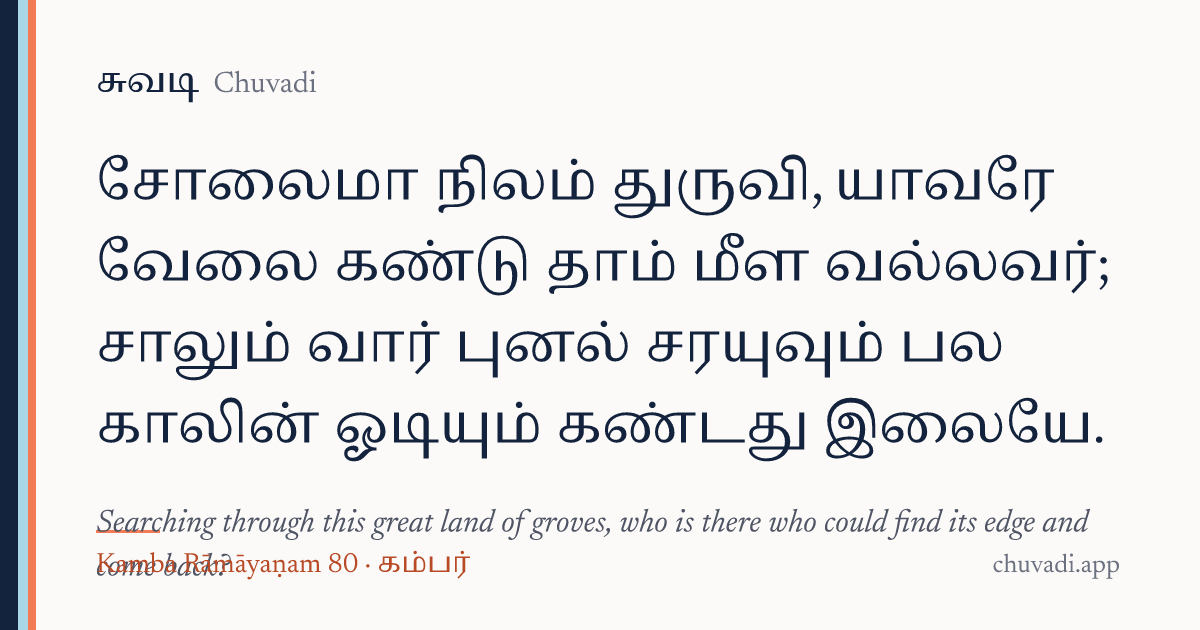
கம்பராமாயணம் 80 · பால 2.60
பாடல் · The poem
Tap a word to see its gloss in the commentary and where else it occurs.
பாட வேறுபாடு · Project Madurai reads
பொருள் · Meaning in Tamil
சோலை மாநிலம் துருவி - சோலைகள் சூழ்ந்த அக் கோசல நாட்டைத் துருவிச் சென்று; வேலை கண்டு தாம் மீள வல்லவர் யாவரே - அதன் எல்லையைக் கண்டு மீண்டுவர வல்லவர் யாருளர்? சாலும் வார்புனல் சரயுவும் - மிகுந்த நீரை உடைய அந்நாட்டு நதியாகிய சரயு நதியும்; காலின் ஓடியும் கண்டதில்லை - பல கால்வாய்களால் ஓடிச் சென்றும் அந்த நாட்டின் எல்லையைக் கண்டதில்லை.
பல கால்களால் ஓடிச் சென்றும் சரயு நதியால் காணமுடியாத அந்த நாட்டின் எல்லையை, இரு கால்களை உடைய மனிதரால் எப்படிக் காணமுடியும்! காணமுடியாது என்பது கருத்து. இரண்டு காலுள்ள உயர்திணைப் பொருள்களாலும் பல கால்களுள்ள அஃறிணைப் பொருள்களாலும் காணக் கூடாத எல்லையுடைய கோசல தேயம்; இராமசாமி நாயுடு உரை விளக்கம்.
வேலை: எல்லை. கால்: வாய்க்கால். துருவி: தேடி. இதனால் கோசல நாட்டின் பரப்பு கூறப்பட்டது.
ஆங்கிலம் · English translationAI
Translation
- Searching through this great land of groves, who
- is there who could find its edge and come back?
- Even the Sarayū, with its full and far-flowing waters, though it ran
- on many legs, never found it.
What the poem says
The poet stresses how vast Kōcalam is. No one could travel through it, reach its frontier and return. Even the Sarayū, which runs through the land on many "legs", has never found its end. The pun is on kāl, which means both "leg" and "channel". If the river could not find the border running on so many legs, how could a human being, who has only two?