



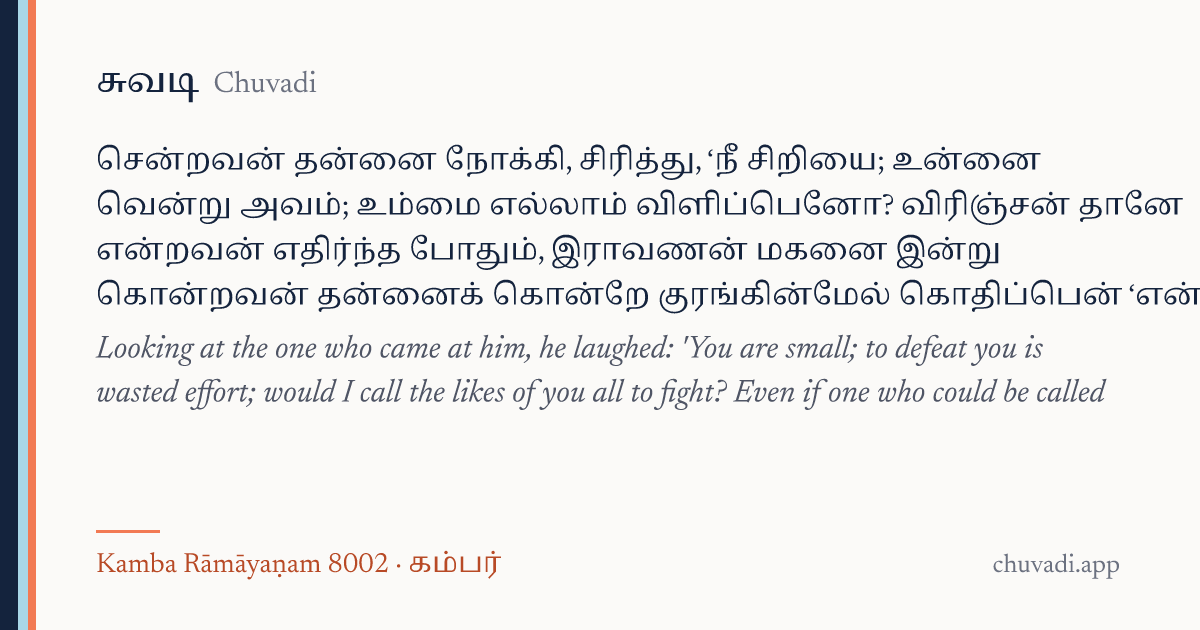
கம்பராமாயணம் 8002 · யுத்த 17.231
பாடல் · The poem
Tap a word to see its gloss in the commentary and where else it occurs.
பொருள் · Meaning in Tamil
சென்றவன் தன்னை நோக்கி - தன்னை நோக்கிச் சென்றவனாகிய (வந்தவனாகிய) இடபனைப் பார்த்து; சிரித்து - வயமத்தன் எள்ளிச் சிரித்து; நீ சிறியை - நீ மிகச் சிறியவன்; உன்னை வென்று அவம் - உன்னை வெல்லுதல் வீண்; உம்மை எல்லாம் விளிப்பெனோ - உங்களைப் போன்ற (சிறியவர்களை) எல்லாம் போருக்கு அழைப்பேனோ (அழையேன் என்றபடி); விரிஞ்சன் தானே என்றவன் - பிரமதேவன்தான் என்று சொல்லத் தக்கவன்; எதிர்ந்த போதும் - (என்னை) எதிர்த்துவந்த போதும்; இன்று இராவணன் மகனை - இப்போது இராவணனது மகனாகிய அதிகாயனைக்; கொன்றவன் தன்னைக் கொன்றே - கொன்றவனாகிய இலக்குவன் தன்னைக் கொன்றபிறகே; குரங்கின் மேல் கொதிப்பென் - குரங்குகளின் மீது சினம் பொங்கப் போரிடுவேன்; என்றான் - என்று கூறினான்.
அவம் - வீண். விரிஞ்சன் - பிரமன்; இது அநுமனைக் குறிப்பிட்டுக் கூறியதாகக் கொள்வர் வை. மு.கோ.
ஆங்கிலம் · English translationAI
Translation
- Looking at the one who came at him, he laughed: 'You are small; to defeat you
- is wasted effort; would I call the likes of you all to fight? Even if one who could be called
- Viriñcaṉ himself came against me, it is the one who today killed Irāvaṇaṉ's son
- that I shall kill first, and only then let my rage loose on the monkeys,' he said.
What the poem says
Vayamattaṉ mocks Iṭapaṉ as too small to be worth fighting. Even if someone as great as Viriñcaṉ, that is Brahmā, the creator, were to face him, his first aim is Ilakkuvaṉ, who has just killed Irāvaṇaṉ's son Atikāyaṉ. Only after avenging Atikāyaṉ will he turn on the monkey host. A commentator suggests the "one who could be called Brahmā" is a veiled reference to Aṉumaṉ.