



கம்பராமாயணம் 8007 · யுத்த 17.236
பாடல் · The poem
Tap a word to see its gloss in the commentary and where else it occurs.
பொருள் · Meaning in Tamil
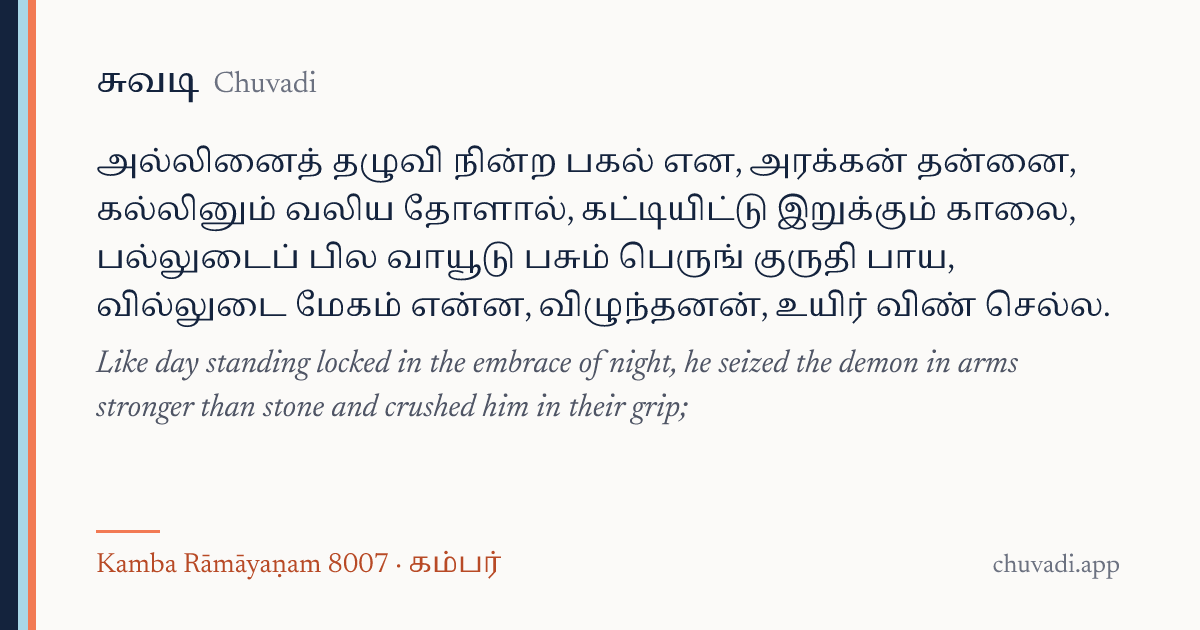
அல்லினைத் தழுவி நின்ற பகல் என - இரவினைத் தழுவி நின்ற பகல் போல; அரக்கன் தன்னை - அரக்கனாகிய வயமத்தன் தன்னை; கல்லினும் வலிய தோளால் - (இடபன் தன்னுடைய) கல்லைக் காட்டிலும் வலிமையுள்ள தோள்களால்; கட்டியிட்டு - கட்டிப்பிடித்து; இறுக்கும் காலை - இறுக்கமாய் நெருக்கிய பொழுது; பல்லுடைப் பில வாயூடு - பல்பொருந்திய குகை போன்ற வாயின் வழியாக; பசும் பெருங்குருதி பாய - பசிய மிகுதியான உதிரம் வெளிப்பட; உயிர் விண் செல்ல - உயிர் வானுலகம் செல்ல; வில்லுடை மேகம் என்ன - வில்லை உடைய மேகம் போல; விழுந்தனன் - நிலத்தில் விழுந்தான்;
அல் - இரவு. அல்லினைத் தழுவி நின்ற பகல் - வயமத்தனைத் தழுவி நின்ற இடபன். பிலம் - குகை. பசுங்குருதி - புதிய இரத்தம். வில்லுடை மேகம் - வயமத்தன்.
ஆங்கிலம் · English translationAI
Translation
- Like day standing locked in the embrace of night, he seized the demon
- in arms stronger than stone and crushed him in their grip;
- from the cavern of his toothed mouth fresh blood poured out in floods,
- and like a cloud that bears a bow he fell, his life departing to the sky.
What the poem says
Iṭapaṉ crushes Vayamattaṉ in a bear hug. The poet pictures the bright monkey clasping the dark demon as day embracing night. Blood bursts from the demon's cave-like mouth and he falls dead.
"A cloud that bears a bow" is a double image: the dark demon still holding his bow, and a rain cloud with a rainbow.