



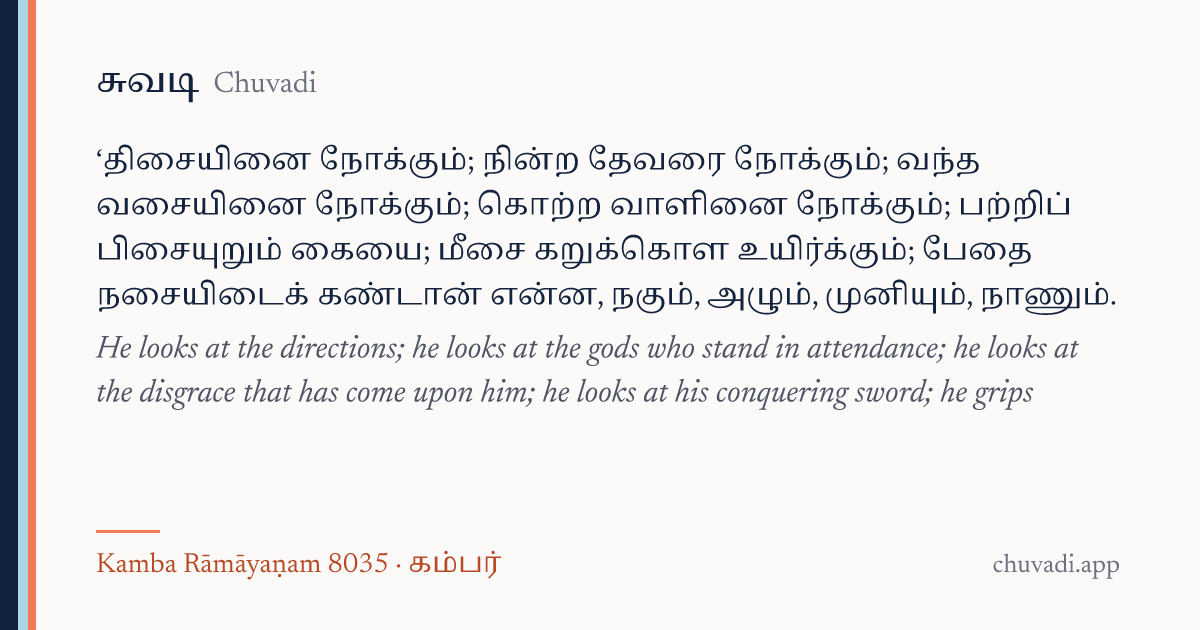
கம்பராமாயணம் 8035 · யுத்த 17.264
பாடல் · The poem
Tap a word to see its gloss in the commentary and where else it occurs.
பாட வேறுபாடு · Project Madurai reads
பொருள் · Meaning in Tamil
திசையினை நோக்கும் - (அதற்குப் பின்னால் இராவணன்) திசைகளை எல்லாம் நோக்குவான்; நின்ற தேவரை நோக்கும் - (தனக்குப் பணிவிடை செய்து நின்ற) தேவர்களை நோக்குவான்; வந்த வசையினை நோக்கும் - (தனக்கு) ஏற்பட்ட பழியினை நோக்குவான்; கொற்ற வாளினை நோக்கும் - வெற்றி பொருந்திய வாளினை நோக்குவான்; கையைப் பற்றிப் பிசையுறும் - கையைப் பற்றிப் பிசைவான்; மீசை கறுக்கொள உயிர்க்கும் - மீசை தீய்ந்து போகும்படி பெருமூச்சு விடுவான்; நசையிடைப் பேதை கண்டான் என்ன - விருப்பம் மிகுதியால் பேதமைக் குணங்களை அடைந்தவன் போல; நகும் அழும் முனியும் நாணும் - நகுவான், அழுவான், முனிவான், நாணுவான்.
ஆங்கிலம் · English translationAI
Translation
- He looks at the directions; he looks at the gods who stand in attendance; he looks at
- the disgrace that has come upon him; he looks at his conquering sword; he grips
- and wrings his hands; he breathes so hot that his moustache is scorched; like a fool
- lost in longing, he laughs, he weeps, he rages, he is ashamed.
What the poem says
A study of Irāvaṇaṉ's agitation, built from short, broken actions. He stares around him, at the captive gods who serve him, at his own shame, at his sword. He wrings his hands and sighs so fiercely that his moustache singes. He swings between laughter, tears, fury and shame like someone infatuated, a hint that his desire for Cītai still governs him.