



கம்பராமாயணம் 8050 · யுத்த 18.3
பாடல் · The poem
Tap a word to see its gloss in the commentary and where else it occurs.
பொருள் · Meaning in Tamil
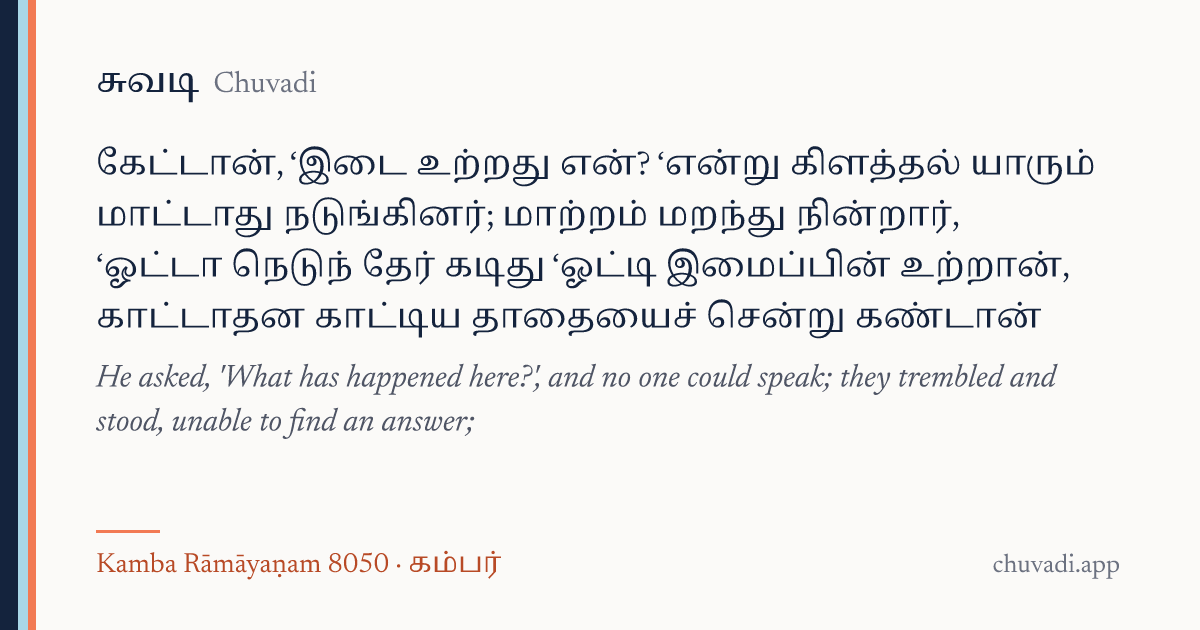
இடை உற்றது என் என்று கேட்டான் - (இந்திரசித்தன்) இவ்விடத்தில் (துன்பத்துக்குரியதாக) நடந்தது என்ன என்று கேட்டான்; யாரும் கிளத்தல் மாட்டாது நடுங்கினர் - அதற்கு யாரும் விடை சொல்ல மாட்டாமல் நடுங்கியவர்களாய்; மாற்றம் மறந்து நின்றார் - (எதை) விடையாகச் சொல்லுவது என்பதை மறந்து நின்றார்கள்; ஓட்டா நெடுந்தேர் கடிது ஓட்டி - (காரணத்தை அறிய விரும்பிய இந்திரசித்தன்) ஓட்டாமலேயே (விரைந்து செல்லும் சிங்கங்கள் பூட்டிய) பெரிய தேரினை விரைவாகச் செலுத்தி; இமைப்பின் உற்றான் - கண்ணிமை அளவு நேரத்தில் போய்ச் சேர்ந்து; காட்டாதன காட்டிய தாதையை - (செயற்கு) அரிய செயல்களை எல்லாம் செய்து காட்டிய (தன்) தந்தையாகிய இராவணனைச் சென்று கண்டான் - சென்று பார்த்தான்.
காட்டாதன காட்டிய தாதை - இராவணன் பிறரால் செய்ய இயலாத கைலாய மலையை எடுத்தல், தன் தலையைத் தானே கொய்து யாழ் வாசித்தல், திக்கு யானைகளோடு போரிடல் போன்ற அருஞ் செயல்களைச் செய்தவன் என்பது குறிக்க. இதுவரை காட்டாதனவாகிய அவல உணர்வை அதிகாயன் இறந்ததால் முகத்தில் காட்டி வருந்தும் தாதையை என்று உரைப்பினும் அமையும்.
ஆங்கிலம் · English translationAI
Translation
- He asked, 'What has happened here?', and no one
- could speak; they trembled and stood, unable to find an answer;
- swiftly driving his great chariot that needs no driver, in the blink of an eye he arrived
- and went to see his father, who had done what no one had ever done.
What the poem says
Nobody dares tell Intiracittaṉ the news. He races to his father in a chariot that runs without being driven, drawn by lions, arriving in an instant. Irāvaṇaṉ is called the one who "showed what none had shown": he lifted Mount Kailāsa, cut off his own head to play the vīṇā for Śiva, and fought the elephants that guard the directions. The phrase can also mean that Irāvaṇaṉ's face now shows a grief it has never shown before.