



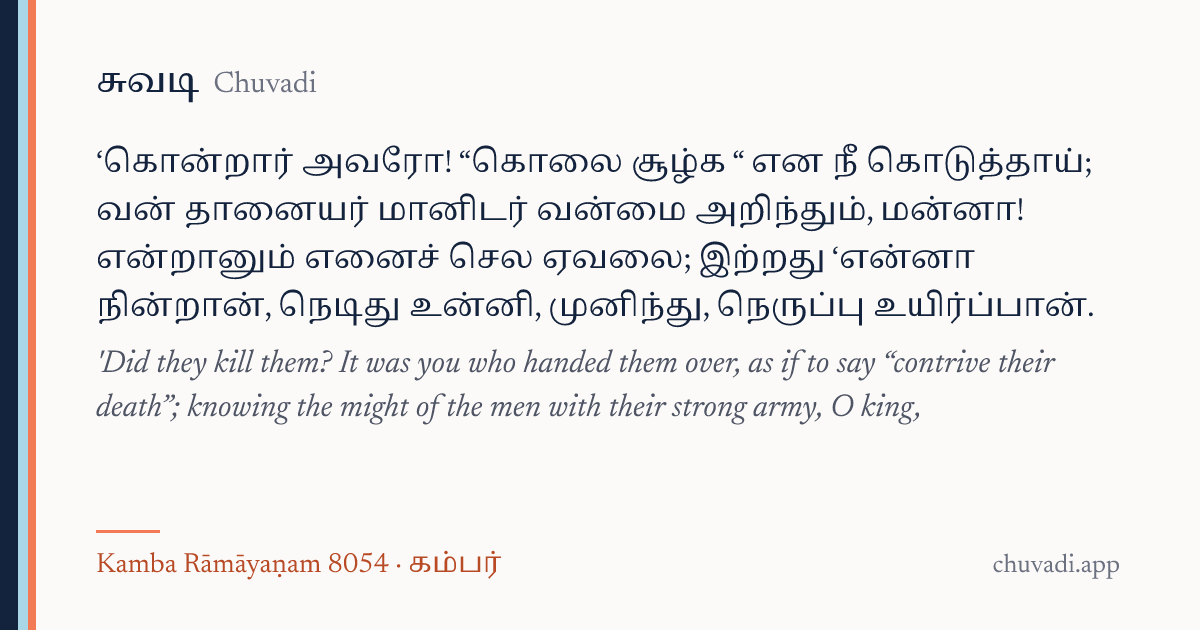
கம்பராமாயணம் 8054 · யுத்த 18.7
பாடல் · The poem
Tap a word to see its gloss in the commentary and where else it occurs.
பொருள் · Meaning in Tamil
மன்னா - (இந்திரசித்தன் இராவணனைப் பார்த்து) அரசனே; வன் தானையர் - வலிமை உள்ள குரங்குப் படையை உடைய; மானிடர் - மனிதர்களாகிய (இராமலக்குவருடைய); வன்மை அறிந்தும் - போர் வலிமையை (நீ முதல் நாள் போரில்) அறிந்திருந்தும்; என்றானும் - (அவர்களோடு போரிட) என்ன காரணத்தாலோ; எனைச் செலஏவலை - என்னை போரிடச் செல் என்று ஏவவில்லை; கொன்றார் அவரோ - (என்னை ஏவாது அவர்களை அனுப்பியதால்) கொன்றவர்கள் அவர்களல்லர்; கொலை சூழ்க என - (இவர்களைக்) கொலை செய்யுங்கள் என்று; நீ கொடுத்தாய் - நீயே (அவர்களிடம் அனுப்பிக்) கொடுத்தாய்; இற்றது என்னா - (அவர்கள் போரில் இறந்து பட்டதால் நம்முடைய வலிமை) குறைந்து விட்டது என்று; நெடிது உன்னி - நீண்ட நேரம் (அது பற்றி) நினைத்து; முனிந்து - சினம் கொண்டு, நெருப்பு உயிர்ப்பான் - நெருப்புப் போல் பெருமூச்சு விட்டுக் கொண்டு; நின்றான் - நின்றான்.
அவர்கள் இறந்ததற்குக் காரணம் உன் பிழை தான் எனக் கூறினான் இந்திரசித்தன் என்க. மன்னா - தந்தை என விளிக்காது மன்னா என விளித்ததாக அமைத்த நயம் காண்க.
ஆங்கிலம் · English translationAI
Translation
- 'Did they kill them? It was you who handed them over, as if to say “contrive their death”;
- knowing the might of the men with their strong army, O king,
- never once did you send me to go; and so they have perished!' With these words
- he stood, brooding long, in fury, breathing fire.
What the poem says
Intiracittaṉ blames his father. Irāvaṇaṉ had already seen in the first day's fighting how strong Irāmaṉ, Ilakkuvaṉ and their army were. Yet instead of sending his best warrior, Intiracittaṉ himself, he sent the young princes, which was as good as handing them over to be killed. The commentary points out that the son addresses Irāvaṇaṉ coldly as "king" rather than "father".