



கம்பராமாயணம் 8068 · யுத்த 18.21
பாடல் · The poem
Tap a word to see its gloss in the commentary and where else it occurs.
பொருள் · Meaning in Tamil
ஏயாத் தனிப்போர் வலி காட்டிய இந்திரன் தன் - (அத்தேர்) ஒப்பில்லாத சிறந்த போர் வலிமையைக் காட்டிப் (போரிட்ட) இந்திரன் தன்னுடைய; சாயாப் பெருஞ்சாய் கெட - அழியாத பெரு வலிமை அழியும்படியாக; தாம்புகளால் தடந்தோள் போய் ஆர்த்தவன் - கயிறுகளால் (மாயைப் பாசத்தால்) (அந்த இந்திரனுடைய) அகன்ற தோள்களைப் (போரில்) சென்று கட்டிய (வீரன்); வந்தனன் வந்தனன் என்று - வந்தான் வந்தான் என்று; பூசல் பேய் ஆர்த்து எழுந்து ஆடு - பேரொலியுடைய பேய்கள் இரைத்து எழுந்து ஆடுகிற; நெடுங்கொடி பெற்றது அம்மா - பெரிய கொடியைப் பெற்றது.
இந்திரனை மாயைப் பாசத்தால் கட்டி வென்ற வீரனாகிய இந்திரசித்தனது கொடி பேய்க் கொடி என்பது இப்பாடலால் தெரிகிறது.
ஆங்கிலம் · English translationAI
Translation
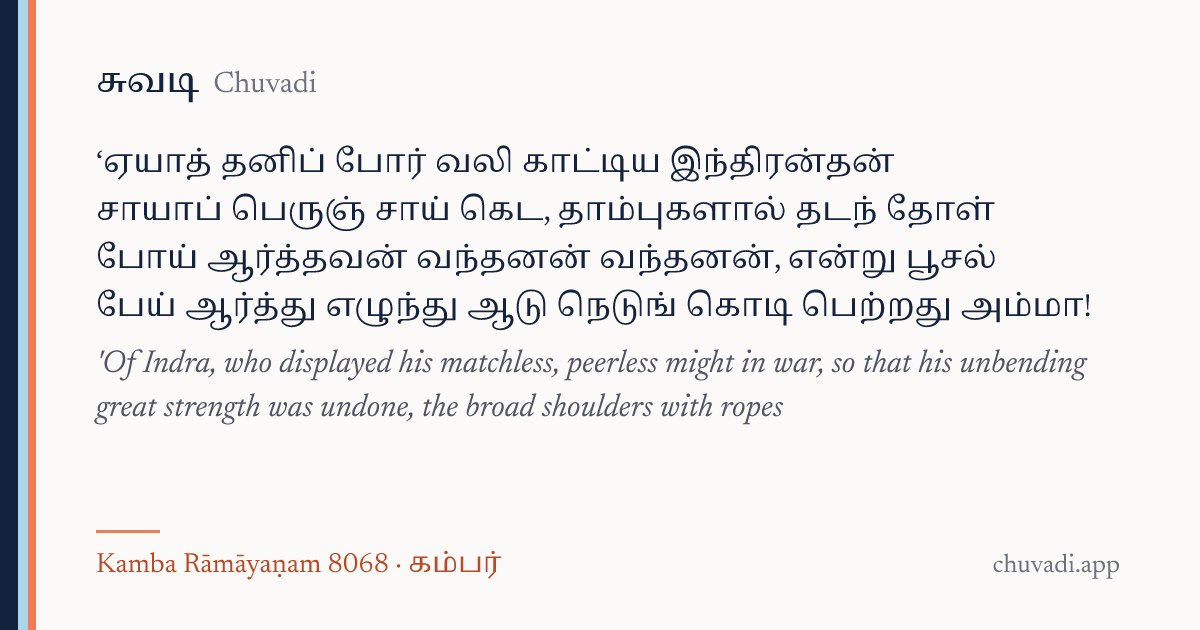
- 'Of Indra, who displayed his matchless, peerless might in war,
- so that his unbending great strength was undone, the broad shoulders with ropes
- he went and bound: he has come, he has come!' Crying so, with clamour,
- ghouls rose shouting and danced upon the tall banner it bore!
What the poem says
The banner of Intiracittaṉ's chariot shows ghouls. As he rides out they seem to leap up, dancing and yelling, "Here he comes!", celebrating the warrior who once tied up Indra with magic ropes after the god had fought his hardest. The commentary notes that the verse tells us his emblem is the ghoul banner.