



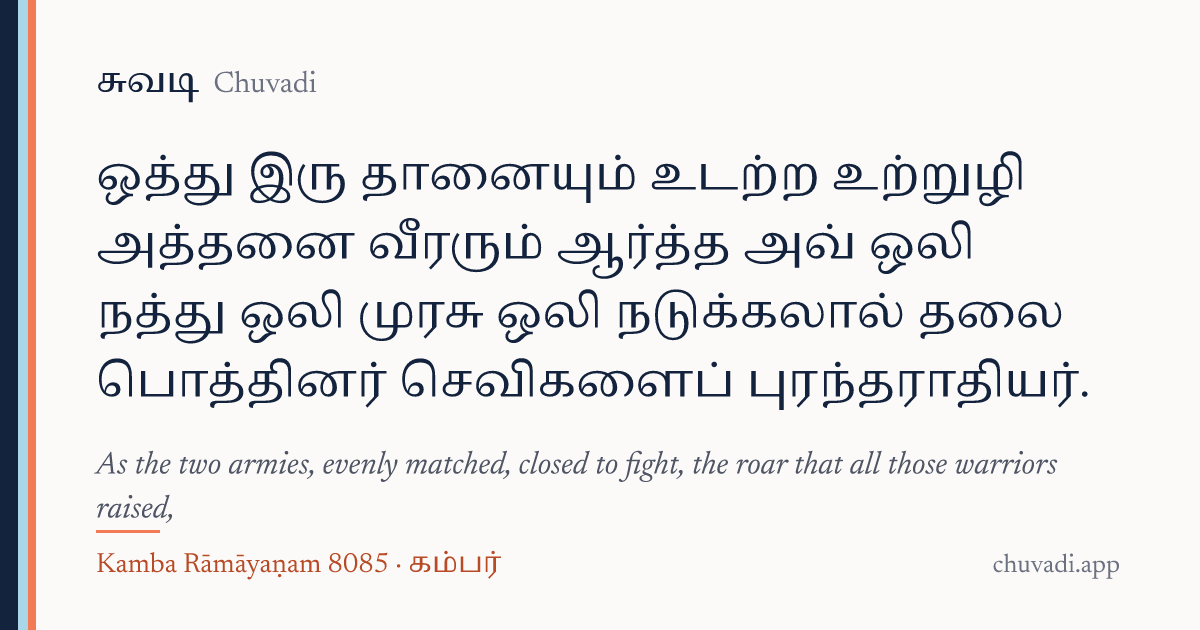
கம்பராமாயணம் 8085 · யுத்த 18.38
பாடல் · The poem
Tap a word to see its gloss in the commentary and where else it occurs.
பொருள் · Meaning in Tamil
(போர் காணவந்த) இந்திரன் முதலிய தேவர்கள்; இரு தானையும் - இரு பக்கத்துப் படைகளும்; ஒத்து - ஒப்பாக; உடற்ற உற்றுழி - போர் செய்ய நெருங்கிய போது; அத்தனை வீரரும் - அவ்விரு படைகளில் உள்ள எல்லா வீரர்களும் ஆர்த்த அவ்ஒலி - (எழுப்பிய) பேரோசையாகிய அந்த ஒலியும்; நத்து ஒலி - சங்கு ஒலியும்; முரசு ஒலி - முரசு ஒலியும்; தலை நடுக்கலால் - தலையை நடுங்கச் செய்தலால்; செவிகளை பொத்தினர் - (அச்சத்தால் தங்கள்) காதுகளைக் கைகளால் மூடிக் கொண்டார்கள்.
உடற்றுதல் - போரிடுதல். நத்து - சங்கு, புரந்தரன் - (பகைவர்) பட்டணங்களைப் பிளப்பவன். நத்து - நந்து என்பதன் வலித்தல் விகாரம்.
ஆங்கிலம் · English translationAI
Translation
- As the two armies, evenly matched, closed to fight,
- the roar that all those warriors raised,
- the blare of the conches and the beat of the drums so shook their heads
- that Purantaraṉ and the other gods stopped their ears.
What the poem says
When the two armies collide, the shouting of the soldiers, the conches and the war drums are so deafening that the gods watching from above clap their hands over their ears. Purantaraṉ, "destroyer of cities", is a title of Indra.