



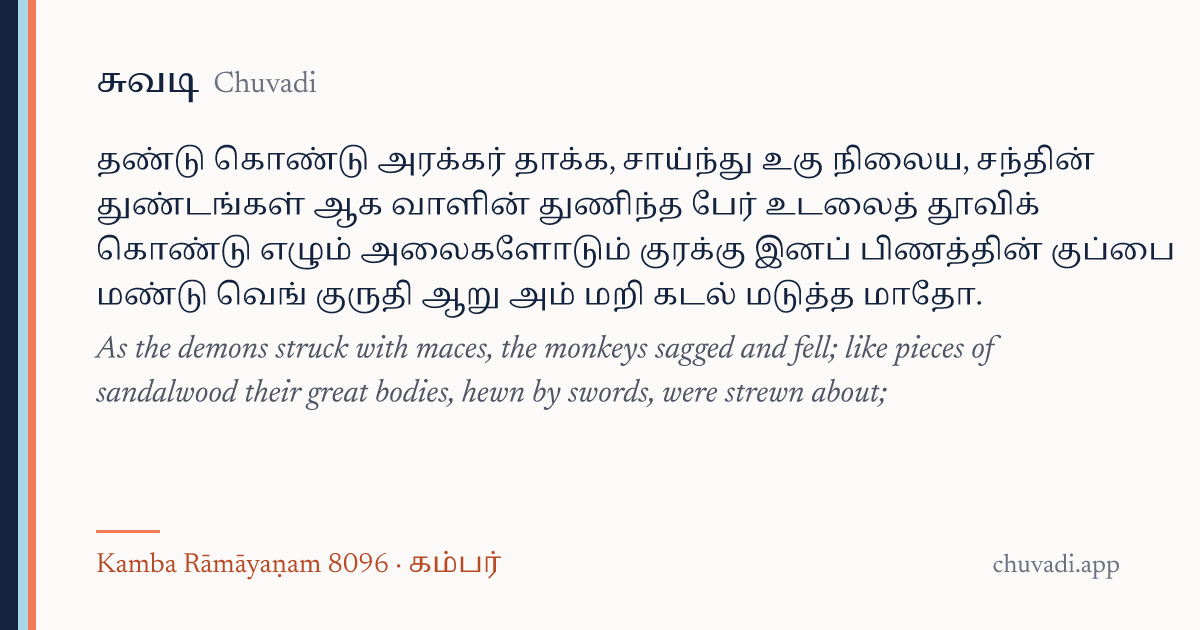
கம்பராமாயணம் 8096 · யுத்த 18.49
பாடல் · The poem
Tap a word to see its gloss in the commentary and where else it occurs.
பாட வேறுபாடு · Project Madurai reads
பொருள் · Meaning in Tamil
அரக்கர் தண்டு கொண்டு தாக்க - அரக்க வீரர்கள் கதைகளைக் கொண்டு தாக்கியதனால்; சாய்ந்து உகு நிலைய - சாய்ந்து விழுகின்ற தன்மையுடைய (குரக்கு வீரர்களின் உடம்புகள்); சந்தின் துண்டங்கள் ஆக - சந்தன மரத்தின் துண்டுகளாக, வாளின் துணிந்த பேர் உடலை - அவர்களது வாட்களால் துண்டு பட்டுச் சிதறிக் கிடந்த பெரிய உடம்புகளை; தூவி - (பல இடங்களில்) சிதற விட்டு; கொண்டு எழும் அலைகளோடும் - மோதி எழும் அலைகளோடு; குரக்குஇனப் பிணத்தின் குப்பை - குரங்குக் கூட்டங்களின் பிணக் கூட்டங்களின் மிகுதியிலிருந்து; மண்டு வெங்குருதி ஆறு - நெருங்கிப் பெருகிய இரத்த ஆறு; அம் மறிகடல் மடுத்த மாதோ - அந்த அலைகள் மடங்கி வரும் கடலையும் நிறைத்து விட்டன.
சந்தின் துண்டு - நிறத்தால் குரங்குகளின் உடலுக்கு உவமை. அரக்கர் தண்டாலும் வாளாலும் வானரப் படைகளைச் சிதைத்தனர் என்க.
ஆங்கிலம் · English translationAI
Translation
- As the demons struck with maces, the monkeys sagged and fell; like pieces of sandalwood
- their great bodies, hewn by swords, were strewn about;
- and with the waves that rose and carried them, from the heaps of monkey dead
- the crowding rivers of hot blood poured into that wave-tossed sea.
What the poem says
The demons, with maces and swords, cut down the monkeys. The bodies of the slain monkeys, pale like sandalwood logs, are scattered over the field. So much blood flows from the heaps of their dead that it runs in rivers down to the ocean, carrying the bodies on its waves.