



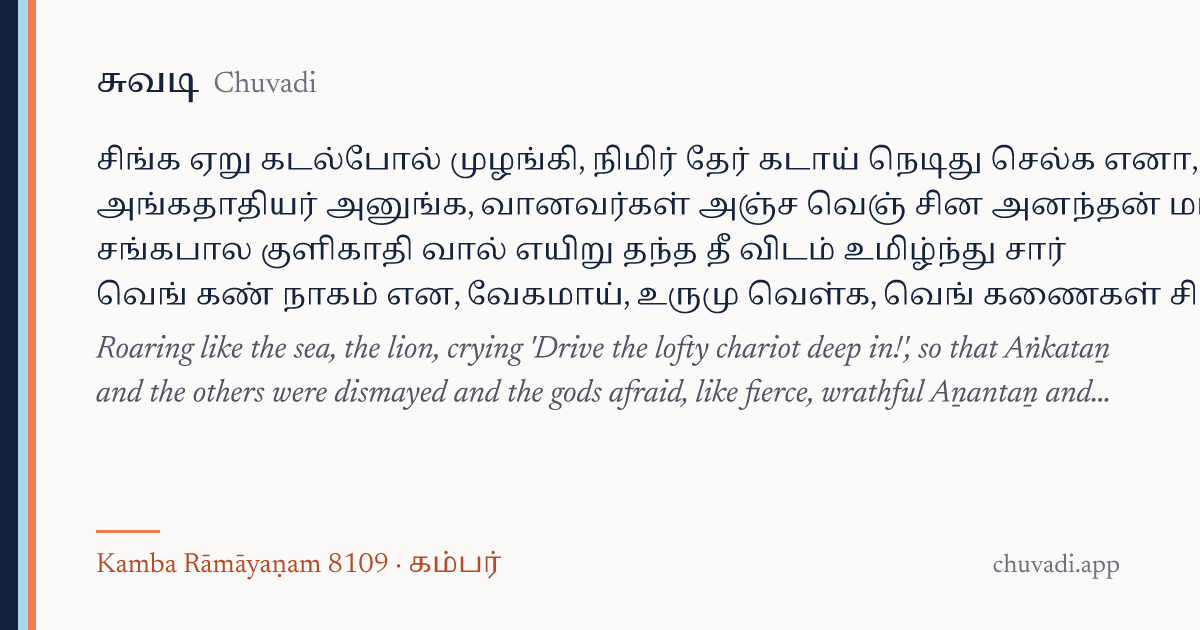
கம்பராமாயணம் 8109 · யுத்த 18.62
பாடல் · The poem
Tap a word to see its gloss in the commentary and where else it occurs.
பொருள் · Meaning in Tamil
சிங்க ஏறு - ஆண்சிங்கம் போன்றவனாகிய இந்திரசித்தன்; கடல் போல் முழங்கி - கடல் போலப் பேரொலி செய்து; நிமிர் தேர் - பெரிய உயர்ந்த தேரைக்; கடாய் நெடிது செல்க எனா - செலுத்திப் (பகைப்படையுள்) நீண்ட தூரம் செல்க என்று (தேர்ப்பாகனிடம் கூறி); அங்கதாதியர் அனுங்க - அங்கதன் முதலிய வானரர் மனம் வருந்தவும்; வானவர்கள் அஞ்ச - தேவர்கள் அஞ்சவும்; உருமுவெள்க - இடிகளும் (அம்பின் கொடுமை கண்டு ஈடாகோம் என) வெட்கம் அடையவும்; வால் எயிறு - ஒளி பொருந்திய பற்கள்; தந்த தீ விடம் உமிழ்ந்து சார் - வெளிப்படுத்துகிற கொடிய தீப்போன்ற நஞ்சைக் கக்கிக்கொண்டு வருகின்ற; வெஞ்சின அனந்தன் - கொடிய சினத்தை உடைய அனந்தன்; மாச்சங்க பால - பெரிய சங்க பாலன்; குளிகாதி வெங்கண் நாகம் என - குளிகன் முதலிய கொடிய கண்களை உடைய நாகங்கள் என்று கூறும்படியாக; வேகமாய் - விரைவாக; வெங்கணைகள் சிந்தினான் - கொடிய அம்புகளைச் செலுத்தினான்.
ஆங்கிலம் · English translationAI
Translation
- Roaring like the sea, the lion, crying 'Drive the lofty chariot deep in!',
- so that Aṅkataṉ and the others were dismayed and the gods afraid, like fierce, wrathful Aṉantaṉ and great
- Caṅkapālaṉ, Kuḷikaṉ and the other cruel-eyed serpents that come spitting the fiery poison their bright fangs yield,
- swiftly, so that thunder itself was shamed, he scattered his cruel arrows.
What the poem says
Intiracittaṉ orders his charioteer to drive deep into the enemy and showers arrows on the monkeys. His arrows are like the great serpents of myth, Aṉantaṉ, Caṅkapālaṉ, Kuḷikaṉ and the rest, spitting fiery venom. They are so fast and deadly that thunderbolts are ashamed to compete. Aṅkataṉ and the monkey chiefs are shaken and the watching gods afraid.