



கம்பராமாயணம் 811 · பால 13.7
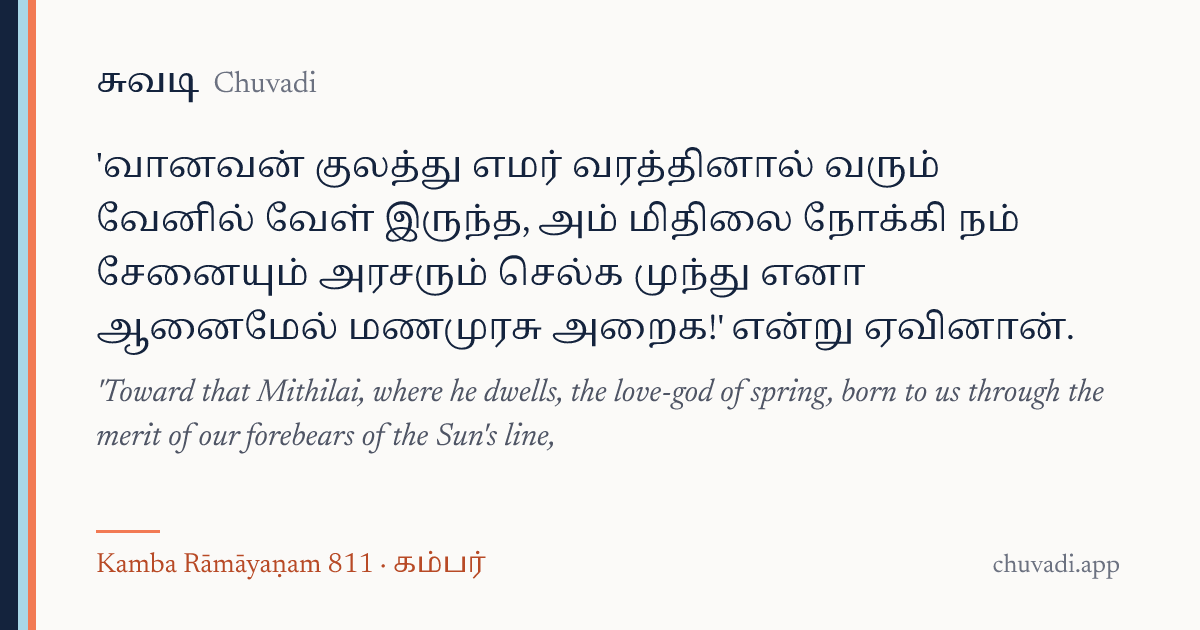
பாடல் · The poem
Tap a word to see its gloss in the commentary and where else it occurs.
பொருள் · Meaning in Tamil
வானவன் குலத்து - சூரிய குலத்தில் தோன்றிய; எமர் வரத்தினால் - எம்முன்னோர்கள் செய்த புண்ணியப் பயனாக; வரும் - பிறந்த; வேனில் வேள் - மன்மதனை ஒத்த இராமன்; இருந்த - இருந்த; அம் மிதிலை நோக்கி - அந்த மிதிலை நகரை நோக்கி, நம் சேனையும் - நம் படைகளும்; அரசரும் - அரசகுமாரரும்; முந்து செல்க என - முன்னே செல்க என்று; ஆனைமேல் - யானையின் மேல் வைத்து; அணிமுரசு - அழகிய மண முரசு; அறைக - (வள்ளுவர்) முழக்கட்டும்; என்று ஏவினான் - என்று (தசரதன்) கட்டளையிட்டான்.
வானவன் - வானத்திலே உலாப் போகின்றவன் - கதிரவன். மன்மதன் உள்ள இடங்களில் எல்லாம் வசந்தனும் கூடவே இருப்பானாதலின் “வேனில் வேள்” என்றார் அது போலவே இராமனைப் பிரியாமல் இலக்குவன் இருக்கும் நிலையை உணர்த்துகின்றார். மணம் முதலிய மங்கல நிகழ்ச்சிகளை வள்ளுவர் யானைமேல் முரசை வைத்து அதை முழக்கி ஊருக்கு அறிவித்தல் மரபு.
ஆங்கிலம் · English translationAI
Translation
- 'Toward that Mithilai, where he dwells, the love-god of spring, born to us
- through the merit of our forebears of the Sun's line,
- let our army and our princes go on ahead,' he said,
- 'and let the wedding drum be beaten from an elephant's back!' So he commanded.
What the poem says
Tacarataṉ orders the march to Mithilā. Irāmaṉ, he says, is a gift earned by the merit of the ancestors of the solar dynasty, and as handsome as the god of love; the phrase "love-god of spring" also hints at Ilakkuvaṉ, since the love god is always accompanied by Spring, as Irāmaṉ is by his brother.
The army and princes are to go ahead, and the royal herald is to announce the wedding by beating the drum from elephant-back, the customary way of proclaiming auspicious news.