



கம்பராமாயணம் 8115 · யுத்த 18.68
பாடல் · The poem
Tap a word to see its gloss in the commentary and where else it occurs.
பொருள் · Meaning in Tamil
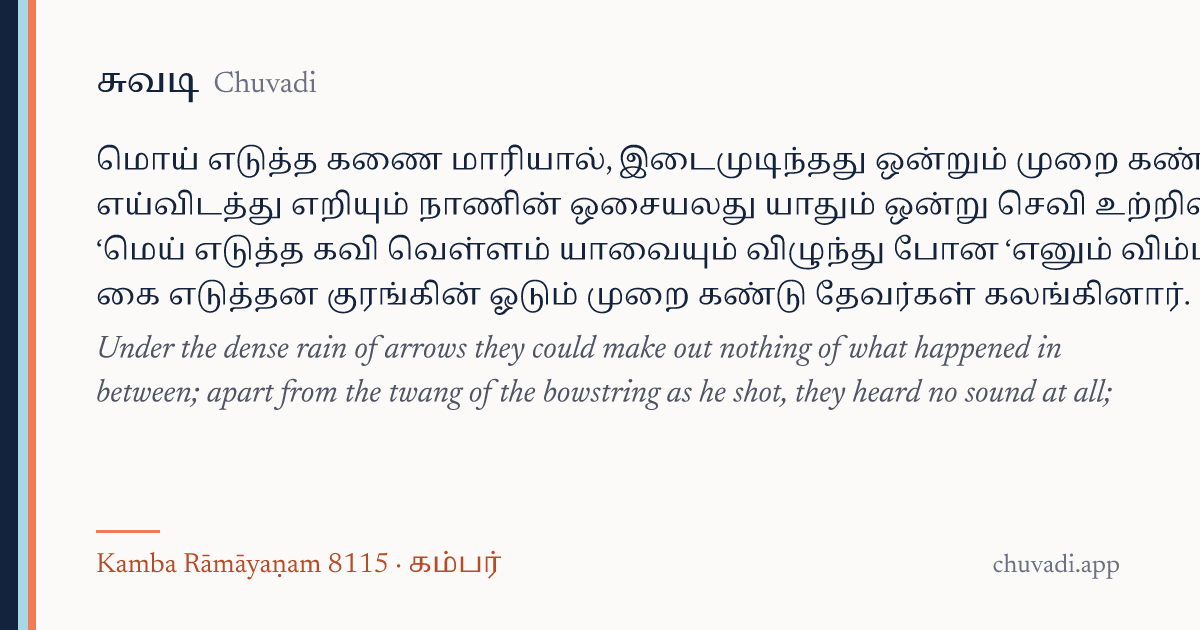
தேவர்கள் - (போர் கண்டு நின்ற) தேவர்கள்; மொய் எடுத்த கணை மாரியால் - (இந்திரசித்தன் எய்த) வலிமை மிகுந்த அம்பு மழையினால்; இடை முடிந்தது ஒன்றும் - இடையில் நடந்த செயல்கள் ஒன்றையும்; முறை கண்டிலார் - முறையாகக் கண்டார்கள் இல்லை; எய்விடத்து - (அவன்) அம்பு எய்யும் பொழுது; எறியும் நாணின் ஓசையலது - (விரல்களால்) தெறிக்கின்ற ஓசை அல்லாது; யாதும் ஒன்று செவி உற்றிலார் - வேறு எந்த ஓசையையும் காதினால் கேட்டு உணர்ந்தார்கள் இல்லை; மெய் எடுத்த கவி வெள்ளம் யாவையும் - உடம்பு எடுத்த குரங்குக் கூட்டங்கள் எல்லாம்; விழுந்து போன - இறந்து போய் விட்டன; எனும் விம்மலால் - என்னும் துன்பத்தினால்; கை எடுத்தன குரங்கின் - கைகளை மேலும் தூக்கியனவாகிய குரங்குகளின்; ஓடும் முறை கண்டு - ஓடுகிற தன்மையைக் கண்டு; கலங்கினார் - கலங்கினார்கள்.
ஆங்கிலம் · English translationAI
Translation
- Under the dense rain of arrows they could make out nothing of what happened in between;
- apart from the twang of the bowstring as he shot, they heard no sound at all;
- 'All the hosts of monkeys that took bodily form have fallen!' With this grief,
- seeing how the monkeys fled with their arms flung up, the gods were dismayed.
What the poem says
The gods watching from the sky cannot follow the battle through the cloud of arrows. All they hear is the steady twang of Intiracittaṉ's bow. Seeing the monkeys run with their arms in the air, they fear that the whole monkey army, the gods' own allies, has been destroyed, and they are filled with despair.