



கம்பராமாயணம் 8118 · யுத்த 18.71
பாடல் · The poem
Tap a word to see its gloss in the commentary and where else it occurs.
பாட வேறுபாடு · Project Madurai reads
பொருள் · Meaning in Tamil
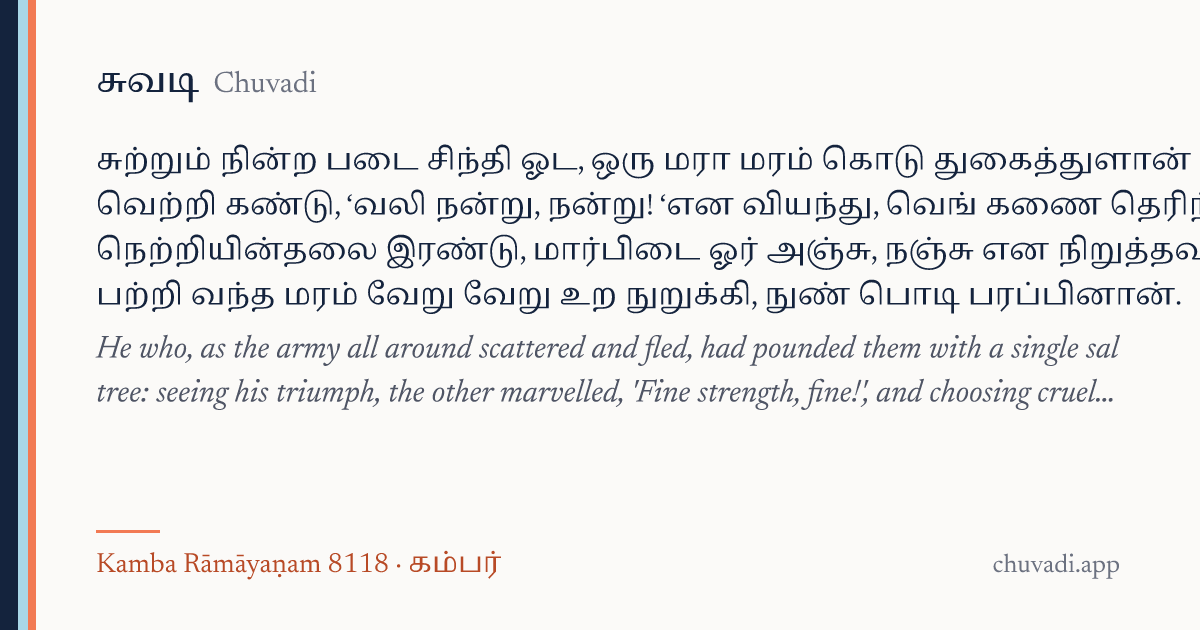
சுற்றும் நின்ற படை சிந்தி ஓட - (தன்னைச்) சுற்றி நின்ற (அரக்கர்) படை சிதறி ஓடும்படியாக; ஒரு மராமரம் கொடு துகைத்துளான் - ஒரு மராமரத்தைக் (கையில்) கொண்டு தாக்கி வருந்துபவனான சுக்கிரீவனது வெற்றியைக் கண்டு; வலி நன்று நன்று என வியந்து - இவனுடைய வலிமை நன்று நன்று என்று (இந்திரசித்தன்) வியந்து (புகழ்ந்து); வெங்கணை தெரிந்து - கொடிய அம்புகளைத் தேர்ந்தெடுத்து; அவன் - அந்தச் சுக்கிரீவனது; நெற்றியின் தலை இரண்டு - நெற்றியின் இடத்து இரண்டு அம்புகளையும், மார்பிடை ஓர் அஞ்சு - மார்பின் இடத்தில் ஒப்பற்ற ஐந்து அம்புகளையும்; நஞ்சு என நிறுத்தினான் - நஞ்சு என்று கூறுமாறு பதியும் படி எய்தான்; பற்றி வந்த மரம் - (அந்தச் சுக்கிரீவன்) கையில் பற்றி (எடுத்து) வந்த மராமரத்தை; வேறு வேறு உற நொறுக்கி - துண்டு துண்டாகுமாறு நொறுக்கி; நுண் பொடி பரப்பினான் - நுண்மையான பொடியாக்கி தூவச் செய்தான்.
ஆங்கிலம் · English translationAI
Translation
- He who, as the army all around scattered and fled, had pounded them with a single sal tree:
- seeing his triumph, the other marvelled, 'Fine strength, fine!', and choosing cruel arrows,
- planted two in his forehead and five in his chest, like poison;
- then, smashing to pieces the tree he had carried as he came, scattered it as fine dust.
What the poem says
Intiracittaṉ, a true warrior, admires Cukkirīvaṉ's strength and praises him aloud before striking. He fixes two arrows in the monkey king's forehead and five in his chest, burning like poison, and then shoots the great tree out of his hands into a powder.