



கம்பராமாயணம் 8121 · யுத்த 18.74
பாடல் · The poem
Tap a word to see its gloss in the commentary and where else it occurs.
பொருள் · Meaning in Tamil
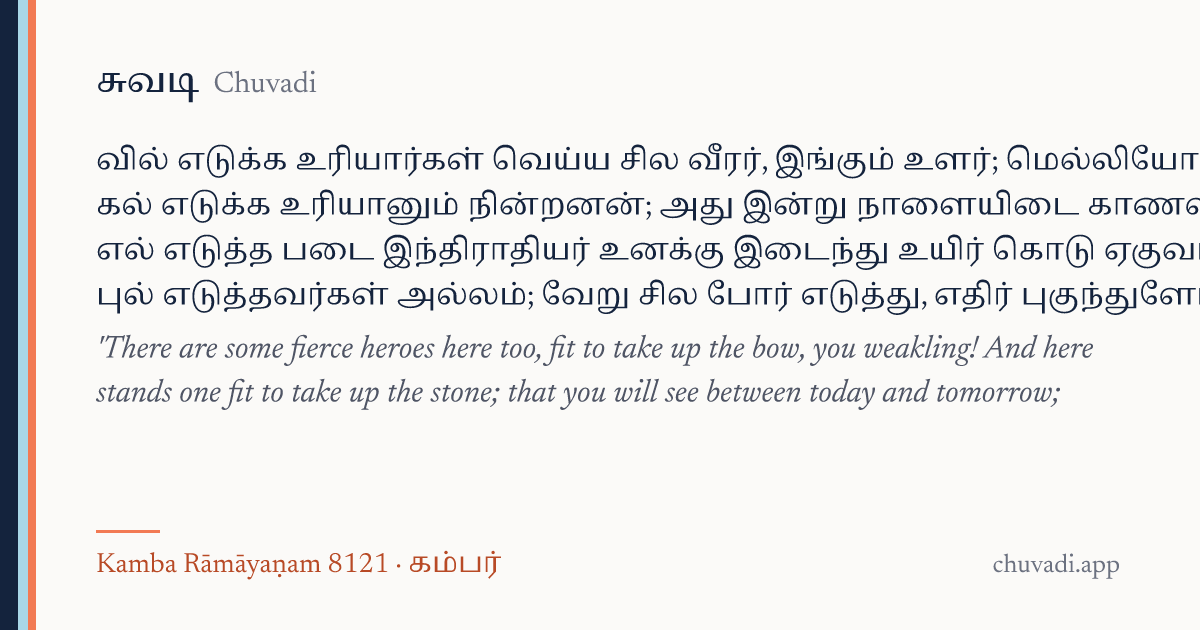
மெல்லியோய் - வலியற்ற மென்மைத்தன்மை உடையவனே; இங்கும் - எங்கள் பக்கத்திலும்; வில் எடுக்க உரியார்கள் - வில்லெடுத்துப் போர் செய்ய உரிய தக்கவர்களான; வெய்ய சில வீரர் - கொடிய சில வீரர்கள்; உளர் - உள்ளனர்; கல் எடுக்க உரியானும் நின்றனன் - கல்லை எடுத்துப் போர் செய்ய உரியவனாகிய நானும் நிற்கின்றேன்; அது இன்று நாளையிடை காணலாம் - அவ்வாறு இருத்தலை இன்று (அல்) நாளைக்குள் காணலாம்; எல் எடுத்த படை இந்திராதியர் - ஒளி பொருந்திய படைக்கலங்களைக் (கையில் தாங்கிய) இந்திரன் முதலிய தேவர்கள்; உனக்கு இடைந்து - உனக்குத் தோற்று; உயிர் கொடு ஏகுவார் - உயிரை (உடலில் தாங்கிக்கொண்டு செல்வார்கள்); புல் எடுத்தவர்கள் அல்லம் - (போரில் தோற்றுப்) புல்லை வாயினால் கவ்வி எடுத்தவர்கள் (நாங்கள்) அல்லோம்; வேறு சில போர் எடுத்து - வேறு சில போர் வகைகளைத் தொடங்கி, எதிர் புகுந்துளோம் - (போரிட) உன் எதிரில் வந்துள்ளோம்.
சில வீரர் - இராமலக்குவரைக் குறித்தது. மெல்லியோய் - இகழ்ந்தவனை இகழ்ந்த குறிப்பு. கல் எடுக்க உரியார் - அரக்கர் குலத்துக்கு வீரக் கல்லெடுப்புச் சடங்கு நடத்த உரிமை உள்ள அனுமன் எனவும் கூறலாம். சவச்சடங்கைக் கல்லெடுப்புச் சடங்கு என்று கூறலும் எண்ணுக. சுந்தரகாண்டத்தில் மிகப்பல அரக்கரையும் அக்கனையும் கொன்றமை கொண்டு இவ்வாறு கூறினான் என்க. புல் எடுத்தவர்கள் அல்லம் - புல்லை வாயினால் கவ்வி எடுத்தவர்கள் அல்லம். போரில் தோற்றவர் வாயினால் புல்லைக் கவ்வுதல் மரபு. தற்காலத்தில் தோற்றவனை மண்ணைக் கவ்வினான் என்று கூறுவதை நினைக்க. உங்களுக்கெல்லாம் கல்லெடுத்து ஈமச்சடங்கு செய்ய உரியவனாகிய வீடணனும் உள்ளான் என்று கூறுதல் மிகவும் பொருந்தும் என்பது மாகவித்துவான் மயிலம் வே. சிவசுப்பிரமணியன் கருத்து.
ஆங்கிலம் · English translationAI
Translation
- 'There are some fierce heroes here too, fit to take up the bow, you weakling!
- And here stands one fit to take up the stone; that you will see between today and tomorrow;
- Indra and his like, with their bright weapons, gave way before you and left with their lives;
- we are not the kind who take grass in their mouths; we have come against you with another kind of war.'
What the poem says
Aṉumaṉ answers in kind. Irāmaṉ and Ilakkuvaṉ are the archers on his side. He is the one entitled to "take up the stone", a double meaning: to fight with rocks, but also to raise the memorial stone at a funeral. The commentary notes he means he will perform the last rites for the demons he kills. The gods may have saved themselves by surrendering, but the monkeys will never "take grass in their mouths", the old sign of submission in defeat, much like the modern "bite the dust".