



கம்பராமாயணம் 8122 · யுத்த 18.75
பாடல் · The poem
Tap a word to see its gloss in the commentary and where else it occurs.
பாட வேறுபாடு · Project Madurai reads
பொருள் · Meaning in Tamil
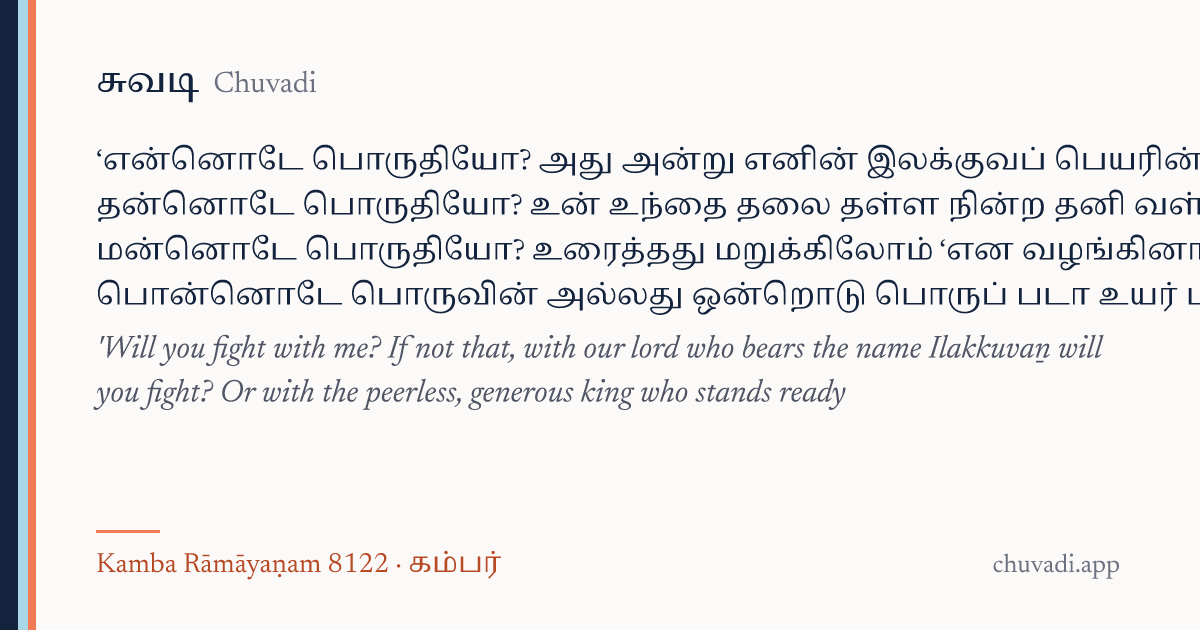
என்னொடே பொருதியோ - என்னுடன் போர் செய்வாயோ? அது அன்று எனின் - அவ்வாறு அல்லாவிட்டால்; இலக்குவப் பெயரின் - இலக்குவன் என்ற பெயரை உடைய; எம்பிரான் தன்னொடே பொருதியோ - எமது தலைவனுடன் போர் செய்வாயோ; (அதுவும் அன்று என்றால்) உன் உந்தை தலை - உன் தந்தையாகிய இராவணனது தலைகளை; தள்ள நின்ற - துண்டித்துத் தள்ளுவதற்காகவே (தோன்றி) நின்ற; தனி வள்ளலாம் - ஒப்பற்ற வள்ளன்மைப் பண்புடையவனாகிய; மன்னொடே பொருதியோ - மன்ன குமாரனாகிய இராம பிரானோடு போர் செய்வாயோ? உரைத்தது மறுக்கிலோம் - நீ சொல்வதை மறுக்க மாட்டோம்; என வழங்கினான் - என்று கூறினான்; பொன்னொடே பொருவின் அல்லது - பொன் மலையோடு ஒப்பாவதல்லது; ஒன்றொடு - வேறு ஒன்றொடும்; பொருப்படா - ஒப்பாக மாட்டாத; உயர் புயத்தினான் - உயர்ந்த தோள்களை உடைய அனுமன்.
ஆங்கிலம் · English translationAI
Translation
- 'Will you fight with me? If not that, with our lord who bears the name Ilakkuvaṉ
- will you fight? Or with the peerless, generous king who stands ready
- to strike off your father's heads, will you fight? Whichever you say, we will not refuse,'
- said he whose lofty shoulders can be matched with nothing but the golden mountain.
What the poem says
Aṉumaṉ, whose shoulders compare only with golden Mount Mēru, offers Intiracittaṉ his choice of opponent. He can fight Aṉumaṉ himself, or Ilakkuvaṉ, or Irāmaṉ, the generous prince whose destiny is to strike off Irāvaṇaṉ's ten heads. The monkeys will accept whichever he chooses.