



கம்பராமாயணம் 8131 · யுத்த 18.84
பாடல் · The poem
Tap a word to see its gloss in the commentary and where else it occurs.
பொருள் · Meaning in Tamil
உயிரோடு நின்றனவும் - உயிரோடு உள்ளனவாகிய உயிரினங்களும்; ஊகம் எங்கும் ஓட - குரங்குகளும் எல்லாப் பக்கங்களிலும் சிதறி ஓடும்படியாக; தேவர்கள் உள்ளமும் - தேவர்களின் உள்ளங்களிலும் (பிறருடை உள்ளங்களிலும்); மோகம் எங்கும் உள ஆக - திகைப்பு எங்கும் உண்டாகும் படியாக; மேருவினும் - மேரு மலையைக் காட்டிலும்; மும்மடங்கு வலி திண்மை சால் - மூன்று மடங்கு வலிமையும் திண்மையும் மிக்க; ஆகம் எங்கும் - (நீலனுடைய) உடம்பு முழுவதும், வெளி ஆக - (அம்பினால் துளைபட்டுச் சல்லடைக் கண்போல்) வெட்ட வெளியாக, வெங்குருதி ஆறுபாய - கொடிய இரத்தவெள்ள ஆறு (எங்கும்) பாய; அனல் அஞ்சுவாய் - தீயும் அஞ்சும் நுனியை உடைய; வெங்கண் நாகநகு - கொடிய கண்களை உடைய பாம்பு (நஞ்சின் கொடுமையை எள்ளி) நகுகின்ற; வாளி பாய்தொறும் - (இந்திரசித்தனுடைய) அம்புகள் விரைந்து பாய்ந்து வரும் தோறும்; மலை பிடுங்கினான் - மலையைப் பெயர்த்து (அவன் மேல் எறிந்தவனாகிய) நீலன்; நடுங்கினான் - நடுங்கி நின்றான்.
ஆங்கிலம் · English translationAI
Translation
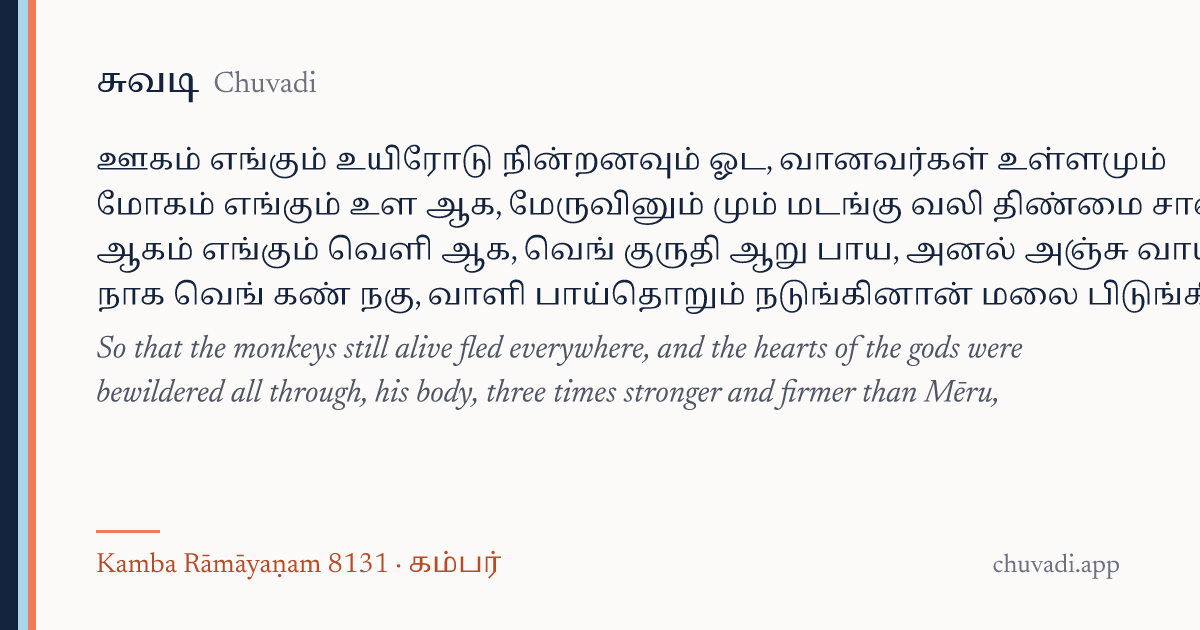
- So that the monkeys still alive fled everywhere, and the hearts of the gods
- were bewildered all through, his body, three times stronger and firmer than Mēru,
- was riddled through and through, and rivers of hot blood poured out; as each arrow struck,
- with tips that fire itself fears, mocking cruel-eyed serpents, he who had uprooted the mountain trembled.
What the poem says
Intiracittaṉ turns his arrows on Nīlaṉ himself. The general's body, said to be three times sturdier than Mount Mēru, is pierced through and through like a sieve, and blood pours from it in rivers. The arrows are so deadly that fire fears them and they mock the venom of serpents. Nīlaṉ trembles, the surviving monkeys flee, and the gods watching are stunned.