



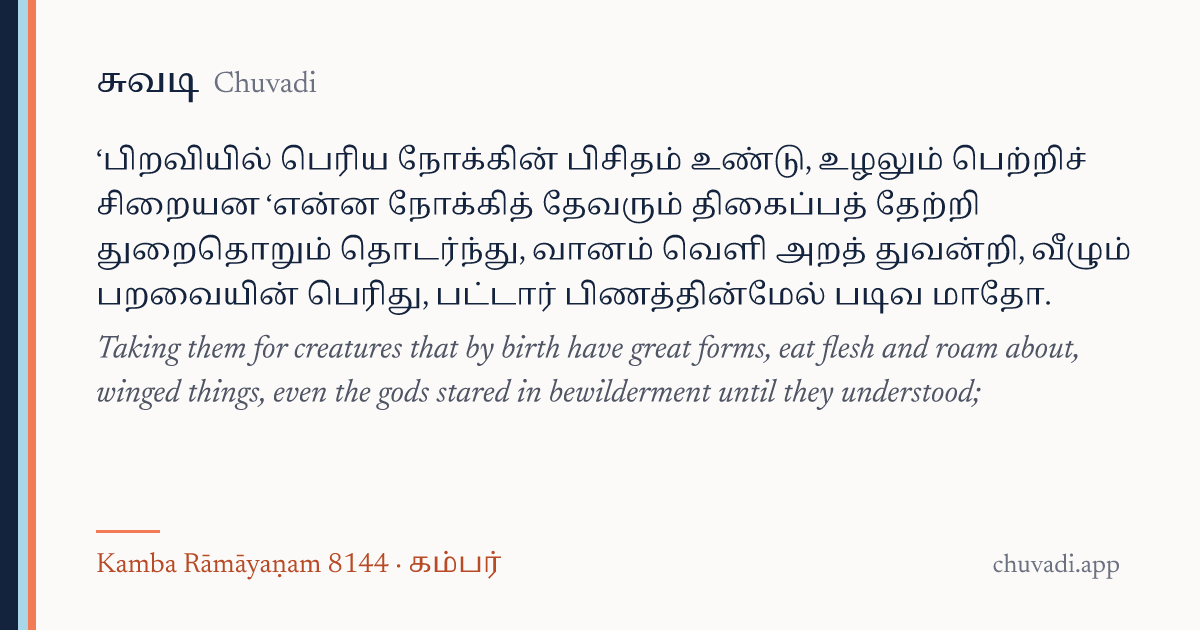
கம்பராமாயணம் 8144 · யுத்த 18.97
பாடல் · The poem
Tap a word to see its gloss in the commentary and where else it occurs.
பாட வேறுபாடு · Project Madurai reads
பொருள் · Meaning in Tamil
பிறவியில் - (இடைவிடாது வருகின்ற இலக்குவனது அம்புகள்) பிறப்பிலேயே; பெரிய நோக்கின் - பெரிய தோற்றத்தையும்; பிசிதம் உண்டு - ஊனினை உண்டு; உழலும் பெற்றி - திரிகின்ற தன்மையையும் (உடைய) சிறையன - சிறகுகளை உடைய பறவைகளாகும்; என்ன - என்று; தேவரும் நோக்கி திகைப்ப - தேவர்களும் பார்த்துத் திகைப்படைய; தேற்றி - (இவை அம்புகளே பறவைகள் அல்ல என்பதைத்) தெளிய வைத்து; துறை தொறும் தொடர்ந்து - (அந்த அம்புகள்) எல்லா இடங்களிலும் நிறைந்து; வானம் வெளி அற - ஆகாயத்தில் இடைவெளி இல்லாதவாறு (நெருங்கி); துவன்றி வீழும் - (இறந்தவர்களின் உடலைத் தின்பதற்காக அவ்வுடலங்களின் மீது) நெருங்கி விழுகின்ற; பறவையின் பெரிது பட்டார் - பறவைகளைக் காட்டிலும் மிகுதியாக இறந்தவர்களுடைய; பிணத்தின் மேல் படிவ - பிணங்களின் மேல் குத்துண்டு கிடப்பன.
ஆங்கிலம் · English translationAI
Translation
- Taking them for creatures that by birth have great forms, eat flesh and roam about,
- winged things, even the gods stared in bewilderment until they understood;
- following on to every place, filling the sky until no gap remained, crowding down,
- thicker than the birds that fall, they settled on the corpses of the slain.
What the poem says
Ilakkuvaṉ's arrows come so thick that the gods watching from the sky mistake them for flesh-eating birds of prey, and only after a while realise they are arrows.
The figure turns on itself: the arrows fill the air without a gap and come down on the bodies of the dead even more densely than the carrion birds that descend to feed on them, lodging in the corpses.