



கம்பராமாயணம் 8187 · யுத்த 18.140
பாடல் · The poem
Tap a word to see its gloss in the commentary and where else it occurs.
பொருள் · Meaning in Tamil
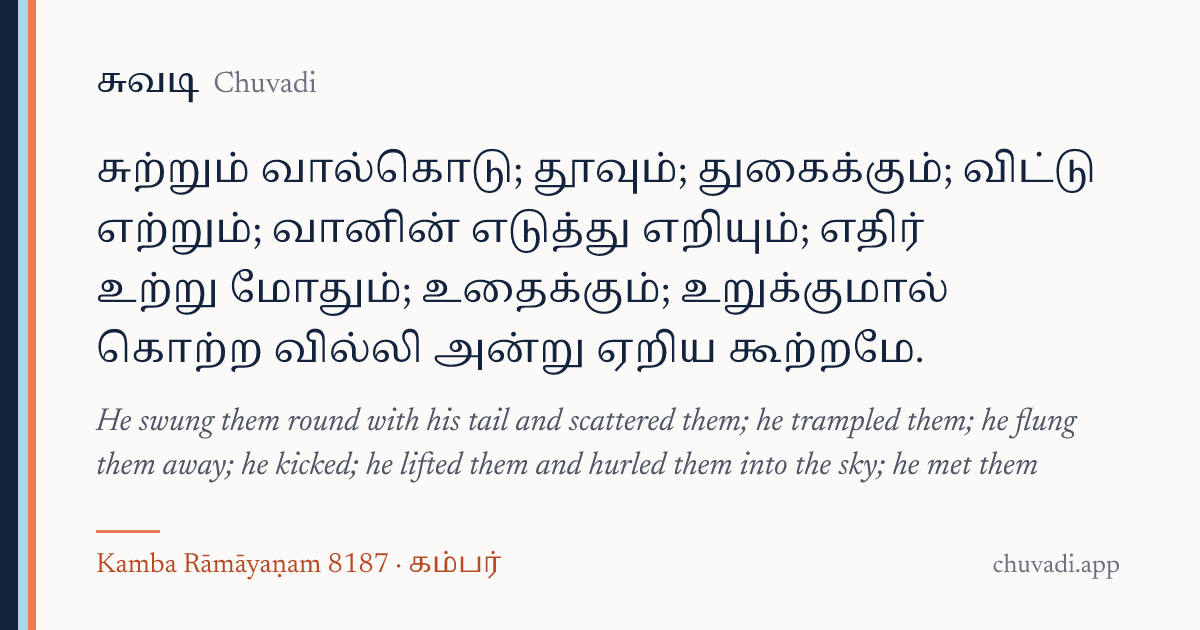
அன்று - அப்பொழுது; கொற்ற வில்லி - வெற்றி பொருந்திய வில்வீரனாகிய இலக்குவன்; ஏறிய கூற்றமே - ஏறிச் செலுத்திய அனுமனாகிய இயமன்; வால்கொடு சுற்றும் தூவும் - (அரக்க வீரர்களைத்) தன் வாலைக்கொண்டு சுற்றிவளைத்து (எடுத்துத்) தூவுவான்; துவைக்கும் - தன் கால்களால் மிதிப்பான்; விட்டு எற்றும் - நெட்டித் தள்ளி உதைப்பான்; வானின் எடுத்து எறியும் - வானத்தில் எடுத்து எறிவான்; எதிர் உற்று மோதும் - எதிரே பொருந்தி மோதுவான்; உதைக்கும் - (தன்) கால்களால் உதைப்பான்; உறுக்கும் - சினந்து பார்ப்பான்.
ஆங்கிலம் · English translationAI
Translation
- He swung them round with his tail and scattered them; he trampled them; he flung them away;
- he kicked; he lifted them and hurled them into the sky; he met them
- head-on and smashed them; he stamped; he glared in fury, did that
- Death whom the victorious archer rode that day.
What the poem says
The poet turns to Aṉumaṉ, who is carrying Ilakkuvaṉ. He is called the Death that the victorious bowman rides, and the line of short verbs shows him fighting with his whole body at once.
He coils his tail round demons and throws them, tramples them, kicks them, tosses them into the air, rams them and glares at them in rage. This verse and the next three each end by naming Aṉumaṉ as a different mount: Death, elephant, lion, horse.